


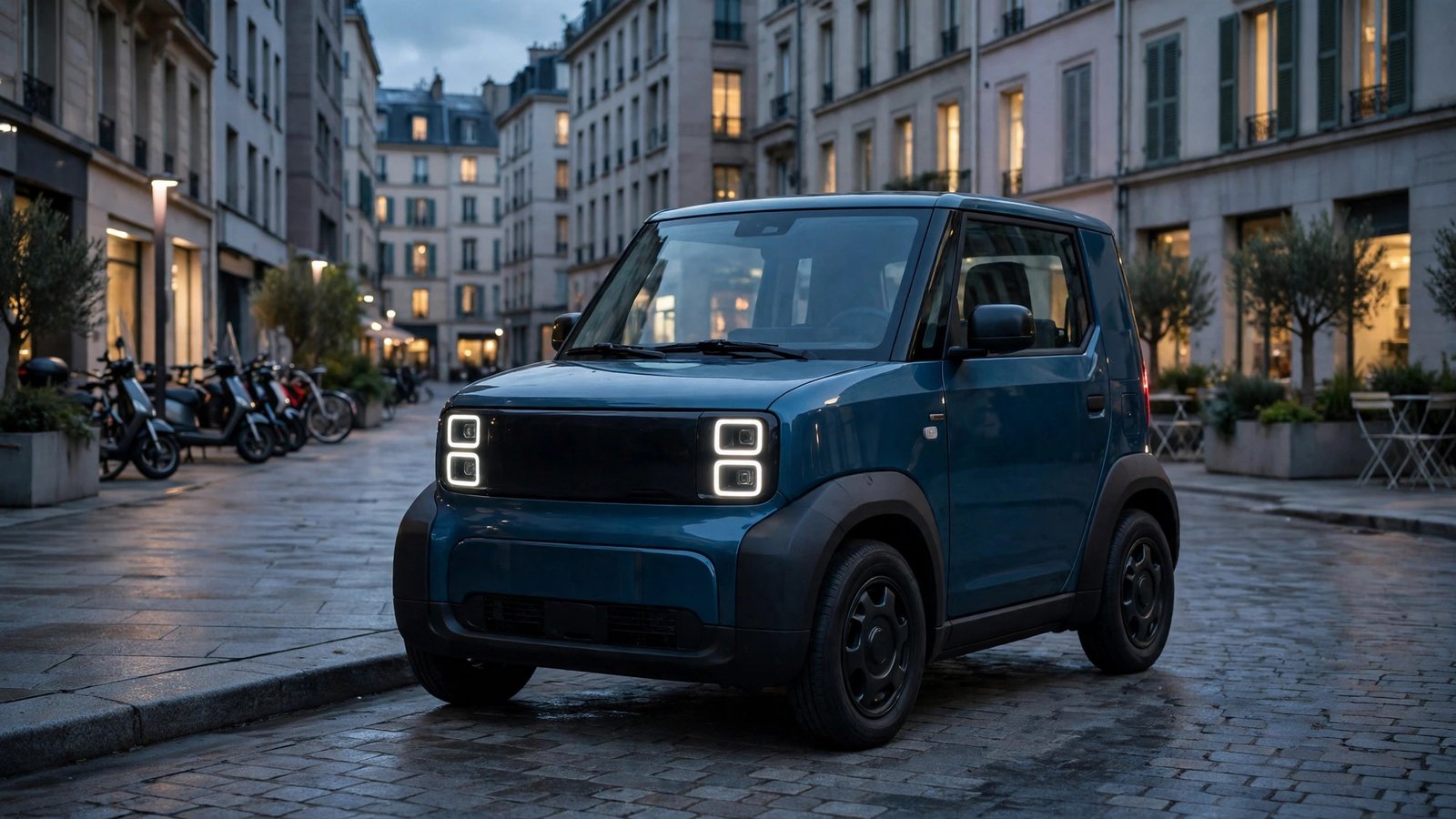
Suzuki has brought back the Ignis nameplate as an all-electric compact hatchback. The new Ignis EV was revealed globally on November 25, 2026, at an online world premiere, and it is a very different car from the quirky petrol crossover that used to wear the badge. It is smaller, taller, fully electric, and built specifically for crowded city streets.
This is Suzuki’s second global battery electric vehicle after the e Vitara, and it shows how seriously the company is taking the affordable end of the EV market. Instead of chasing big batteries and long ranges, Suzuki has built a tiny, light, practical city car — and priced it, by early estimates, at around £20,000 in the UK.
What Suzuki revealed
The Ignis EV is based on the Vision e-Sky concept that Suzuki first showed at the 2025 Japan Mobility Show. It adapts the mechanical package of the Japan-market Suzuki e-Sky, a small electric kei car that went on sale in Japan on November 16, 2026 — just nine days before the Ignis EV’s global reveal. The Ignis name will be used for the international version.
Underneath, the car uses Suzuki’s HEARTECT-e electric architecture, the same platform that underpins the larger e Vitara. That shared platform matters: it means the Ignis EV is not a one-off conversion of an old petrol car, but a purpose-built electric vehicle from the ground up.
International sales are scheduled to begin in summer 2027, starting with Europe and other global markets. Suzuki has not announced an exact launch date, market-by-market pricing, or a full equipment list yet. Those details are expected closer to launch.
A boxy new design built for tight streets
The old Ignis had a rounded bonnet, an upright grille, chunky wheel arches and an unusual rear design. The electric Ignis takes a very different route. Its short bonnet, near-vertical nose, flat sides and tall roof make it look more like a miniature van than a conventional hatchback — a deliberate choice, because the tall, boxy shape squeezes as much passenger space as possible into the smallest possible footprint. It is the same approach Japanese kei cars have followed for decades.
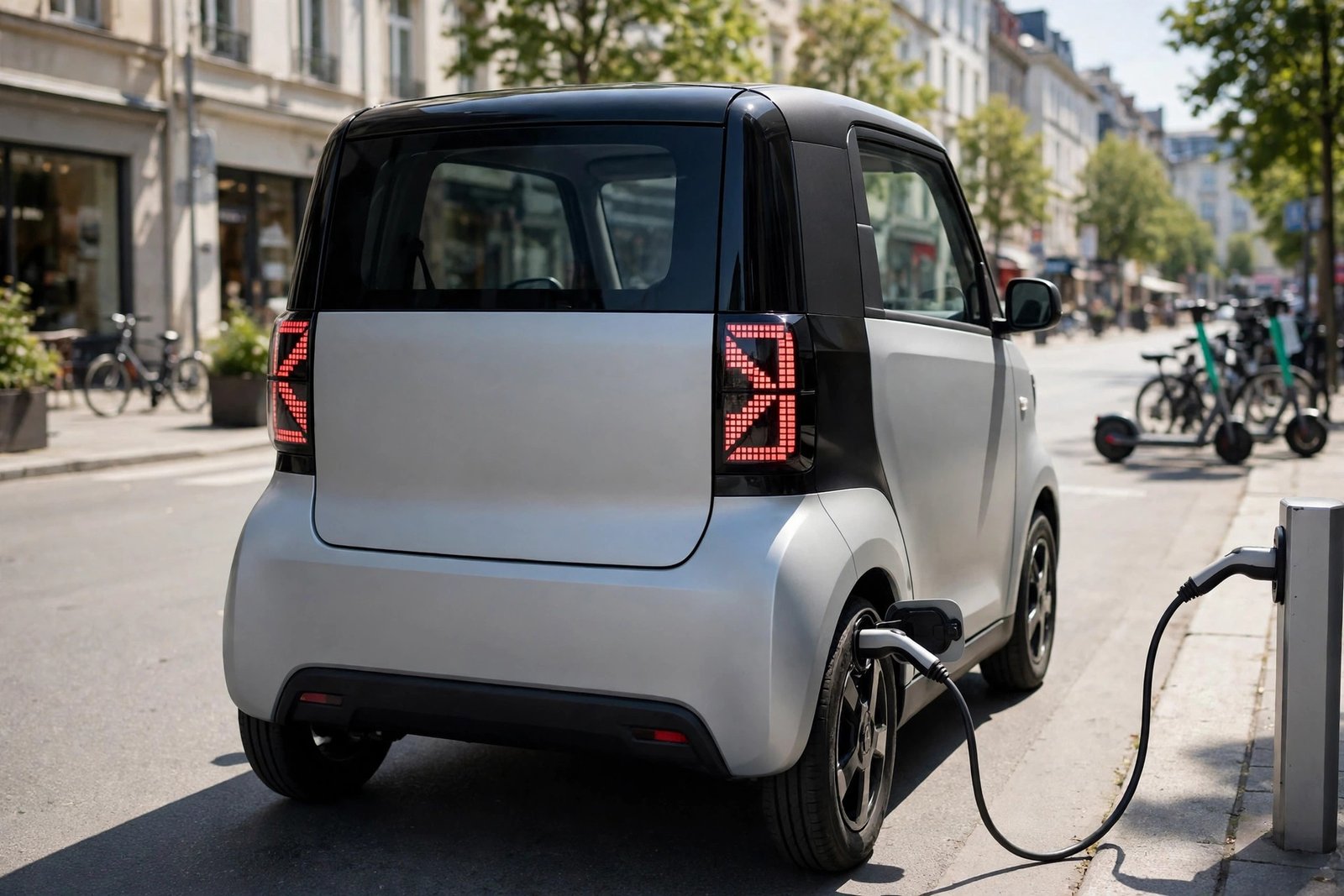
At the front, the Ignis EV gets a blacked-out grille, segmented square LED daytime running lamps, LED projector headlights and a broad bumper. Black cladding runs around the wheel arches, there is a contrasting roof, and the car sits on small 15-inch wheels wrapped in 175/65-section tyres. At the rear, the lamps repeat the geometric pattern seen at the front.
It may not appeal to everyone, but the styling has a clear purpose. With a 4.5-metre turning radius and a tight 9-metre turning circle, the Ignis EV is made for narrow lanes, crowded parking and tight U-turns — the kind of driving that defines daily life in European and Asian cities.
Smaller on the outside, roomier where it counts
The numbers show just how compact this car is. The Ignis EV measures 3,570 mm in length, 1,565 mm in width and 1,635 mm in height, with a 2,460 mm wheelbase. Compared with the discontinued petrol Ignis, it is 130 mm shorter and 125 mm narrower, but 40 mm taller, and its wheelbase is actually 25 mm longer. So although the new car occupies less space on the road, Suzuki has managed to stretch the distance between its wheels — which is what creates cabin room.
The car weighs just 1,080 kg, which is light by modern EV standards. That low weight is one of the reasons Suzuki could get away with a small battery, and it should also help efficiency and agility in stop-start city traffic.
There is one catch for families: the new Ignis is officially a four-seater. That is not surprising given its narrow body, but it means it cannot directly replace a conventional five-seat hatchback for every buyer. Anyone who regularly carries five people will need to look elsewhere.
Battery, motor and charging
The Ignis EV uses a 26 kWh lithium iron phosphate (LFP) battery pack paired with a front-mounted electric motor producing 91 PS (90 bhp) and 133 Nm of peak torque. Suzuki has packaged the motor, inverter and reduction gears into one compact unit, which leaves more room for the cabin.
LFP chemistry is a deliberate choice. It is cheaper and longer-lasting than the nickel-based batteries used in many larger EVs, and it suits a small city car that is charged frequently and driven short distances. The trade-off is lower energy density, which is why the battery is small — but for a car designed for urban use, Suzuki is betting that is enough.
Charging support covers up to 7.4 kW AC charging alongside 50 kW DC fast charging. Suzuki has not announced official charging times yet, and those figures are expected closer to launch.
The one number Suzuki has not confirmed: range
The most important question for any EV buyer is range, and Suzuki has not yet released an official European homologation figure for the Ignis EV. That number is still subject to final testing.
The closely related Japanese e-Sky carries a claimed range of 310 km under Japan’s WLTC test cycle. That figure is useful context, but it should not be treated as the confirmed range of the international Ignis — the two cars are related, not identical, and European WLTP figures are measured differently. Final market-specific range, charging times and prices are all expected closer to launch.
For now, the honest picture is this: a 26 kWh battery in a light, small car should deliver a practical city range, but anyone waiting for an official number will have to wait for Suzuki’s homologation results.
Inside: simple, practical, and physical buttons
Inside, the Ignis EV is configured as a four-seater with a practical, minimalist dashboard layout. A dual-screen display setup sits atop the dashboard, complemented by physical controls for climate and audio volume — a welcome touch at a time when many cars bury everything in touchscreens.
The drive selector is mounted on the dashboard to free up centre console space, where Suzuki has integrated storage cubbies and 45-watt charging ports. The multifunction steering wheel includes controls for cruise control and a lane-watch camera. The cabin also gets a wide digital display, rounded dashboard trim and a simple storage area inspired by ceramic trays. Regenerative braking and an electric brake booster are part of the package, while the exact equipment list will vary by market.
Price: around £20,000 expected in the UK
Suzuki has not announced official pricing, but early reports put the expected UK price at around £20,000. If that holds, the Ignis EV would sit at the affordable end of the European EV market, competing with other small city EVs rather than with larger family electric cars.
That positioning is the whole point of the car. Suzuki is not trying to build a long-range motorway cruiser. It is building a second car, a commuter car, or a first EV for someone who mostly drives in the city — and keeping the price low enough to make that case work.
Will the Ignis EV come to India?
For Indian buyers, the answer is: not confirmed. Suzuki’s rollout roadmap remains focused on Europe and other international markets, and Maruti Suzuki has not confirmed plans to bring the electric hatchback to India.
That is a notable gap, because the Ignis badge is familiar to Indian buyers. The petrol Ignis was launched through Maruti’s Nexa outlets in January 2017, offering a peppy 1.2-litre petrol engine and styling unlike anything else in Maruti’s range. Yet it never became a major seller: sales peaked at 51,176 units in 2022 and fell to 27,900 in 2025, and production was wound down in April 2026, with dealers left to clear remaining stock.
Maruti Suzuki is separately developing an affordable entry-level electric hatchback for India, internally codenamed Y2V. Even if the Ignis EV’s platform or mechanicals are adapted for the Indian market in the future, the company is likely to use a different nameplate. If a compact EV in this segment did reach India, it would compete against urban electric models such as the MG Comet EV and the Tata Tiago EV.
Why this car matters
The Ignis EV matters because it shows where the affordable EV market is heading. For years, most new electric cars were large, heavy and expensive. The Ignis EV is the opposite: tiny, light, modestly powered, and built around a small battery that keeps costs down.
Small city EVs already have an audience, as the MG Comet EV and Tata Tiago EV show. A tall body, easy parking and silent stop-start driving would fit crowded cities well, and Suzuki’s small-car experience and a modest battery could help keep weight and energy use in check.
There are real questions too. A four-seat layout could limit appeal among families that want one car to do everything. The 26 kWh battery would need to deliver convincing real-world range, and the price would have to justify choosing it over established small EVs as well as affordable petrol hatchbacks. Local manufacturing and battery sourcing would be critical to reaching a truly accessible price in markets like India.
What happens next
Suzuki will release final range, charging-time and pricing figures closer to the summer 2027 launch. The first market will be Europe, followed by other international markets. Whether the Ignis EV — or its platform — ever reaches India under a different name will depend on Maruti Suzuki’s separate Y2V project and on how the small-EV segment develops there.
For now, the Ignis is back — smaller, taller, quieter, and fully electric.
Frequently Asked Questions
When will the Suzuki Ignis EV go on sale?
Suzuki has confirmed sales will begin in Europe and other international markets from summer 2027. An exact launch date and market-by-market pricing have not been announced yet.
What is the range of the Suzuki Ignis EV?
Suzuki has not released an official range figure for the Ignis EV yet. The closely related Japan-market e-Sky is rated at 310 km under Japan’s WLTC cycle, but that is not the confirmed range of the international Ignis.
What battery and motor does the Ignis EV have?
It uses a 26 kWh lithium iron phosphate (LFP) battery and a front-mounted electric motor producing 91 PS and 133 Nm of torque.
How big is the Suzuki Ignis EV?
It measures 3,570 mm long, 1,565 mm wide and 1,635 mm tall, with a 2,460 mm wheelbase. It is a four-seater and weighs 1,080 kg.
How fast does the Ignis EV charge?
It supports up to 7.4 kW AC charging and 50 kW DC fast charging. Suzuki has not announced official charging times yet.
Will the Ignis EV launch in India?
Not confirmed. Maruti Suzuki has not announced plans to bring it to India, and it is separately developing an affordable entry-level electric hatchback codenamed Y2V for the Indian market.
Sources: NDTV Profit — “Suzuki Ignis Revealed As A Compact Electric Car, India Launch Uncertain” (Nov 25, 2026); CarToq — “The Ignis Is Back, And You’ll Be Surprised At How It Looks Now!” (Nov 25, 2026). Also corroborated by TimesDrive and Fleetwise (Nov 25, 2026).
Related reading: BMW Neue Klasse iX3/i3 China launch; BYD Tang third-gen EV; Denza N8 EV
