


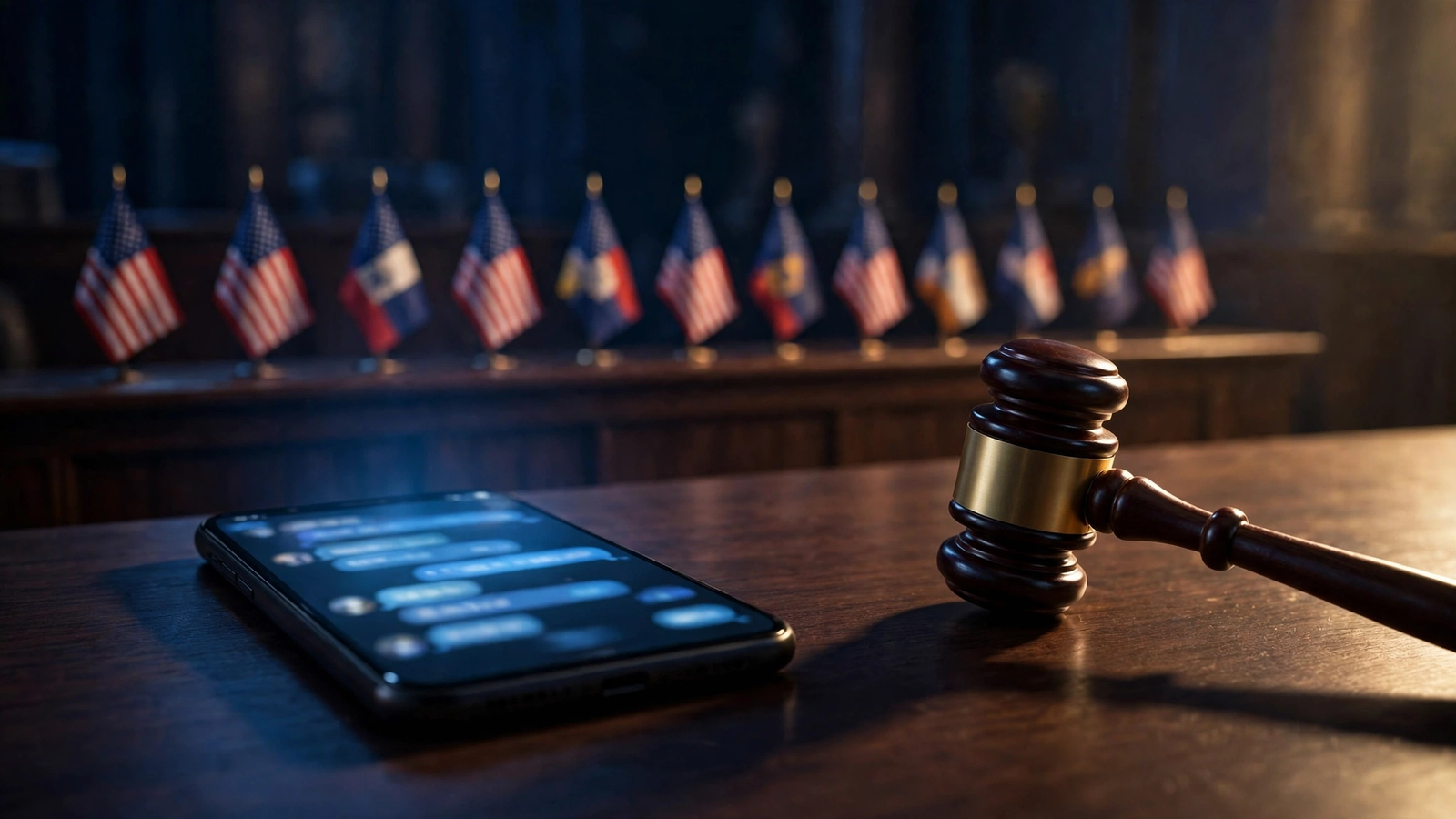
Character.AI promised its users it would not sell their personal information. Now, in bankruptcy, the company plans to auction off the private chat histories of more than 21 million Americans — and 42 state attorneys general are asking a federal judge to stop it.
The coalition, led by California Attorney General Rob Bonta, filed its objection with the U.S. Bankruptcy Court for the District of Delaware. It targets a planned December 1 auction in which Character.AI would sell its platform and its entire trove of user data to a buyer who, under the current terms, would owe those users nothing.
“This plan to auction off its platform, including the IP addresses and private chat histories of its users — many of them children — with zero protection for those users is appalling,” Bonta said in a statement on November 24. “Bankruptcy shouldn’t be used to sidestep the law.”

What is actually for sale
The sale package is far broader than a company name and a logo. According to the states’ objection and court filings, the asset purchase agreement covers the character.ai website and its iOS and Android apps, all end-user account and profile information, user-created characters and their chat content, advertising and analytics data, training datasets and unprocessed data, and every AI model the company built, including the model weights.
It also covers records of users’ consent and deletion requests, IP addresses, and risk scores the company assigned to flagged users. In other words, the buyer would get the conversations themselves, the data about who had them, and the records of people who asked for their data to be deleted.
The scale of what is at stake is laid out in the states’ filing. As of March 2025, Character.AI had more than 21.6 million U.S. accounts. More than 2.1 million of those accounts were registered to users who declared themselves to be under 18. The platform has about 12 million monthly active users who spend an average of around 120 minutes a day talking to its AI characters.
Character.AI’s own website still states that it does “not sell personal information for monetary consideration” and that it “is not a data broker.” The attorneys general say the company previously told consumers directly that their personal information would not be sold.
A buyer formed the day before it was picked
The identity of the lead bidder has become a central part of the states’ objection. The only disclosed bidder so far is Smirks and Pangs Acquisition LLC, a company registered in Delaware on November 13, 2026. Character.AI selected it as the stalking-horse bidder — the opening bidder that sets the floor price for the auction — the very next day, November 14.
The proposed price is $10 million in cash, plus assumed liabilities. The deal also includes a $350,000 break-up fee, payable to Smirks and Pangs if another bidder ultimately wins the auction. The states are asking the court to reject the sale terms, deny the lead bidder, and strike that fee.
When Character.AI first disclosed the bidder, it did not say who owned or financed it. The Wall Street Journal later reported that Smirks and Pangs is backed by Octave Advisors, a New York-based investment firm. The states’ filing notes that the ownership and financing of the bidder were not disclosed when it was selected, and a bankruptcy judge approved the selection on Tuesday, November 24.
The missing protections
The attorneys general say their objection is about the structure of the deal, not just the fact of a sale. As the agreement is written, the buyer would have no obligation to follow Character.AI’s existing privacy policy. There is no requirement to honour user deletion requests, and no limit on how the data could be used, shared or resold after the sale closes.
That is the core of the states’ argument: whoever buys the data could do as they like with it, including reselling it without telling anyone. The coalition says there are no protections for users anywhere in the current terms, and that the sale as structured would violate state and federal consumer protection laws.
“At a minimum,” Bonta’s office said in its press release, “any sale must leave out kids’ chats and other sensitive data and include conditions that protect users.”
The court has appointed a Consumer Privacy Ombudsman to review any sale involving user accounts and chat data, a standard step in bankruptcies where personal information is on the table. The ombudsman’s findings will feed into the judge’s decision on whether the sale can proceed and on what terms.
How Character.AI got here
Character.AI was founded in 2021 by former Google engineers Noam Shazeer and Daniel De Freitas, almost exactly five years before its bankruptcy filing. The platform lets users create and chat with custom AI companions, many modelled on real celebrities or well-known fictional characters. It grew fast, reaching roughly 12 million monthly active users, but that engagement never turned into sustainable revenue.
The company filed for Chapter 11 bankruptcy on October 12, 2026, in the District of Delaware, listing estimated assets and liabilities each in the range of $50 million to $100 million. In a blog post at the time, it blamed “significant legal, regulatory, and operational headwinds.”
Those headwinds are real. The company has faced years of scandals and lawsuits, including cases tied to the safety of teenage users. It has since made changes aimed at protecting young users, including capping their usage at one hour per day and adding more reliable age-verification checks. But the legal pressure kept building, and the bankruptcy filing followed.
The sale is being run in two tracks. The first involves Disney, which agreed to pay $20 million for a non-exclusive, perpetual licence to some of Character.AI’s intellectual property, and to hire most of the company’s remaining staff. That deal notably excludes user chats and account data — it is a technology licence, not a data purchase. It has not yet been approved by the court.
The second track is the platform-and-data sale now opposed by the states. That is where the chats sit, and that is the auction scheduled for December 1.
New chatbot laws are about to take effect
The fight is landing just as state regulation of AI chatbots is tightening. New York, Connecticut, California and Colorado have all passed laws governing chatbots, and those laws take effect in January 2027. The attorneys general argue that a sale with no privacy conditions would cut directly against the protections those laws are meant to provide.
The case also raises a question every AI company will eventually face: what happens to the conversations users had with a chatbot when the company behind it fails? Character.AI’s users typed some of their most personal thoughts into those chats — about relationships, mental health, loneliness and daily life — believing the company when it said their information would not be sold.
What happens next
The bankruptcy court in Delaware will decide whether the sale proceeds and on what terms. The attorneys general want the current terms rejected outright. If the court agrees, Character.AI would have to rework the deal — potentially excluding children’s chats and other sensitive data, adding conditions that protect users, or finding a different buyer under different terms.
The auction is scheduled for Tuesday, December 1, 2026. Unless the court intervenes before then, the sale of the platform and its data will go ahead as planned. The states’ objection, filed November 20 and announced November 24, is their attempt to make sure it does not go ahead in its current form.
For the millions of people who used Character.AI, the outcome will decide whether years of private conversations become an asset that can be bought, sold and resold — or whether a bankruptcy court draws a line around them.
FAQs
Q1: Why are 42 states trying to block the Character.AI sale?
A1: A coalition of 42 state attorneys general, plus the District of Columbia, is asking a Delaware bankruptcy court to stop Character.AI from auctioning its platform and user data. They say the sale has no protections for users: the buyer would not have to follow Character.AI’s privacy policy, honour deletion requests, or face any limits on using or reselling the data.
Q2: How many users’ chats would be sold in the Character.AI bankruptcy auction?
A2: The sale covers the chat histories of more than 21 million U.S. accounts. As of March 2025, Character.AI had more than 21.6 million U.S. accounts, and more than 2.1 million of them were registered to users who declared themselves under 18. The platform has about 12 million monthly active users.
Q3: Who is buying Character.AI’s user data?
A3: The only disclosed bidder is Smirks and Pangs Acquisition LLC, which was registered in Delaware on November 13, 2026 — one day before Character.AI picked it as the lead bidder on November 14. Its opening bid is $10 million in cash plus assumed liabilities. The Wall Street Journal reported it is backed by New York investment firm Octave Advisors.
Q4: When is the Character.AI data auction happening?
A4: The auction is scheduled for Tuesday, December 1, 2026. The bankruptcy court in Delaware will first decide whether the sale can proceed under the current terms, after the attorneys general filed their objection on November 20, 2026.
Q5: Did Character.AI promise not to sell users’ personal information?
A5: Yes. Character.AI previously told consumers their personal information would not be sold, and its website still states that it does “not sell personal information for monetary consideration” and that it “is not a data broker.” The attorneys general cite that promise as a central part of their objection.
Q6: What is Disney’s deal with Character.AI in the bankruptcy?
A6: Disney agreed to pay $20 million for a non-exclusive, perpetual licence to some of Character.AI’s intellectual property, and to hire most of the company’s remaining staff. That deal excludes user chats and account data, so it is a technology licence rather than a data purchase, and it still needs court approval.
Sources
TechCrunch: State AGs fight Character.AI’s plan to auction off users’ private chats
TechSpot: 42 state attorneys general move to block Character.AI sale
