


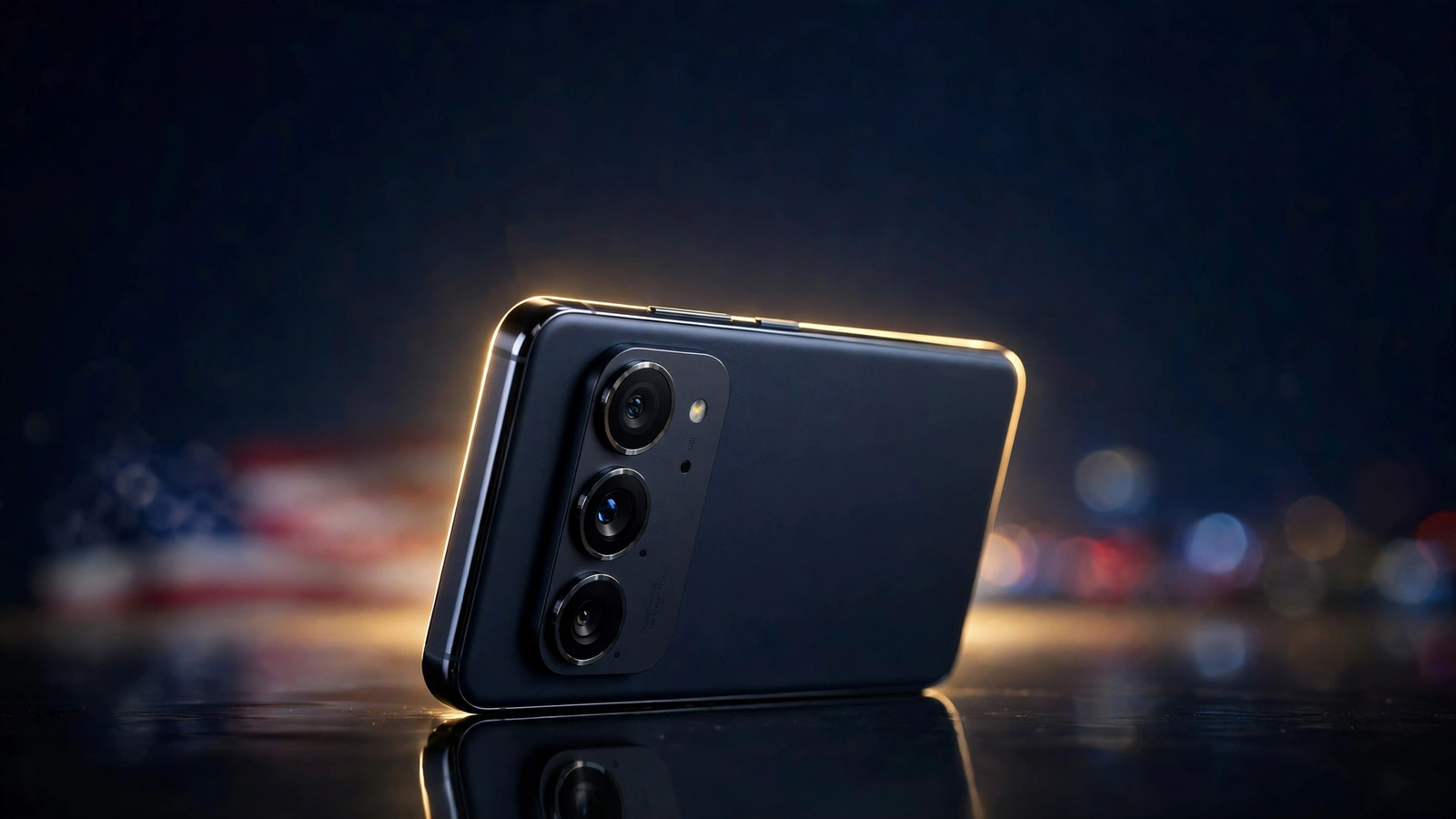
Samsung’s Galaxy S25 line has run into a legal problem in the United States that could, in theory, block the phones from being imported at all. The US International Trade Commission (ITC) has issued a final determination finding that Samsung infringed a Maxell camera patent, and it has ordered an import ban on the infringing devices along with a cease-and-desist order against Samsung Electronics America.
That sounds dramatic, and for Samsung it is a serious ruling. But the most important fact for anyone who owns a Galaxy S25, or is thinking of buying one, is that the ban is not in effect yet — and it may never take effect at all. A 60-day presidential review period is now running, and until it ends, sales continue as normal. Here is the full picture: what the ITC decided, which patent is at the centre of the case, which phones are affected, and what happens next.
What the ITC decided
The ITC handed down its final determination on 24 November 2026 in Investigation No. 337-TA-1432, the case Maxell brought against Samsung. The Commission found that Samsung infringed US Patent No. 11,490,004, titled “Mobile terminal”, on claims 1 and 10. As remedies, it issued a limited exclusion order — an import ban covering the infringing Samsung mobile devices — and a cease-and-desist order against Samsung Electronics America, Samsung’s US arm.
The ruling was narrow in one important respect. Maxell’s original complaint, filed on 17 December 2024, asserted six patents. Five of those remained in the final proceedings, and the ITC found infringement on only one of them. Samsung was cleared on the other patents, so the entire case now turns on a single patent and a single camera feature.
That matters because it limits what Samsung has to fix. The company does not need to redesign its phones around five different patents. It needs to deal with one feature, and as the case record already shows, a redesigned version of the product was found not to infringe — a point that could prove decisive in the weeks ahead.
What the patent covers
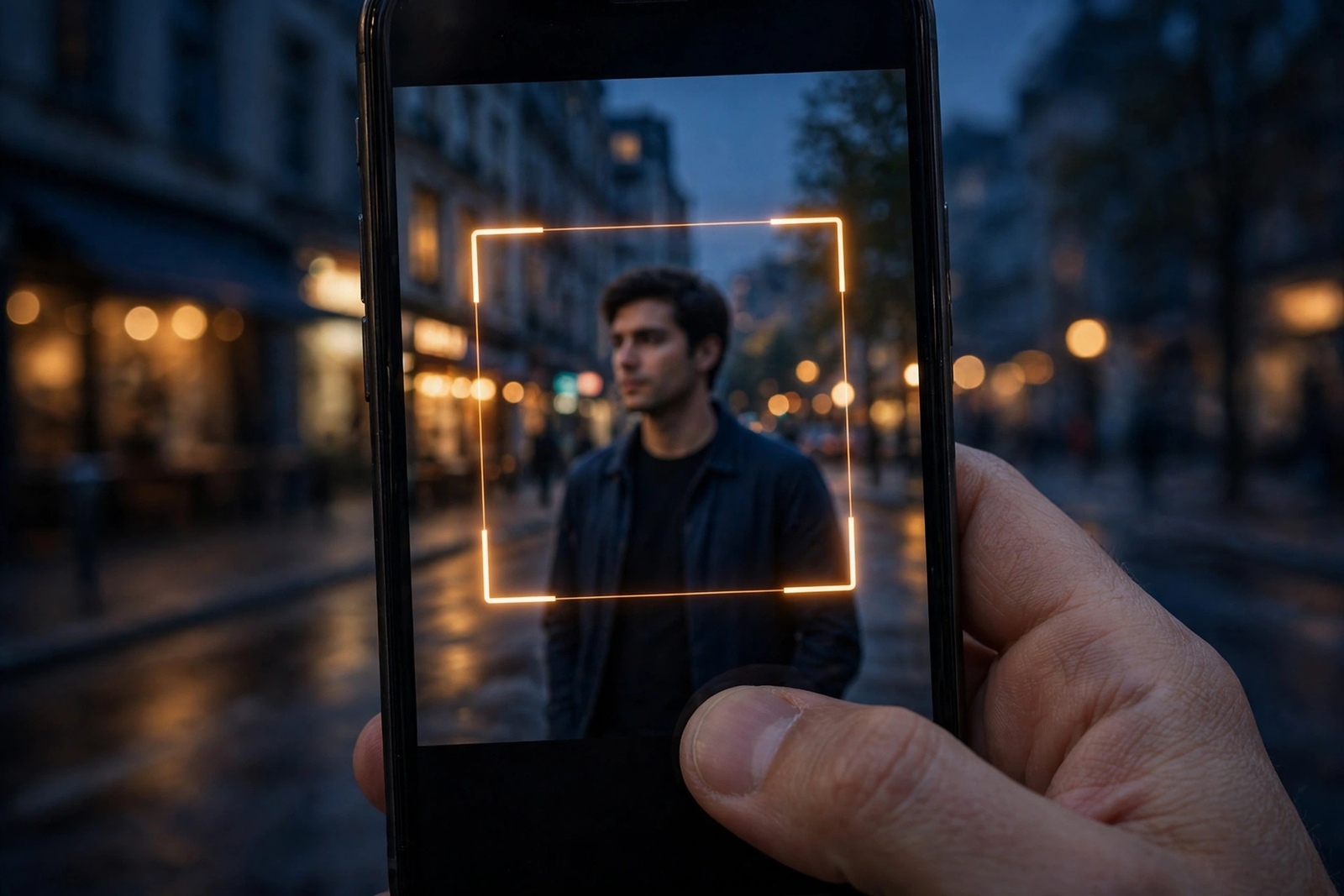
US Patent No. 11,490,004 covers a camera feature that will be familiar to anyone who has used a phone camera. The patent describes a mobile terminal that displays a frame or guide in the viewfinder around the subject, showing the focus area while the user lines up a shot. In plain terms, it is the on-screen frame that tells you what the camera is focusing on before you press the shutter.
That is a small, specific piece of camera software behaviour, and it sits inside a much larger camera system. The Galaxy S25 range is known for its photography — Samsung has continued to push camera improvements across the S25 generation, and camera quality remains one of the main reasons people choose the phones. The ITC’s finding does not say the whole camera system infringes. It says this particular focus-frame feature, as implemented in the S25 phones, falls within the claims of Maxell’s patent.
How the case got here
The dispute has been running for almost two years. Maxell filed its ITC complaint on 17 December 2024, accusing Samsung of infringing six patents. The case then went through the ITC’s usual process, in which an Administrative Law Judge hears the evidence and issues an initial determination before the full Commission reviews it.
Administrative Law Judge Cameron Elliot issued that initial determination in July 2026. He found that Galaxy S25 smartphones infringed the Maxell patent, and — significantly — that redesigned products did not infringe. That second finding is important: it means Samsung already has a design-around path, a version of the feature that the judge considered non-infringing. The full Commission’s final determination on 24 November 2026 confirmed the infringement finding and set the remedies.
The Federal Register published the notice of the final determination on 27 November 2026 as Document 2026-24208, which is the formal public record of the order. As of 26 November 2026, neither Samsung nor Maxell had commented publicly on the ruling.
Which devices are affected
The exclusion order is written around infringing devices rather than model names, which is standard for ITC orders. Bloomberg Law reported that the cease-and-desist order targets Galaxy S25 products, and the Galaxy S25, Galaxy S25 Plus and Galaxy S25 Ultra are the models likely to be affected. The judge’s initial determination specifically identified Galaxy S25 smartphones as infringing, which points to the whole S25 family rather than a single model.
What is equally important is what the order does not cover. Redesigned products were found not to infringe, so a version of the phone with the feature changed or removed would fall outside the ban. And the order is an import ban, not a sales ban on phones already in the country. It targets devices coming into the United States, not the phones sitting on store shelves or in customers’ hands.
The Galaxy S25 range has been on sale for most of 2026, and Samsung has kept updating it — the November 2026 security patch rolled out to the Galaxy S25 and S24 lines together, keeping the phones current while the legal case moved toward its conclusion. That update cadence is a reminder of how established the S25 family is in the US market, and why an import ban, if it ever took effect, would be a major disruption rather than a minor inconvenience.
Why the ban cannot take effect yet
Here is the part that most headlines skip. An ITC exclusion order does not take effect immediately. By law it goes through a 60-day presidential review period, run by the US Trade Representative, during which the President can veto the order on policy grounds. That review period began on 25 November 2026 and runs until around 23 January 2027.
During the review, Samsung can keep importing the phones without posting any security. The bond rate during the review period is 0 percent, so there is no financial penalty for continuing to import while the review runs. The ban only takes effect if the review period ends without a veto.
Presidential vetoes of ITC exclusion orders are rare, but they do happen, and they usually turn on public-interest factors such as the effect on consumers, competition and the wider economy rather than on the patent merits. Samsung’s case for a veto would rest on the disruption an import ban would cause to the US phone market. Maxell’s case would rest on its right, as a patent holder, to stop the import of infringing products. Neither side has commented publicly yet, so it is not clear how either will argue its position during the review.
What it means for Galaxy S25 owners
For anyone who already owns a Galaxy S25, the ruling changes nothing right now. Phones already sold are unaffected by the order. Service, repair and warranty replacements for units bought before the review period ends are also exempt, so getting a phone fixed or replaced under warranty is not affected either.
Software updates are not part of the order at all. Samsung can continue to update the S25 range, and there is no suggestion that any update would be blocked. Owners should keep installing updates as normal.
The practical advice for owners is simple: do nothing different. Your phone will keep working, it will keep receiving updates, and it can still be repaired or replaced under warranty. The legal fight is between Samsung and Maxell, and it is about future imports, not about the phone in your hand.
What it means if you are thinking of buying one
Buyers are in the same position as owners for now: sales continue during the review period, and there is no reason to rush a purchase or to avoid the phone because of this ruling. If you were already considering a Galaxy S25, the ITC decision does not change the phone itself.
The picture changes only if the review ends without a veto and the ban takes effect. At that point, new imports of the infringing models would stop, which could affect availability and pricing of the S25 range in the US. But that is a scenario for late January 2027 at the earliest, and several things could happen before then to prevent it.
One thing worth watching is whether Samsung starts shipping a redesigned version of the phone. Because redesigned products were found not to infringe, Samsung could change the focus-frame feature and keep importing. That is the most straightforward commercial fix, and it would make the ban irrelevant to future sales. Samsung’s camera work does not stop with the S25 either — the company is already preparing the Galaxy S27 Ultra with a stronger focus on night photography and video, which shows how much of its flagship strategy now runs through the camera.
What happens next
Four paths are open to Samsung, and more than one could be used at the same time.
First, the presidential review. The US Trade Representative will run the review until around 23 January 2027, and the President can veto the order. This is the fastest route to making the ban disappear entirely, and it is the one Samsung will be watching most closely.
Second, a design-around. Samsung can change the focus-frame feature so the phones no longer infringe, and the judge’s finding that redesigned products do not infringe suggests this route is already mapped out. If Samsung ships the redesigned version, the ban would have nothing left to bite on.
Third, a settlement or licence. Patent disputes of this kind often end with the two sides agreeing terms — Samsung could take a licence to Maxell’s patent, or the companies could settle on other commercial terms. Nothing of that kind has been reported yet, and neither company has commented, but a deal remains one of the most common endings for ITC cases.
Fourth, an appeal. Samsung can appeal the ITC’s determination to the US Court of Appeals for the Federal Circuit, the court that hears ITC patent appeals. An appeal would take much longer than the review period, so it is a longer-term option rather than an immediate fix.
The most likely outcome, based on how ITC cases usually play out, is a combination: Samsung adjusts the feature, negotiates with Maxell, or both, while the review runs its course. Outright import bans that actually take effect and stay in effect are uncommon for mainstream consumer phones, precisely because the companies involved usually find a way around them before the deadline arrives.
Why this case matters beyond Samsung
The ITC has become one of the most important venues for patent fights in the technology industry, because an exclusion order can do something a court damages award cannot: it can keep a product out of the US market altogether. That is why companies file there, and why a single-patent finding can carry so much weight.
This case is also a reminder of how much of a modern smartphone is covered by other companies’ patents. A focus-frame indicator in a camera viewfinder is a tiny part of what a Galaxy S25 does, but it was enough to support an import ban order. Samsung is far from the first phone maker to face this kind of case, and it will not be the last. The company’s broader strategy — including its push into on-device AI and private-cloud processing for Galaxy AI features — shows how much of its flagship pitch now depends on software, and software features are exactly the kind of thing that can attract patent claims.
For now, though, the situation is clear. The ITC has ordered an import ban on Galaxy S25 devices over one Maxell camera patent. The ban cannot take effect until the 60-day presidential review ends around 23 January 2027. Samsung can keep importing in the meantime, owners are unaffected, and the company has a design-around route, a possible settlement and an appeal open to it. The next date that matters is 23 January 2027 — and the weeks before it will tell us whether this becomes a real disruption or a footnote in the S25’s story.
Frequently asked questions
Is the Galaxy S25 banned in the US right now?
No. The ITC has ordered an import ban, but it cannot take effect until the 60-day presidential review ends around 23 January 2027. Sales continue as normal during the review, and the bond rate is 0 percent, so Samsung can keep importing the phones.
Which Galaxy S25 models are affected by the import ban?
The Galaxy S25, Galaxy S25 Plus and Galaxy S25 Ultra are the models likely to be affected. Bloomberg Law reported that the cease-and-desist order targets Galaxy S25 products, and the judge’s initial determination found Galaxy S25 smartphones infringed. The order is written around infringing devices rather than model names.
What patent did Samsung infringe?
US Patent No. 11,490,004, titled “Mobile terminal”, on claims 1 and 10. The patent covers a camera feature that displays a frame or guide in the viewfinder around the subject to show the focus area. Maxell originally asserted six patents, and Samsung was cleared on the others.
Will my Galaxy S25 stop working if the ban takes effect?
No. Phones already sold are unaffected by the order. Service, repair and warranty replacements for units bought before the review period ends are exempt, and software updates are not part of the order. Your phone will keep working normally.
When will the import ban take effect?
Only if the 60-day presidential review, which began on 25 November 2026 and ends around 23 January 2027, does not result in a veto. If the review ends without a veto, the exclusion order takes effect. If the President vetoes it, the ban never takes effect.
Can Samsung avoid the import ban?
Yes, in several ways. Redesigned products were already found not to infringe, so Samsung can change the camera feature. It can also settle or take a licence from Maxell, seek a presidential veto during the review, or appeal the ITC’s determination to the US Court of Appeals for the Federal Circuit.
Sources
Sources: Android Police, ChipDispatch, NewsField, The Mobile Central.
