


Lead
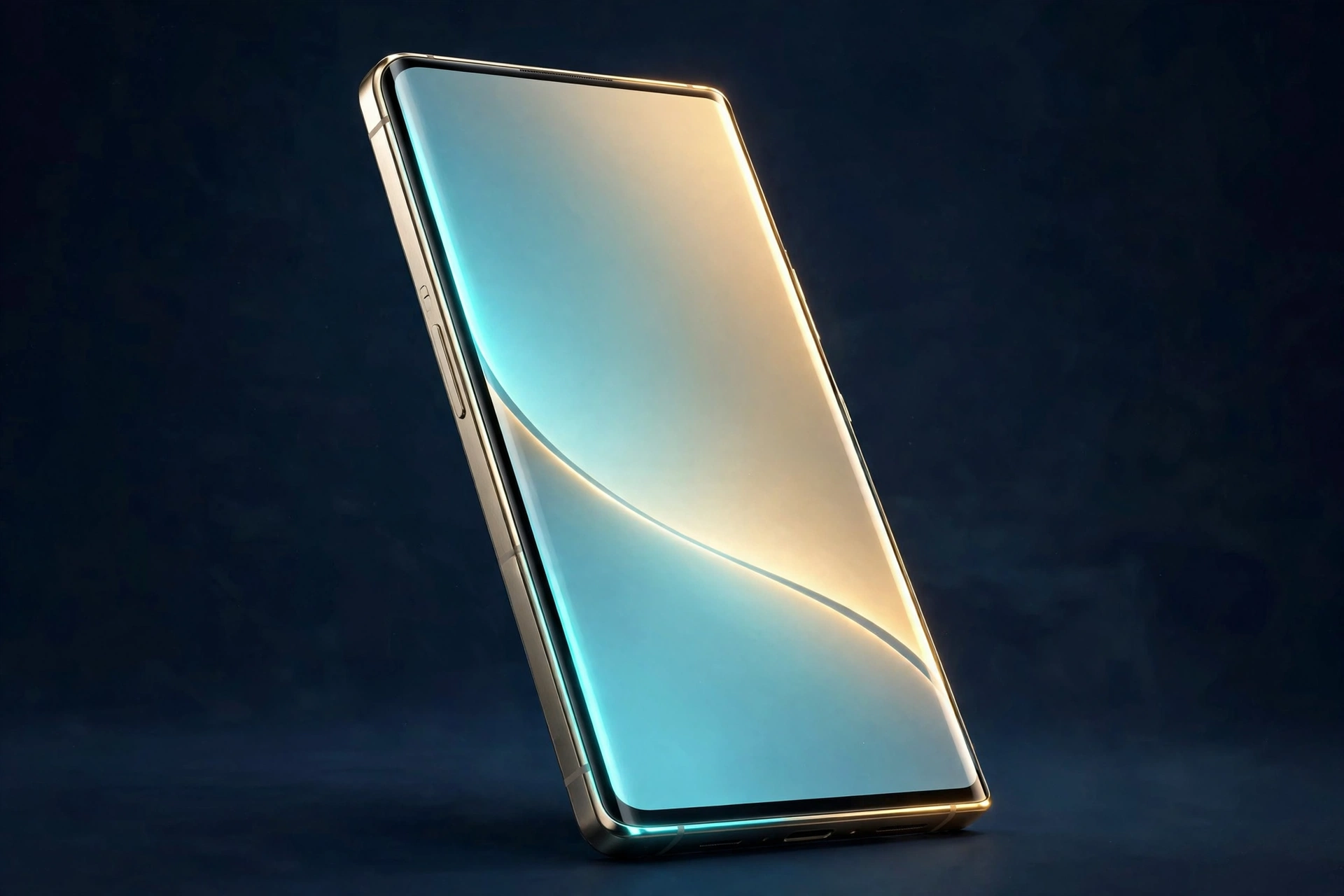
A hands-on video of what is described as an approved cover glass sample for the iPhone 20 Pro has leaked online, and it suggests Apple is about to bring back a design idea the Android world spent years walking away from. The video, posted on X by tipster Ice Universe on November 14, 2026, shows a sheet of glass that curves down on all four sides — top, bottom, left and right — toward the frame. It is the clearest look yet at the phone Apple is reportedly building to mark twenty years of the iPhone, and it points to the biggest redesign of the device since the iPhone X in 2017.
The leak was covered by Gadgets360 on November 16, 2026, and by PhoneArena on November 14, 2026. Both outlets stress the same thing: this is a glass sample, not a finished phone. Apple has confirmed nothing about the iPhone 20 Pro, its name, its design or its launch date. But the details in the video line up with months of reporting about a glass-first redesign for 2027, including bigger screens, smaller camera cutouts and a possible move of Face ID under the display. If the sample is real — and if it survives Apple’s testing — the flat-screen iPhone era that began with the iPhone 12 could be about to end.

Summary
- Tipster Ice Universe posted a hands-on video on X on November 14, 2026, showing a purported “3D quad-curved” cover glass sample for the iPhone 20 Pro, with the glass bending down on all four sides toward the frame.
- The sample has rounded corners and visibly smaller cutouts for the front camera and Face ID sensors than the current iPhone 18 Pro.
- Apple is reportedly skipping the “iPhone 19” name entirely and going straight to the iPhone 20 series to mark the 20th anniversary of the iPhone, with a launch expected in 2027.
- The iPhone 20 Pro and Pro Max are reportedly codenamed V73 and V74, with screens growing to 6.41 inches and 6.96 inches — the first screen size increase since 2024.
- The 20th anniversary iPhone is also reported to drop the dedicated Action Button, folding its functions into the Camera Control button, and to keep a triple rear camera with a next-generation A-series chip.
- Apple typically finalises a new iPhone design about a year before launch, but a sample passing approval does not guarantee the final phone will look like this — Apple has shelved a more ambitious all-glass design before, after it failed durability testing.
What the leaked video actually shows
The video is short and simple. A hand holds a clear sheet of glass up to the camera and turns it through three positions so the curve along each edge can be seen. The glass bends downward on all four sides, which is what the video’s own text calls “3D quad-curved”. The corners are rounded, and the whole panel looks like a shallow dome rather than a flat slab.
That matters because most curved phone screens only bend on the left and right edges. A four-sided curve is a different thing: the glass wraps down toward the metal mid-frame on every side, which would leave almost no visible bezel from the front and give the phone a borderless, pebble-like look. The video also shows two small black markings on the front of the glass, which Gadgets360 says could be for the front-facing camera. The cutouts for the camera and Face ID sensors look noticeably smaller than the ones on the current iPhone 18 Pro.
Gadgets360 also reports that the handset might retain a smaller Dynamic Island, like its predecessor, and that the Face ID sensor could be placed in the top-left corner under the display — similar to this year’s Pro and Pro Max models. That would be a step toward the long-rumoured under-display Face ID, though the leak shows a glass sample with visible markings, not a working phone, so none of this is confirmed.
Ice Universe, who has a long record of leaking accurate display and design details for unreleased phones, could not resist a joke in the post. Quoting the Android makers, he wrote: “Other smartphone brands: ‘We JUST finished switching from curved screens to flat displays, and now you’re bringing curved screens back?! Apple, you’re so damn annoying!'” The joke lands because it is true. Android brands spent the last few years flattening their screens. Apple, if this leak is right, is about to go the other way.
Skipping the iPhone 19
The first of the two commemorative steps Apple is reportedly taking for the anniversary, according to PhoneArena, is the name. Apple is expected to skip the iPhone 19 entirely and go straight to the iPhone 20 series. The logic is familiar: in 2017, Apple marked ten years of the iPhone with the iPhone X, skipping the iPhone 9 and using the occasion to introduce a radically redesigned phone with no home button, a notch and Face ID. The 20th anniversary model is expected to follow the same pattern — a milestone number attached to a milestone redesign.
The iPhone 18 Pro and iPhone 18 Pro Max launched in September 2026 as Apple’s flagship candybar models, marking nineteen years since Steve Jobs introduced the original iPhone in 2007. The 2027 models would therefore arrive almost exactly twenty years after the first iPhone, and the naming jump gives Apple a clean way to say so. It also avoids the awkwardness of a “19” model that would sit between the 18 and the anniversary phone.
Internally, the successors to the iPhone 18 Pro and Pro Max are reportedly codenamed V73 and V74. That detail, reported by PhoneArena, is worth noting because codenames tend to surface only once a project is well into development. Apple usually locks in the big design decisions about a year before launch, so a physical cover glass sample appearing in November 2026 fits the normal timeline for a phone due in the second half of 2027. It does not, however, mean the design is final.
Bigger screens, smaller cutouts
The 2027 models could also mark the first screen size increase since 2024. PhoneArena reports that the iPhone 20 Pro will grow from 6.27 inches to 6.41 inches, while the Pro Max will expand from 6.86 inches to 6.96 inches. The increases are small — roughly a tenth of an inch on each model — but they fit with the glass-first design: if the glass curves away on all four sides, the visible screen can grow slightly without the phone itself getting much bigger.
The smaller cutouts visible in the leaked video point in the same direction. A smaller Dynamic Island and a Face ID sensor moved under the display would free up more of the front of the phone for the screen itself. Combined with the four-sided curve, the result would be a phone that looks almost entirely like a screen from the front, with the metal frame mostly hidden behind the glass.
PhoneArena also reports that the new look may be paired with a brighter and thinner Samsung-made OLED panel. Samsung is Apple’s main display supplier for the Pro models, and a thinner panel would help offset the extra thickness that curved glass can add at the edges. As with everything else here, that is reporting, not a specification sheet — the leaked video shows only glass, and it says nothing about the display panel underneath it.
No Action Button — Camera Control takes over
One of the more surprising reports around the anniversary iPhone has nothing to do with the glass. According to a report highlighted by Gadgets360, the 20th anniversary iPhone will launch in 2027 without a dedicated Action Button. Instead, Apple is reportedly planning to integrate the Action Button’s functions into the Camera Control button.
The idea, as reported, is that users will be able to open the camera app with a single tap on Camera Control, while a longer press could trigger whatever function they had assigned to the Action Button. It is a neat piece of consolidation if it works — one button doing the work of two — but it also removes a physical control that many iPhone owners have come to rely on for quick access to the torch, silent mode, voice memos or shortcuts. Apple introduced the Action Button on the iPhone 15 Pro in 2023, so dropping it after four years would be a real change of direction, not a small tweak.
The same report says the anniversary iPhone will keep a triple rear camera unit and use the next-generation A-series Apple Silicon chip. Neither claim is surprising: the Pro models have carried three rear cameras for years, and a new A-series chip arrives with every generation. What matters is the combination. A new chip, a bigger and brighter screen, a redesigned body and a consolidated button layout would add up to the most substantial Pro redesign since the iPhone X — which is exactly what an anniversary phone is supposed to be.
The glass-first design and the durability question
The deeper story in the leak is not one piece of glass. It is the direction Apple is heading. The 2027 models are expected to get a major glass-centric overhaul, with glass on the front and the back curving into the sides and effectively hiding the metal band in the middle. The Liquid Glass interface that debuted last year — all translucent layers and light refraction — already looks like a software preview of this hardware. A phone that is mostly glass, inside and out, is the physical version of the same idea.
That is also where the risk sits. Curved glass is more fragile than flat glass, and a four-sided curve leaves very little frame to absorb a drop. PhoneArena notes that Apple previously shelved a more ambitious design with even more glass after it failed to hold up during durability testing. The company is famously cautious about materials: it tests prototypes for years and has killed designs late in the process when they did not survive. A cover glass sample that has passed an approval stage inside the supply chain is a real milestone, but it is not a promise. Hiccups in advanced testing could still force Apple to change course, and the final phone could arrive with a gentler curve, or none at all.
There is a practical question too. Curved screens make screen protectors harder to fit, cases harder to design and accidental touches more likely. Apple will need to solve those problems in software — palm rejection, edge touch filtering — the same way Android makers had to. The company has the engineering depth to do it, but the history of curved screens suggests the problems are real, not theoretical.
Android tried this first — and walked away
The irony of the leak is that Apple may be reviving a trend Android abandoned. Curved, edge-to-edge screens were all the rage in the Android world for a while. Samsung pioneered them, and for several years a curved display was the clearest sign that a phone was a flagship. The screens looked sleek and felt fluid in the hand.
Then the complaints piled up. Accidental touches along the curved edges, distracting glare where the glass bent away from the viewer, screen protectors that peeled off over time, and a noticeably higher risk of cracking when the phone was dropped. Around 2020, most Android companies started ditching the trend, and by the middle of the decade flat displays were the standard again — even on Samsung’s own flagships.
That history is why the Ice Universe joke works, and why the leak is interesting rather than just nostalgic. If Apple brings curves back, it will be doing so after watching the entire Android industry learn the lessons the hard way. The curve in the leaked video looks gentler and more symmetrical than the waterfall edges of old Android flagships, which suggests Apple is aiming for the look without the worst of the side effects. Whether that is possible at scale is the question the next year of testing will answer.
It is also worth remembering that Apple does not follow trends; it waits, watches, and then ships its own version when it thinks the technology is ready. The company was late to big screens, late to always-on displays and late to high refresh rates, and in each case it arrived with a version that fixed the problems early adopters had complained about. The four-sided curve may be the same playbook: let Android work out what does not work, then ship the refined version.
What is still unknown
Almost everything about the iPhone 20 Pro remains unconfirmed, and the list of unknowns is long. Apple has not announced the phone, confirmed the name, shown the design or given a launch date. There is no official price, no confirmed chip name, no camera specifications, no battery figure and no word on colours or storage options. The leaked video shows a single piece of glass. It does not show a frame, a screen, a camera module or a finished phone, so it says nothing about thickness, weight, how the curve feels in the hand, or how the glass would hold up to a drop.
The timing is the other open question. A 2027 launch is the expectation in the reporting, but Apple has moved iPhone schedules before, and a design that is still in testing can slip. The company’s other 2027 hardware plans add to the sense that next year will be a big one for Apple: the Apple smart glasses are reportedly coming at WWDC 2027, with Siri doing the work instead of a display, and the foldable iPhone Duo has already survived a 451,000-fold durability test in CNET’s lab. The anniversary iPhone would sit at the centre of that lineup — but only if the glass survives.
For now, the sensible way to read the leak is as a direction, not a device. Apple is working on a glass-first iPhone with a four-sided curve, bigger screens and a simplified button layout, and the work is far enough along that physical samples exist. That is genuinely new information. Whether the phone that reaches shops in 2027 looks like the glass in this video is a question only Apple can answer, and it will not answer it for another year. The software side is moving too: the Siri controls that Apple’s future devices will rely on are already arriving in iOS 27.3 beta 2, which shows how much of the 2027 plan is already in motion. Until the launch event, every detail here — the name, the sizes, the missing Action Button, the curve itself — should be treated as reported, not confirmed.
Frequently Asked Questions
What is the iPhone 20 Pro 3D quad-curved glass leak?
Tipster Ice Universe posted a hands-on video on X on November 14, 2026, showing a purported cover glass sample for the iPhone 20 Pro. The glass curves down on all four sides toward the frame, has rounded corners, and features smaller cutouts for the front camera and Face ID sensors. The video’s own text calls the glass “3D quad-curved”. Apple has not confirmed that the sample is genuine or that it will ship in a finished phone.
When will the iPhone 20 Pro launch?
The 20th anniversary iPhone is expected to launch in 2027, twenty years after the original iPhone was introduced in 2007. Apple has not announced a date, and the design is reportedly still in testing — Apple typically finalises a new iPhone design about a year before launch, so the schedule could still move.
Is Apple really skipping the iPhone 19?
According to PhoneArena, Apple is reportedly skipping the “iPhone 19” name and going straight to the iPhone 20 series for the 20th anniversary, echoing 2017 when Apple skipped the iPhone 9 and launched the redesigned iPhone X for the tenth anniversary. Apple has confirmed nothing about the name.
How big will the iPhone 20 Pro screen be?
PhoneArena reports the iPhone 20 Pro will grow from 6.27 inches to 6.41 inches, and the Pro Max from 6.86 inches to 6.96 inches — the first screen size increase since 2024. The leaked glass sample also shows smaller cutouts, and the Face ID sensor is reported to move under the display in the top-left corner, with a smaller Dynamic Island retained. These are reports, not confirmed specifications.
Will the iPhone 20 Pro have an Action Button?
According to a report highlighted by Gadgets360, the 20th anniversary iPhone will launch in 2027 without a dedicated Action Button. Apple is reportedly planning to fold the Action Button’s functions into the Camera Control button instead — a single tap to open the camera, and a longer press to trigger the assigned Action Button function. Apple has confirmed nothing about this change.
Related reading
- Apple’s other big 2027 hardware bet: Apple smart glasses are reportedly coming at WWDC 2027, with Siri doing the work and no display in the lenses.
- The foldable that already survived the lab: iPhone Duo passed a 451,000-fold durability test, showing how seriously Apple is testing its 2027 hardware.
- The software foundation is already shipping: iOS 27.3 beta 2 brings the Siri controls that Apple’s future devices will rely on.
Sources
- Gadgets360, “Apple’s 20th Anniversary iPhone to Sport a 3D Quad-Curved Glass Display, Leaked Hands-On Video Suggests,” November 16, 2026.
- PhoneArena, “iPhone 20 Pro hardware sample shown off in leaked video,” November 14, 2026.
- Gizmochina, “iPhone 20 Pro’s 3D quad-curved cover glass leaks in hands-on video,” November 14, 2026.
