


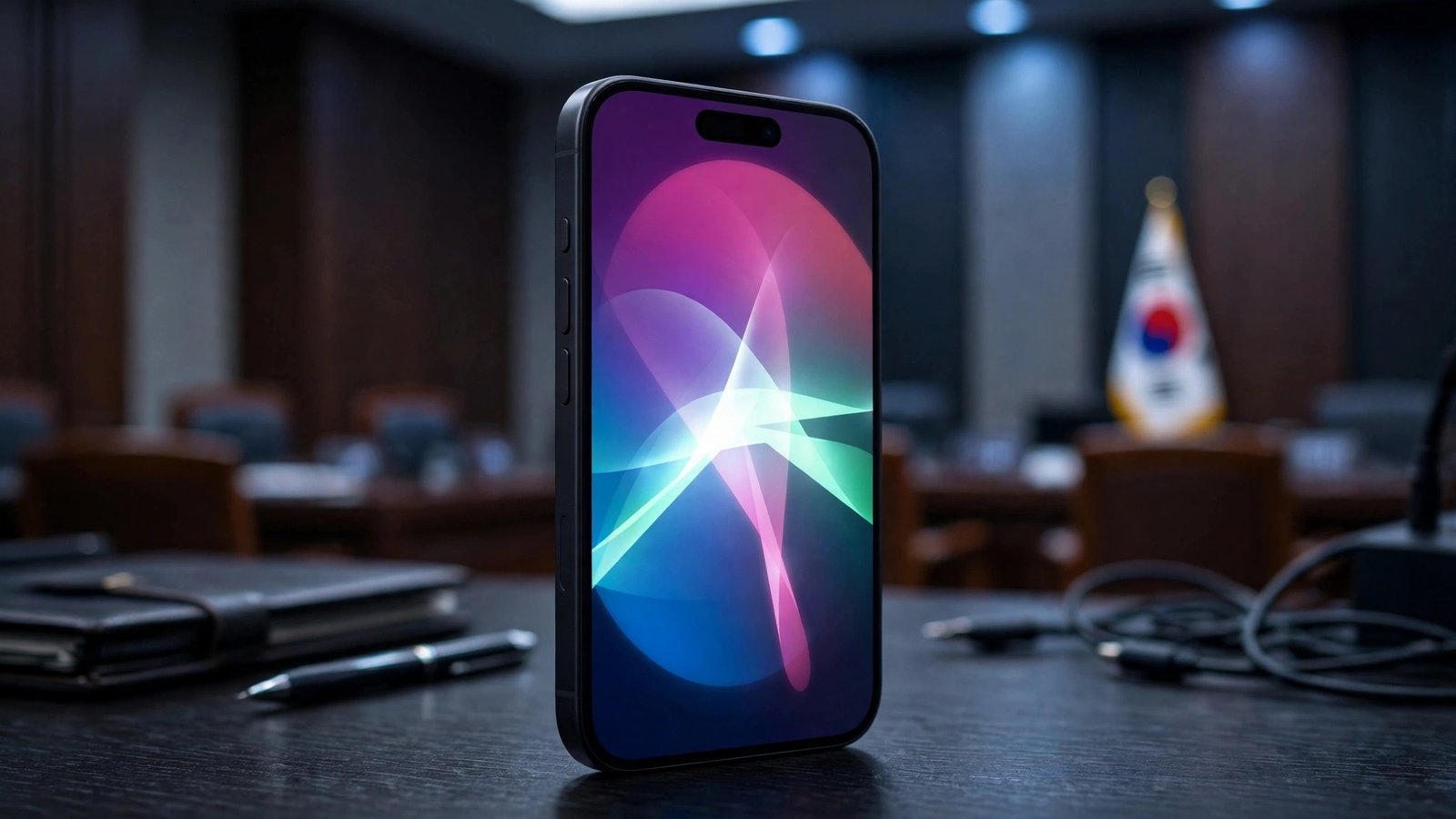
South Korea’s Fair Trade Commission has opened formal sanctions proceedings against Apple over the way the company advertised Apple Intelligence on the iPhone 16, saying several of the AI features shown in the phone’s launch marketing were not delivered as promised — in one case, nearly a year and a half late.
The regulator announced on November 26, 2026 that it has begun the deliberation process against Apple Inc. and Apple Korea. Investigators sent Apple their examination report on November 24, and the company now has six weeks to submit a written defence. Once that process is complete, the commission will convene its committee and decide whether Apple broke the law — and, if so, how large a fine to impose.
The case is the latest in a growing line of regulatory and legal challenges to the way Apple sold the iPhone 16 as an AI phone. In the United States, Apple already agreed to a $250 million settlement in May 2026 over a class-action lawsuit that made similar claims. Now South Korea’s antitrust watchdog has reached its own conclusions — and the potential penalty runs into the tens of billions of won.
What the regulator says Apple got wrong
The Fair Trade Commission’s case centres on the iPhone 16 launch advertising that ran in South Korea from September 2024 to March 2025. According to the commission, Apple advertised nine Apple Intelligence features on the iPhone 16 homepage — including a writing tool, Priority Messages, Image Cleanup and a Siri that could understand personal context — in a way that suggested they would all be available with the phone.
Its investigation concluded that four of those nine features were not provided as advertised. The features named are Genmoji, Image Playground, Siri’s ability to understand personal context, and Siri’s step-by-step guidance. (MacRumors’ account of the case also names Siri’s onscreen awareness among the features the regulator says were not delivered as advertised.)
The commission’s finding is not that the features never arrived at all. It is that Apple advertised them as coming on a schedule it did not keep — and, in the regulator’s words, concealed, minimised or omitted information that mattered to people’s buying decisions.
The clearest example is Siri’s personal-context feature. Apple advertised that it would be “first released in U.S. English within 2024 and supported in Korean in April 2025.” In reality, the feature only arrived in U.S. English in September 2026, and Korean support followed in October 2026 — about 18 months after the date Korean buyers were given.
The complaint that started the investigation was filed in March 2025, as the advertising campaign was ending. The commission has been investigating since then, and on November 26 it said its probe was complete and the case would now go to review.
The fine could reach 53.6 billion won
The commission classified Apple’s conduct as a major violation of Article 3 of the Display and Advertising Act, which covers deceptive display and advertising. It calculated the relevant sales — the iPhone 16 sales linked to the advertising — at approximately 3.3527 trillion won, or roughly $2.5 billion.
That figure drives the size of the possible fine. Under the current surcharge notice, major violations carry a surcharge of 1.5 to 1.8 percent of relevant sales. But because the advertising ended before the notice was revised in June 2026, the previous standard of 0.8 to 1.6 percent applies instead.
On that basis, the maximum surcharge Apple could face is 53.6 billion won — about $36 million — with the lower end of the range at 26.8 billion won, or about $20 million. The exact amount, if any, will be decided by the commission after Apple submits its defence.
One figure differs between reports and is worth noting separately: Yonhap News Agency reports that Apple may face a fine of up to 64 billion won (about $47.7 million), citing the same estimate of roughly 3.35 trillion won in relevant sales. That is Yonhap’s own number, not part of the 26.8–53.6 billion won range derived from the 0.8–1.6 percent standard, and the two should not be blended.
Apple’s response: we gave advance notice
Apple disputes the investigators’ conclusions. The company says it provided advance notice about feature availability, and it expects to make its case during the deliberation process.
In a statement carried by the Chosun Ilbo, Apple said: “Since Apple added Korean support to Apple Intelligence last year, users have been able to utilize dozens of powerful features integrated across the Apple platform.” It added: “We expect to sufficiently present our position during the KFTC’s deliberation process in the future.”
The commission, for its part, said that as soon as the procedures guaranteeing the company’s right of defence — including the submission of written opinions — are complete, it will convene the committee as soon as possible to make a final decision.
That leaves the case in an unusual position: the facts of what was advertised and when the features actually arrived are largely undisputed, but the two sides disagree on whether the advertising was deceptive. Apple’s argument, in essence, is that buyers were told enough about the phased rollout. The regulator’s argument is that the headline promise — nine AI features, available on the schedule shown — was what sold the phone, and the fine print did not undo it.
This is not the first time Apple Intelligence advertising has been challenged
The Korean case follows a pattern that has now played out in several major markets. In April 2025, Apple removed the “available now” marketing claim from its Apple Intelligence page after an inquiry by the National Advertising Division in the United States. The advertising watchdog found that the wording implied all listed features were available, and that a footnote explaining the phased rollout was not clear enough. Apple disagreed with the findings but complied with the recommendation.
A month later, in May 2026, Apple agreed to a $250 million settlement over a U.S. class-action lawsuit alleging it misled buyers about the availability of Apple Intelligence and Siri features when the iPhone 16 was released in September 2024.
The Korean proceedings are separate from both of those cases, and they carry a different kind of risk for Apple. A regulator’s finding of a major violation under the Display and Advertising Act would be a formal determination that the advertising was deceptive — not a settlement in which Apple admits nothing — and it would set a precedent that other regulators could point to.
It also matters because the iPhone 16 was sold, in large part, on Apple Intelligence. The AI features were the headline of the launch, the centrepiece of the marketing, and the reason many buyers chose the new phone over the previous generation. When the features that define a product arrive a year or more late — or, in the case of the Korean Siri features, a year and a half late — the gap between what was advertised and what was delivered becomes the story.
Who is affected
The most directly affected people are iPhone 16 buyers in South Korea who bought the phone between September 2024 and March 2025 on the strength of the Apple Intelligence advertising. For them, the case is about whether they were sold a phone whose headline features did not exist in the form or on the schedule they were promised.
But the case reaches further than one market. It is a signal to every company selling AI features that regulators are now treating AI advertising the way they have long treated other advertising: the claim has to match the product, and a footnote about a phased rollout may not be enough if the headline promise is what drives the sale.
Apple is also facing the same question from a different direction inside its own product line. Siri is being rebuilt around external AI models — Apple has confirmed a Gemini-powered Siri running on its Private Cloud Compute infrastructure — which suggests the company knows the current Siri needs a major upgrade. The Korean case is about the last generation of promises; the next generation is already being built.
What happens next
The timeline from here is set by the regulator’s procedure. Apple has six weeks from the examination report to submit its written defence. The commission will then convene its committee and deliberate, and it will decide both whether a violation occurred and what penalty, if any, to impose.
There is no fixed date for that decision yet. The commission has said only that it will move as soon as the defence procedures are complete. Until then, the case remains open — and Apple faces the prospect of a formal finding that its iPhone 16 advertising misled consumers, on top of the $250 million it has already paid to settle the same complaint in the United States.
For Apple, the stakes go beyond the money. A fine of 53.6 billion won is small against the company’s scale. A regulatory finding that it sold its flagship phone on AI features that did not exist on schedule is not.
Related articles
- Apple Confirms Gemini-Powered Siri With Private Cloud Compute
- Apple Is Reportedly Running macOS on iPads Internally
- Apple Sued in India Over NameDrop Patent
Frequently Asked Questions
Why is South Korea investigating Apple over iPhone 16 advertising?
South Korea’s Fair Trade Commission says Apple advertised nine Apple Intelligence features on the iPhone 16 in a way that suggested they would all be available on the schedule shown, but four of them — Genmoji, Image Playground, Siri’s personal-context understanding and Siri’s step-by-step guidance — were not delivered as advertised. The commission says Apple concealed or minimised information that mattered to buyers’ decisions, in violation of Article 3 of the Display and Advertising Act.
Which Apple Intelligence features were not delivered as advertised?
According to the Fair Trade Commission, four of the nine advertised features were not provided as advertised: Genmoji, Image Playground, Siri’s ability to understand personal context, and Siri’s step-by-step guidance. The best-known example is Siri’s personal-context feature, which was advertised for Korean availability in early April 2025 but arrived in English in September 2026 and in Korean in October 2026.
How much could Apple be fined in South Korea?
Using the previous surcharge standard of 0.8 to 1.6 percent of relevant sales — which applies because the advertising ended before a June 2026 revision — the maximum surcharge is 53.6 billion won, about $36 million, based on relevant sales of approximately 3.3527 trillion won. The lower end of the range is 26.8 billion won, about $20 million. Yonhap separately reports a possible fine of up to 64 billion won (about $47.7 million); that is Yonhap’s own figure, not part of the 26.8–53.6 billion won range.
What happens next in the case?
Apple has six weeks from the examination report, sent on November 24, 2026, to submit a written defence. The Fair Trade Commission will then convene its committee, deliberate, and decide whether Apple violated the Display and Advertising Act and what penalty, if any, to impose. No decision date has been announced.
Does Apple admit it misled buyers?
No. Apple disputes the investigators’ conclusions and says it provided advance notice about feature availability. It says Korean users have been able to use dozens of Apple Intelligence features since Korean support was added, and it expects to present its position fully during the deliberation process.
Has Apple faced similar cases over Apple Intelligence advertising before?
Yes. In April 2025, Apple removed the “available now” claim from its Apple Intelligence page after a U.S. National Advertising Division inquiry found the wording misleading. In May 2026, Apple agreed to a $250 million settlement over a U.S. class-action lawsuit alleging it misled buyers about Apple Intelligence and Siri availability on the iPhone 16.
Sources: MacRumors, Yonhap News Agency, Chosun Ilbo.
