



The global smartphone market is heading for its worst year on record. According to Counterpoint Research’s latest Smartphone Market Outlook Tracker, global smartphone shipments are forecast to fall 13.9 percent year-on-year in 2026, dropping to around 1.08 billion units — the steepest annual contraction the industry has ever recorded, and the lowest annual volume since 2013.
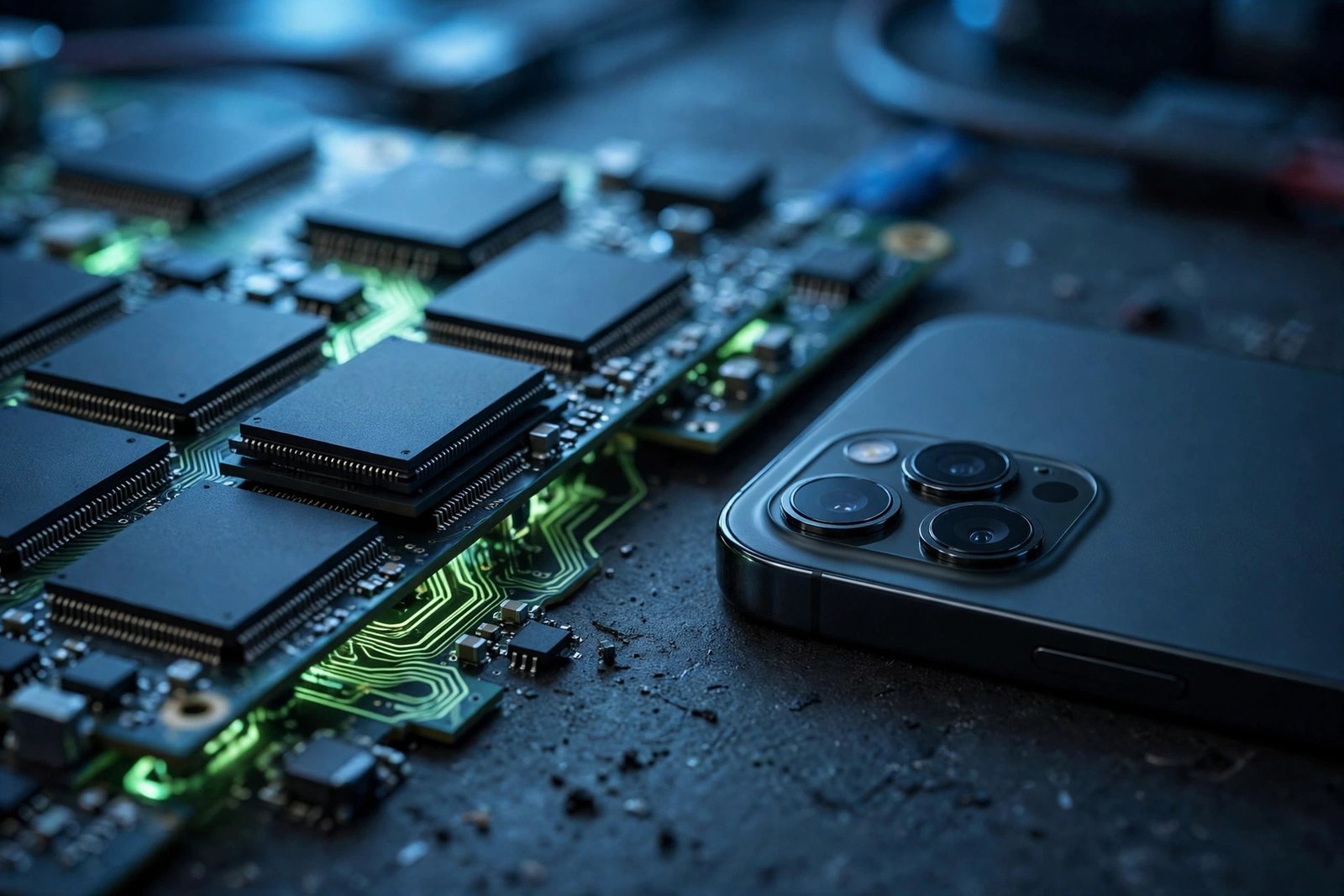
The downturn is not a demand problem. It is a supply problem, and its cause sits far from the phone in your pocket: the artificial intelligence boom is consuming the world’s memory chips, leaving smartphone makers short of the DRAM and NAND they need to build phones at the prices people are used to paying.
A record fall, and another one coming
Counterpoint’s forecast does not see a quick bounce. After the 13.9 percent drop in 2026, global shipments are expected to fall another 6 percent in 2027. Growth is only forecast to return in 2028, with shipments rising 6 percent as memory availability improves and component prices stabilise.
Even that recovery will be shallow. Counterpoint estimates that global shipments in 2028 will still sit around 14 percent below the 2025 figure, with the market potentially taking until after 2030 to recover that ground, as longer replacement cycles and refurbished phones keep weighing on demand for new devices.
The scale of the decline is already visible in the sales data. Global smartphone sales fell 16 percent year-on-year in the third quarter of 2026, an 11 percent drop from the previous quarter, according to Counterpoint’s Global Smartphone Sales Share by Operating System report, which points directly at the RAM supply crisis hitting the entry-level segment hardest and pushing prices up in higher tiers too.
Why memory chips are suddenly so expensive
The shortage comes down to priorities at the world’s memory suppliers. DRAM and LPDDR — the memory that powers every smartphone — is in huge demand from AI data centres and server applications, and suppliers are prioritising those customers. That leaves less supply for phone makers, and what is available costs far more.
Memory supply is expected to remain tight through 2027, with further increases in LPDDR prices adding to manufacturers’ costs. The pressure has already forced brands to change how they sell phones. Several manufacturers have raised retail prices, reduced memory configurations on some models, or discontinued models that are no longer profitable, and some major ODM and EMS suppliers have cut production after Android manufacturers reduced their orders.
The effect on prices is already measurable. In India, smartphone prices rose 16 percent on average in the first half of 2026, according to a separate Counterpoint-linked report — a sign of how quickly the component crunch is reaching consumers.
Budget phones are taking the biggest hit
Phones priced below $200 are likely to be particularly affected, Counterpoint says. These devices run on the thinnest margins in the industry, which leaves their makers with almost no room to absorb higher component prices without raising prices or cutting volume.
That squeeze is reshaping the market’s balance. Android accounted for 74 percent of global smartphone sales in the third quarter of 2026, down five points from 79 percent in the same period last year — the lowest share Android has ever posted in a third quarter — because Android phones span every price segment and were more exposed to the slowdown than Apple’s premium-only lineup.
iOS, by contrast, registered a record 21 percent share in the quarter. iPhone sales grew 2 percent year-on-year in Q3 2026, driven by stronger demand for the iPhone 18 Pro series, even though prices rose across the iPhone portfolio. Counterpoint data cited by MacRumors also shows iPhone 18 Pro sales rising 29 percent in China, helping offset weaker sales in the US and Japan.
Higher prices could push more consumers to hold on to their existing phones for longer, or to consider refurbished models. Demand for premium smartphones has remained relatively stable, but it has not been enough to offset weaker sales in the mass-market segment.
Apple and Samsung hold up — Chinese rivals feel the squeeze
Apple is forecast to remain the world’s largest smartphone vendor by shipments in 2026 and 2027. Its shipments are expected to decline just 1 percent in 2026 and 4 percent in 2027 — far slower than the market as a whole. Counterpoint credits its premium positioning, financing options, customer loyalty and priority access to suppliers for that resilience.
Samsung’s shipments are projected to fall 1 percent in 2026 and 3 percent in 2027. Its broad product portfolio, component capabilities and established relationships with retailers and operators should help it manage the supply constraints, though stronger demand for premium phones and foldables may not be enough to offset weaker sales of its Galaxy A series. Both Apple and Samsung have also been locking in long-term memory supply — see our earlier report on Apple and Samsung’s long-term DRAM memory deal — a move that now looks prescient.
Chinese smartphone makers face greater pressure, particularly those with a strong presence in affordable segments and emerging markets. Counterpoint suggests some manufacturers may have to reduce their product portfolios or withdraw from less profitable markets altogether.
One exception stands out. Huawei is expected to buck the trend in 2026, with shipments forecast to grow 12 percent, supported by its position in China, access to domestic components and progress in HiSilicon chip development. The company already grew 12 percent year-on-year in the third quarter, outperforming a Chinese market that declined 10 percent, and its HarmonyOS accounted for 22 percent of smartphone sales in mainland China in Q3 — though higher prices and supply constraints are expected to weigh on its shipments in 2027.
The US picture: Apple takes 57% as rivals slip
The third-quarter data from the United States shows the same story in miniature. US smartphone shipments fell 9 percent year-on-year in Q3 2026, yet Apple grew its share of the market from 50 percent to 57 percent, according to Counterpoint’s US Market Monitor data. Apple was the only major manufacturer to avoid a shipment decline in the quarter.
Samsung held its ground at 25 percent share, up one point year-on-year, thanks to its flagship Galaxy S and Z series devices and the low-end Galaxy A series. Motorola took the biggest hit: its share fell four points to 8 percent as memory costs squeezed its large low-end lineup, essentially reversing the share growth it posted in the second quarter. Google’s Pixel 11 launch was not strong enough to prevent a slight decline in share.
Sales at the Big Three US carriers already declined 4 percent year-on-year in Q3, and Counterpoint expects weak fourth-quarter sales as consumers increasingly time purchases around the best deals.
What it means for buyers
For anyone planning to buy a phone in the next year, the message from the data is clear: expect higher prices, fewer cheap options, and less choice at the low end. Budget phones under $200 are the most vulnerable — some models may simply disappear from shelves, while others will arrive with less memory or a higher price tag than their predecessors. New flagships are still arriving, from the Realme 17 Ultra leak pointing to a 200MP camera and 9,000mAh battery to the Vivo X500 India launch, but the market around them is shrinking.
What happens next
Counterpoint does not expect the memory crunch to ease soon. Supply is forecast to stay tight through 2027, with LPDDR prices climbing further before availability improves. The rebound, when it comes in 2028, will be led by Chinese brands — Vivo, Honor, Oppo Group and Xiaomi are expected to record some of the strongest shipment growth — while Apple and Samsung recover at a more modest pace.
For now, the smartphone industry is in its deepest downturn ever — and the chips that power the AI boom are the reason your next phone may cost more and offer less.
Sources: Gadgets360, MacRumors
FAQ
How much will global smartphone shipments fall in 2026?
Global smartphone shipments are forecast to fall 13.9 percent year-on-year in 2026, to around 1.08 billion units, according to Counterpoint Research — the steepest annual decline on record.
Why are smartphone shipments falling in 2026?
A shortage of mobile memory (DRAM and LPDDR) is the main cause. Memory suppliers are prioritising demand from AI and server applications, which drives up procurement costs for phone makers and makes affordable phones harder to build profitably.
Will smartphone prices go up because of the memory shortage?
Yes, prices are already rising. In India, smartphone prices rose 16 percent on average in the first half of 2026, and brands are raising retail prices, cutting memory configurations and dropping unprofitable models, especially phones under $200.
Which phone brands are affected most by the memory shortage?
Chinese brands with large budget lineups are hit hardest, while Apple and Samsung are holding up better — Apple is forecast to remain the world’s largest vendor, with shipments down just 1 percent in 2026. Huawei is the exception, with shipments forecast to grow 12 percent in 2026.
When will the smartphone market recover?
Counterpoint forecasts another 6 percent decline in 2027, with growth returning in 2028 at around 6 percent. Even then, shipments in 2028 are expected to remain about 14 percent below 2025 levels, and the market may not fully recover until after 2030.
Is it a good time to buy a new smartphone?
If you need a phone now, premium models offer the best value as supply holds up better at the high end. If you are shopping on a budget, expect higher prices and fewer choices — waiting for major sale events or considering a refurbished phone could save money while the shortage lasts.
