


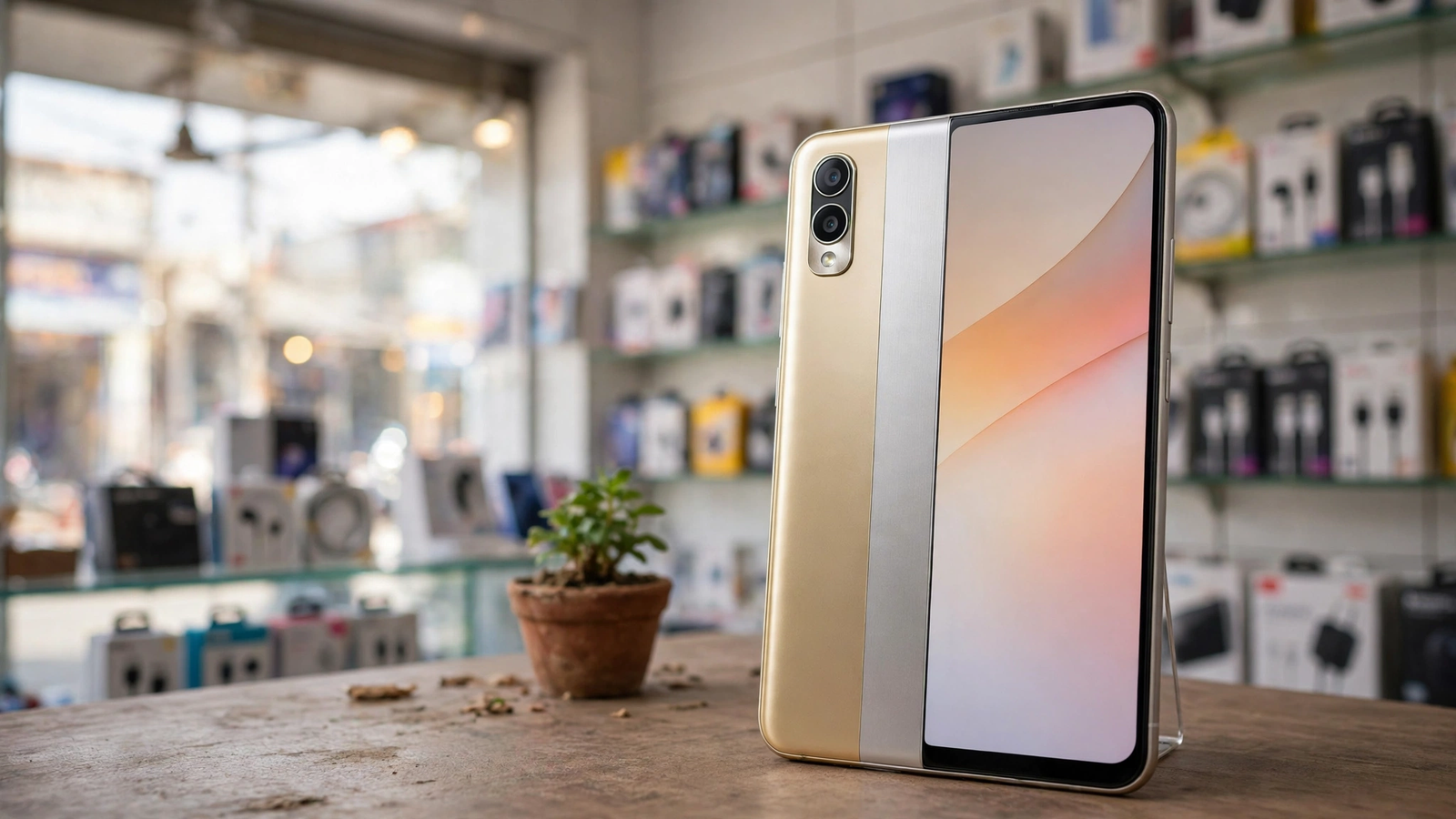
HMD has launched a new budget smartphone in India, and it comes with a twist that is hard to ignore: the HMD Rise runs the latest Android 16 Go Edition on a processor that was first introduced eight years ago.
The phone went official in India on November 26, barely a day after its full specifications leaked online. It is priced at Rs 9,999 for its single 4GB RAM and 64GB storage variant, and it will go on sale through Flipkart from December 2. That price is described as a Day 1 special launch price, which means the regular price after the opening sale has not been confirmed yet.
The Rise is aimed squarely at first-time smartphone buyers and people upgrading from a basic feature phone. HMD is not selling it on raw power. Instead, the pitch is a big battery, the newest lightweight version of Android, a charger in the box, and an AI assistant that speaks 22 Indian languages. The question is whether buyers will look past the chip inside it.
An eight-year-old chip in a brand-new phone
The most talked-about detail of the HMD Rise is its processor. The phone is powered by the Unisoc SC9863A, an octa-core chip built on a 28nm process with eight ARM Cortex-A55 cores running at up to 1.6GHz and a PowerVR GE8322 GPU. That chip was originally introduced on November 27, 2018 — almost exactly eight years before this phone’s launch.
That makes the Rise an unusual launch in 2026. Most new budget phones today ship with far newer silicon, even at this price. The SC9863A was designed for entry-level devices of its own era, and by modern standards it is a modest performer: it will handle calls, WhatsApp, YouTube and light browsing, but heavy multitasking and demanding games are not what it is built for.
HMD’s bet is that the target buyer will not care. The Rise is a 4G-only phone with 4GB of RAM and 64GB of storage, expandable up to 128GB with a microSD card. For someone buying their first smartphone, or replacing an old one that has stopped receiving updates, the combination of a fresh operating system and a low price may matter more than benchmark numbers.
Still, buyers should go in with their eyes open. A chip this old, paired with 4GB of RAM, means the phone will feel slow next to almost any other new phone on sale today, and it will age faster. The value here is in the price and the software, not the performance.
Android 16 Go, and two years of security updates
The software is the strongest part of the package. The HMD Rise runs Android 16 Go Edition out of the box, Google’s lightweight version of Android designed for entry-level devices with limited RAM and storage. Go Edition uses lighter versions of Google’s apps and is tuned to run smoothly on modest hardware, which is exactly the kind of phone this is.
HMD has also promised two years of quarterly security updates for the Rise. That is a meaningful commitment at this price, where many rivals ship with older Android versions and vague update promises. It does not include major Android version upgrades, so buyers should not expect Android 17 on this phone, but the regular security patches keep it safer for longer.
Indus AI speaks 22 Indian languages
The phone’s headline feature is not hardware at all. The HMD Rise comes with Indus, an AI assistant built by Bengaluru-based Sarvam AI, which supports 22 Indian languages. HMD is positioning language support as the phone’s real selling point: a first-time smartphone user who is more comfortable in Hindi, Tamil, Bengali or another Indian language can talk to the phone in their own language instead of struggling with English menus.
Indus runs on servers hosted in India, according to HMD. How deeply the language support runs across everyday apps is not yet clear from the launch details, and that is something to watch in real-world reviews. But as a differentiator in the sub-Rs 10,000 segment, it is a genuinely different idea from the usual race over megapixels and milliamp-hours.
The phone also offers optional integration with the Government of India’s Sanchar Saathi platform, which helps users check and block lost or stolen devices.
Display, cameras and battery
The HMD Rise has a 6.517-inch IPS LCD display with a waterdrop notch. It is an HD+ panel (576 x 1280 pixels) with a 60Hz refresh rate and a rated peak brightness of 460 nits. That is basic by 2026 standards — no high refresh rate, no OLED — but it is in line with the price, and the large screen size is the main attraction for video and reading.
For photography, there is a dual rear camera setup headlined by a 13-megapixel main camera with autofocus and an LED flash, plus a small auxiliary lens. Video recording tops out at 720p at 30 frames per second. The front camera is a 5-megapixel sensor in the waterdrop notch, for selfies and video calls. Nobody should buy this phone for its cameras; they are there for everyday shots and video calls, and that is all HMD claims for them.
The battery is a 5,000mAh cell with 10W wired charging over USB-C, and HMD includes the charger in the box — something many far more expensive phones no longer do. With a low-power chip, an HD+ LCD and Android Go, the battery should comfortably last a full day and likely stretch into a second day with light use, though HMD has not published official endurance figures.
Other details include a 3.5mm headphone jack, a USB Type-C port, a plastic body with a dual-tone design, and an IP54 rating for dust and splash resistance. The phone measures 166.4 x 76.9 x 9mm and weighs 184.5g. It comes in three dual-tone finishes: Emerald Gold, Indigo Silver and Midnight Gold.
Price, availability and who it is for
The HMD Rise costs Rs 9,999 for the single 4GB RAM and 64GB storage variant, and sales begin on December 2 through Flipkart. HMD has described that as a Day 1 price, so the price after the opening sale may be different — buyers who want the lowest price should aim for the first sale day.
The phone is launching in India first, and there is no word yet on availability in other markets such as Pakistan or Bangladesh. Any listings outside India for now should be treated as unofficial imports.
The Rise makes the most sense for a narrow group of buyers: first-time smartphone owners, people buying a second phone for basic use, or anyone who needs a simple, affordable device with a big battery and an assistant that speaks their language. It is not a phone for gamers, heavy multitaskers, or anyone who wants their phone to stay fast for years — the eight-year-old chip is a real limitation, and buyers should weigh it honestly against the low price.
HMD has made an interesting bet: that in the budget segment, language, software and price matter more than the spec sheet. The December 2 sale will show whether Indian buyers agree.
HMD Rise — key specifications
- Display: 6.517-inch HD+ IPS LCD, 576 x 1280, 60Hz, waterdrop notch, 460 nits peak brightness
- Processor: Unisoc SC9863A octa-core (8x Cortex-A55 up to 1.6GHz), PowerVR GE8322 GPU
- RAM and storage: 4GB RAM, 64GB storage, microSD expansion up to 128GB
- Rear camera: 13MP main camera with autofocus + auxiliary lens, LED flash, 720p30 video
- Front camera: 5MP
- Battery: 5,000mAh, 10W wired charging, charger included in the box
- Software: Android 16 Go Edition, 2 years of quarterly security updates
- AI: Indus by Sarvam AI, supports 22 Indian languages
- Connectivity: 4G LTE, USB Type-C, 3.5mm headphone jack
- Build: Plastic body, dual-tone design, IP54 rating, 184.5g
- Colours: Emerald Gold, Indigo Silver, Midnight Gold
- Price: Rs 9,999 (Day 1 price, single 4GB/64GB variant)
- Availability: Flipkart, sales from December 2, 2026 (India)
Frequently asked questions
Q: What is the HMD Rise price in India?
A: The HMD Rise is priced at Rs 9,999 in India for its single 4GB RAM and 64GB storage variant. HMD describes this as a Day 1 special launch price for the first sale on December 2, 2026, so the regular price after that may be different.
Q: When does the HMD Rise go on sale?
A: The HMD Rise goes on sale in India on December 2, 2026, exclusively through Flipkart. It launched on November 26, 2026, and only the 4GB RAM and 64GB storage model is available.
Q: Which processor does the HMD Rise use?
A: The HMD Rise uses the Unisoc SC9863A octa-core processor, with eight ARM Cortex-A55 cores running at up to 1.6GHz. The chip was first introduced in November 2018, which makes it around eight years old — the phone’s most unusual specification.
Q: Does the HMD Rise support 5G?
A: No. The HMD Rise is a 4G-only smartphone. It supports 4G LTE networks, along with Wi-Fi, Bluetooth, USB Type-C and a 3.5mm headphone jack. Buyers who need 5G should look at other phones in this price range.
Q: What Android version does the HMD Rise run?
A: The HMD Rise runs Android 16 Go Edition out of the box, Google’s lightweight version of Android for entry-level phones. HMD promises two years of quarterly security updates, but has not promised a major Android version upgrade.
Q: What is Indus AI on the HMD Rise?
A: Indus is an AI assistant built by Bengaluru-based Sarvam AI that comes with the HMD Rise. It supports 22 Indian languages and runs on servers hosted in India, letting users interact with the phone in their own language instead of English.
Sources: GSMArena (https://www.gsmarena.com/hmd_rise_goes_official_with_a_651inch_display_and_a_5000mah_battery-news-75657.php) and Gadgets 360 (https://www.gadgets360.com/mobiles/news/hmd-rise-price-in-india-launch-specifications-features-12380218?from=app)
Related reading
Honor 700 Series Launches in China With a Rear Display, 200MP Camera and 9,000mAh Battery
Motorola Android 17 Update: Full List of 29 Eligible Phones
OnePlus Nord N7 Pro Leaks With a 9,000mAh Battery, Dimensity 7100 and a Confusing Name
