


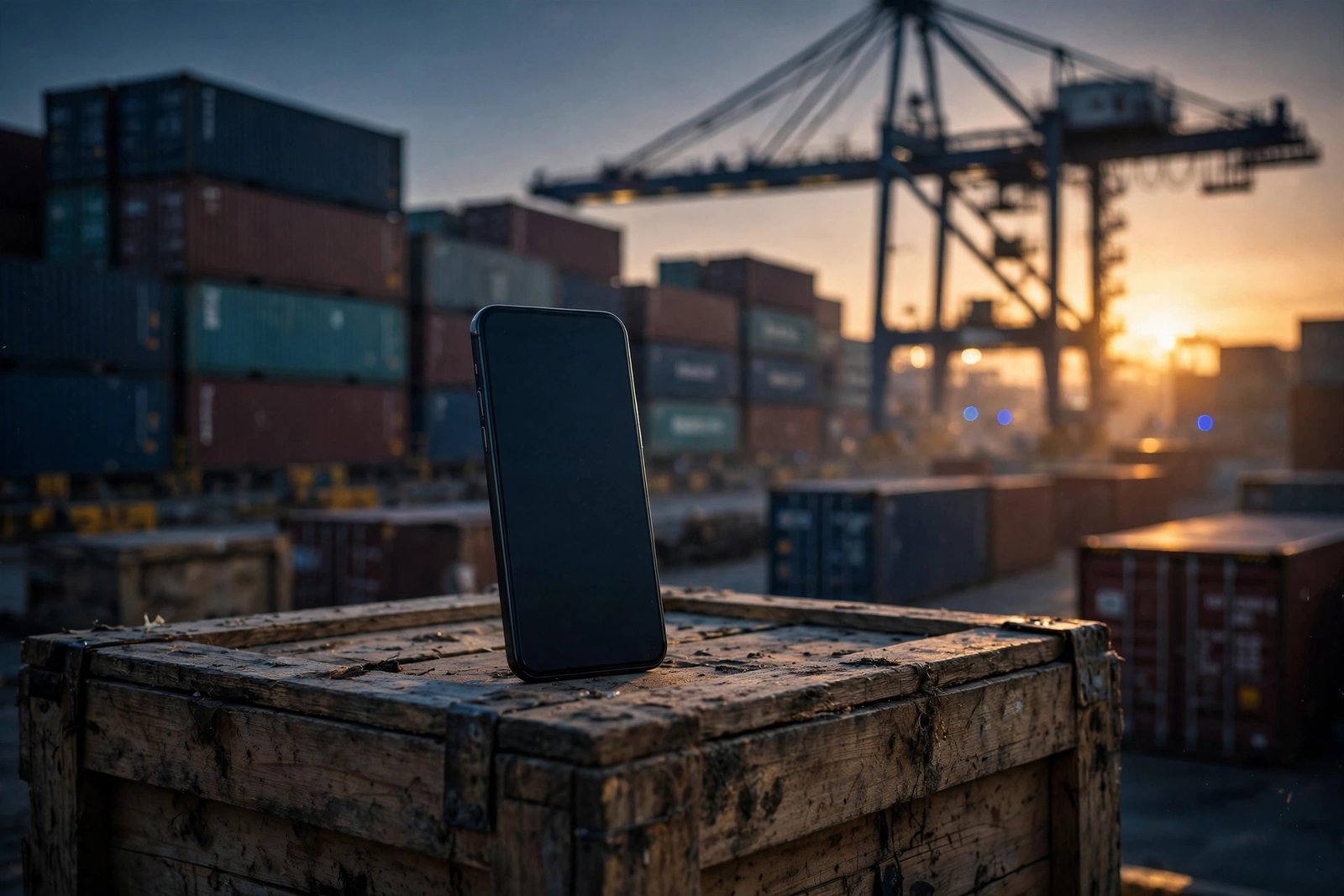
Your next iPhone could cost more — or it could cost exactly the same as it does today. That is the strange position the US government’s latest tariff proposal puts Apple buyers in. On 25 November 2026, the Office of the US Trade Representative (USTR) announced determinations in 14 investigations into what it calls structural excess capacity in manufacturing, and proposed new import tariffs on goods from 14 trading partners. China, where a large share of Apple’s devices are still made, faces the heaviest treatment. But the fine print of the proposal is kinder to phones and laptops than the headline numbers suggest, and where your iPhone was built may matter more than the brand on the box.
Here is the full picture: what the US announced, which countries are on the list, the detail that decides whether iPhone prices actually move, and what buyers should do now.
What the US announced
On 25 November 2026, the USTR announced the results of 14 investigations carried out under Section 301 of the Trade Act of 1974. That law lets the US government act against foreign trade practices it considers unreasonable and a burden on American commerce. The investigations concluded that manufacturing policies in the 14 economies create, sustain or contribute to structural excess capacity — in plain terms, that these countries make so much factory output that cheap imports flood the US market and undercut American companies.
A senior US official told CNBC that the aim is to push back against that flood of cheap factory goods. The USTR has published economy-specific reports to support each determination, and for each country it has proposed extra tariffs, almost all written as maximums — “up to” a given rate — with product exemptions listed in annexes to the Federal Register notices.
This is not a rerun of the earlier tariff rounds. Section 301 is a different legal mechanism from the one the Trump administration used before, which the Supreme Court struck down in February 2026. The administration is now using the older 1974 law, which gives the process a different legal footing and a formal public comment and hearing schedule before anything becomes final.
Which countries are on the list
The 14 trading partners named in the determinations are Bangladesh, Cambodia, China, the European Union, India, Indonesia, Japan, Korea, Malaysia, Singapore, Switzerland, Taiwan, Thailand and Vietnam. Two more economies, Mexico and Norway, were also investigated, but the USTR has made no finding on them yet.
The proposed rates differ sharply by country. For most Chinese goods, the proposal is an additional tariff of up to 20 percent, on top of the existing 25 percent duty that has been in place since 2018. Vietnam faces up to 35 percent, India up to 25 percent, Taiwan, Korea and Japan up to 15 percent, the European Union 15 percent, Singapore up to 20 percent, and Bangladesh, Cambodia, Indonesia, Malaysia and Thailand up to 18 percent.
For most partners, the new duties would not be stacked on top of existing duties. China is the one big exception: its new rate would sit on top of the 25 percent duty already in place, which is why China faces the heaviest headline treatment of any country on the list.
The detail that matters for phones and laptops
The headline rates look alarming, but two product codes carry most of the weight for gadget buyers: smartphones and portable computers. And here the proposal is far gentler than it first appears.
According to readings of the Federal Register annexes by AndroidPure and AppleScoop, phones and laptops made in China sit in Annex A of the China notice, where the proposed extra duty is capped at 10 percent — not the 20 percent that applies to most other Chinese goods. In the India and Vietnam notices, the same two product codes are listed as not covered at all, which means phones and laptops built in those countries would face no extra duty under this proposal. AndroidPure reports the same exemption in the notices for the European Union, Japan, Korea and Taiwan.
That distinction changes the story completely for buyers. A $1,000 laptop built in China would rise by about $100 if the full 10 percent duty were passed straight to shoppers — a worst case, since brands often absorb part of a tariff, shift production, or spread the cost across their range. A phone or laptop built in India or Vietnam, on the other hand, would see no change at all from this proposal.
What it means for Apple and iPhone prices
Apple is the company most exposed to this proposal, because it builds so many of its devices in the countries on the list. Over the past few years Apple has worked hard to move factory work out of China and into India and Vietnam. Now all of those key hubs appear on the target list — but the annex exemptions mean the shift still protects it. Devices built in India and Vietnam, where Apple now makes a large share of the iPhones sold in the US, would be exempt from the new duties.
The exposure that remains is for devices still made in China and shipped to the United States. Those would face the extra duty of up to 10 percent on phones and laptops, and Apple would have to choose what to do with that cost: absorb it and take a hit to its profit margins, or pass it on to customers through higher prices. Apple has not announced any price change so far.
The timing is rough for the company. Its supply chain is already dealing with an ongoing memory shortage that has pushed component prices up across the industry, and some devices have already become more expensive this year as a result. Adding import duties on top of higher part costs leaves Apple with the same two choices — eat the cost or raise prices — at a moment when its margins are already under pressure.
Why Apple is better placed than it looks
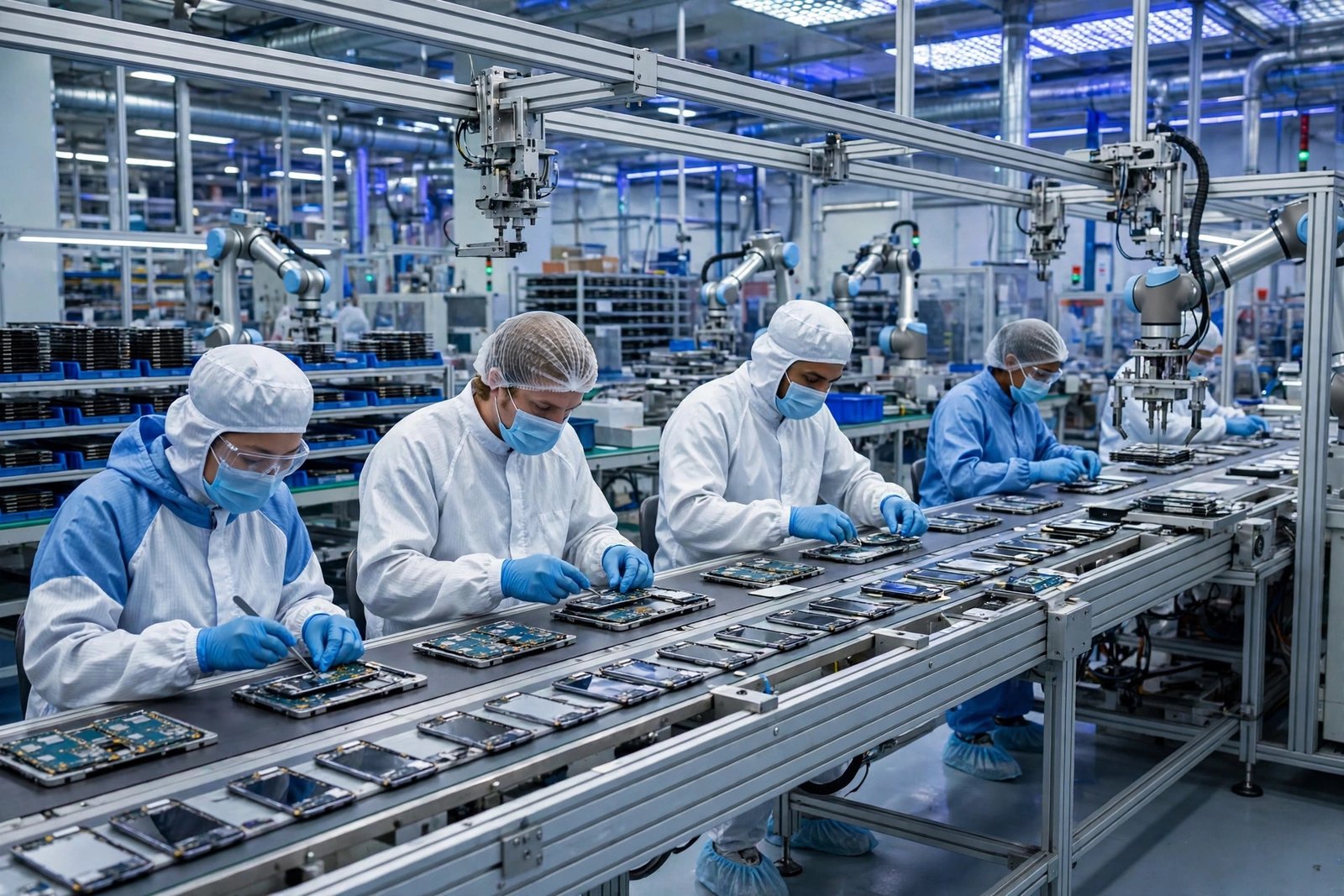
Despite the headlines, Apple may be one of the better-positioned companies under this draft. The reason is the production shift it has already made. Apple said in 2025 that it expected most iPhones sold in the US to come from India, and most Macs and iPads from Vietnam. Both of those countries are spared for phones and laptops under the proposal, which means the bulk of Apple’s US-bound devices would not face the new duty at all.
Brands with large Indian or Vietnamese assembly look best positioned under this draft in general, since their US-bound phones and laptops would not face the new duty. Brands that still rely heavily on Chinese factories for the US market carry the most exposure, though even for them the cap on these two product types is 10 percent, not 20 percent.
There is a limit to that comfort. Apple still makes a significant share of its devices in China, and its most advanced models and components still depend on Chinese supply chains. The diversification helps, but it does not remove the exposure to China entirely. And the proposal is only a draft: the final rates will depend on negotiations with each country, and the White House has listed both a proposed rate and a deal rate for each economy, so the numbers could move in either direction before anything is final.
When could prices actually change?
Nothing changes today, and nothing can change before the new year. The USTR says written comments and requests to testify are due by 5 January 2027, and public hearings start on 25 January 2027. Only after that process can any final action be set, so the phone or laptop you buy during this week’s sales is priced under today’s rules.
That timeline is the most useful fact in the whole story for shoppers. The proposal is months away from being final, and the final rates could be lower than the proposed maximums if negotiations go well — or the exemptions for phones and laptops could be widened or narrowed. Until the hearings conclude, every price impact is a possibility, not a fact.
The wider context matters too. The memory shortage has already pushed some device prices up this year, and a tariff on top of that would land hardest on budget models, where margins are thin. For buyers, that means the cheapest phones and laptops are the ones most likely to see price movement if the duties go ahead, while premium models have more room for the manufacturer to absorb the cost.
What should you do now?
If you are buying in the US this season, there is no tariff reason to panic-buy. Holiday prices are not affected by a proposal that cannot take effect before late January at the earliest. Buy the device you need, when you need it, at the price on the shelf today.
If you are planning a laptop or phone refresh in 2027, check the “country of origin” line on the spec sheet or the box. China-built models are the ones exposed to a possible 10 percent bump, while India- and Vietnam-built models are spared under the current draft. Pull a purchase forward only if you were already close to buying — the draft is narrower for phones and laptops than it first looks, and it is still months from being final.
Small businesses buying in bulk should ask their reseller where their standard models are assembled and whether the supplier plans to switch production. Locking in a written quote now for a first-quarter order costs little and removes the uncertainty.
Buyers outside the US are not charged these duties directly, since they apply only to goods entering the United States. Global pricing decisions can ripple out over time, but a shopper in Europe, the UAE or Asia will not see a tariff line on their receipt because of this proposal.
The bottom line is that this is a big headline with a narrow bite for phones and laptops — so far. The proposal is real, the countries are named, and the process is under way, but the exemptions, the comment period and Apple’s own production shift all soften the impact. The January hearings are the next date that matters, and until then, the price on the shelf is the price that counts.
Frequently asked questions
Will iPhone prices go up because of the new tariffs?
Not necessarily, and not yet. The tariffs are only proposed, not final, and nothing can take effect before late January 2027 at the earliest. Even if they go ahead, iPhones built in India are exempt under the draft, and Apple said in 2025 that it expected most US iPhones to come from India. Only China-built iPhones would face an extra duty of up to 10 percent, and Apple could absorb some or all of that cost instead of raising prices. Apple has not announced any price change.
Which iPhones are affected by the Section 301 tariffs?
Under the current draft, only iPhones built in China would be affected, facing a proposed extra duty of up to 10 percent. iPhones built in India are not covered by the new duties, and the same exemption applies to phones and laptops built in Vietnam. Apple has shifted much of its US-bound iPhone production to India, which limits how many devices the proposal actually touches.
When will the new tariffs take effect?
Not before late January 2027 at the earliest. Written comments and requests to testify are due by 5 January 2027, and public hearings start on 25 January 2027. Only after that process can the USTR set any final action, and the final rates could differ from the proposed maximums.
What is Section 301?
Section 301 of the Trade Act of 1974 is a US law that lets the government act against foreign trade practices it considers unreasonable and a burden on American commerce. The USTR investigated 14 trading partners under this law and concluded their manufacturing policies create structural excess capacity that hurts the US economy. It is a different legal route from the earlier tariffs the Supreme Court struck down in February 2026.
Are the tariffs final?
No. The USTR has announced determinations and proposed extra tariffs, but these are proposals. They go through a public comment period and hearings in January 2027 before any final action, and the rates could change during negotiations with each country. The White House has listed both a proposed rate and a deal rate for each economy.
Do the tariffs affect buyers outside the US?
Not directly. The duties apply only to goods entering the United States, so a buyer in Europe, the UAE or Asia is not charged them. Global pricing decisions can ripple out over time, but there is no tariff charge on a phone or laptop bought outside the US because of this proposal.
Sources: GSMArena, AppleInsider, Technogater
Read more: iPhone 18 production delayed to January 2027 | Galaxy S25 faces a US import ban after ITC ruling | US smartphone shipments fall to a record low as the memory shortage bites
