


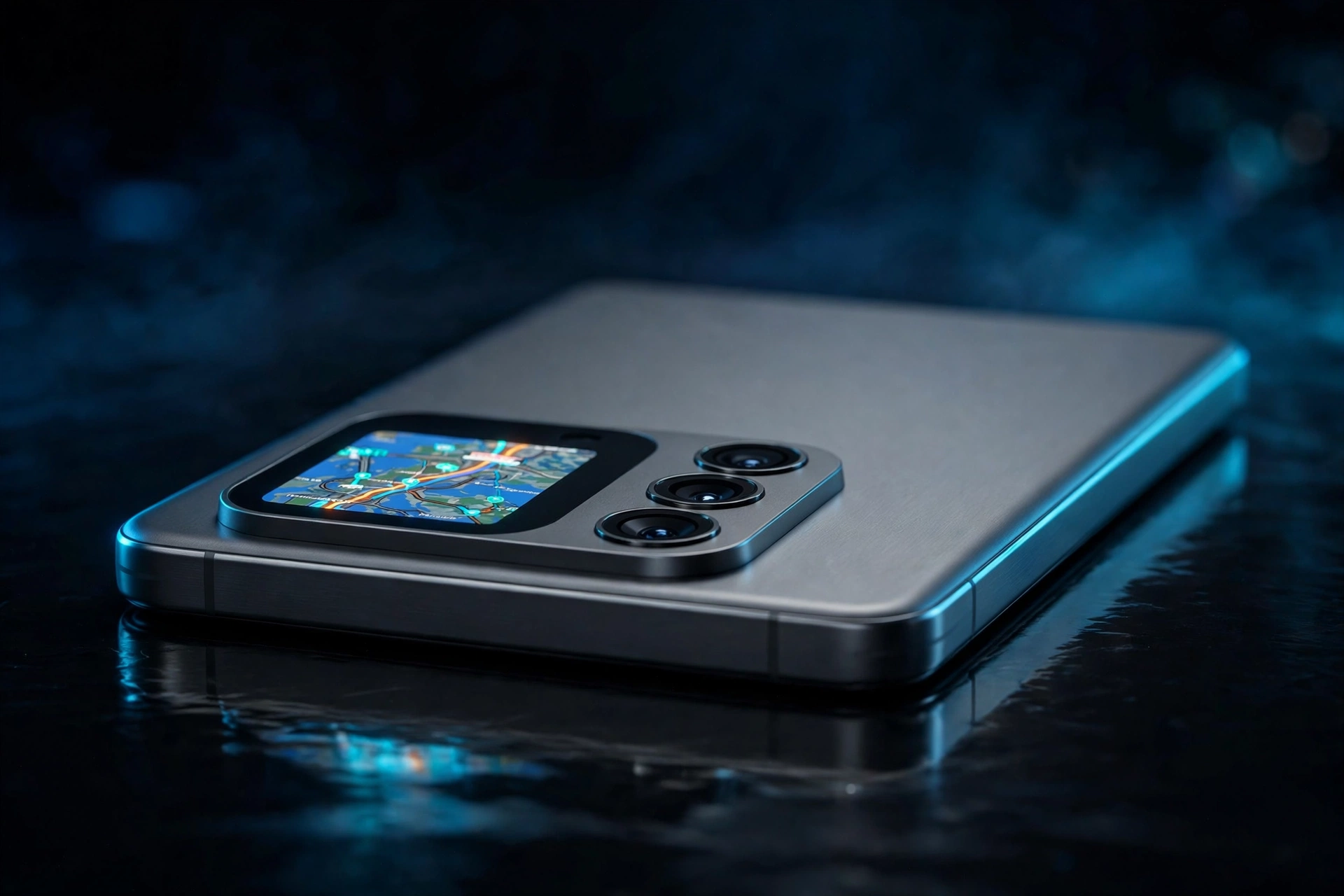
Xiaomi’s most talked-about phone feature is about to leave China for the first time, and the company has spent the final days before launch proving it is more than a gimmick. The Xiaomi 18 Pro and 18 Pro Max carry a small second screen built into the camera island on the back of the phone, and Xiaomi has now confirmed that the rear display runs real apps: Google Maps, Spotify and YouTube Music, plus a generative AI tool that lets owners create their own mini-apps for it.
The confirmation came on November 12 and 13, 2026, four days before the phones’ global debut in Paris on November 17. Xu Fei, Xiaomi Group’s vice president and chief marketing officer, showed the apps running on the rear screen in a series of question-and-answer videos posted on X. GSMArena reported the news on November 13, and 9to5Google followed the same day.
It matters because the rear display was the one feature Xiaomi kept to itself last year. The 17 Pro and 17 Pro Max had a similar second screen, but Xiaomi never sold those phones outside China, so most of the world only ever saw the feature in videos and reviews. The 18 Pro series is the first time the rear display goes global, and Xiaomi is treating it as the headline reason to buy the phone, putting it ahead of the cameras and the chip in its launch teasers.
Summary
- The news: Xiaomi confirmed on November 12–13, 2026 that Google Maps, Spotify and YouTube Music run on the Xiaomi 18 Pro rear display, ahead of the global launch in Paris on November 17.
- Google Maps: Shows navigation progress and the next turn on the rear screen, so you can check directions without flipping the phone over.
- Spotify and YouTube Music: Show album art, the song name, and play, pause and skip controls on the small display.
- GenAI apps: A built-in “Back Display GenAI Apps” tool creates custom mini-apps for the rear screen from a text description — Xiaomi demonstrated a water reminder, an egg timer and recipe recommendations.
- The hardware: 2.7-inch rear display on the 18 Pro and 2.9-inch on the Pro Max, both 120Hz, up to 4,000 nits, alongside dual 200MP Leica cameras and Snapdragon 8 Elite Gen 6 family chips.
- The catch: Global prices, the sale date and the global battery sizes are still unannounced — and reports say the global models will have smaller batteries than the Chinese versions.
What the Rear Display Can Actually Do
Google Maps is the most practical of the three apps Xiaomi named. On the rear display it shows your navigation progress and your next turn, so you can glance at directions without unlocking the main screen or flipping the phone around. Xiaomi’s shared images show a map with a route and a turn indicator on the rear panel, and both GSMArena and 9to5Google describe the same behaviour: a progress indicator plus the upcoming direction.
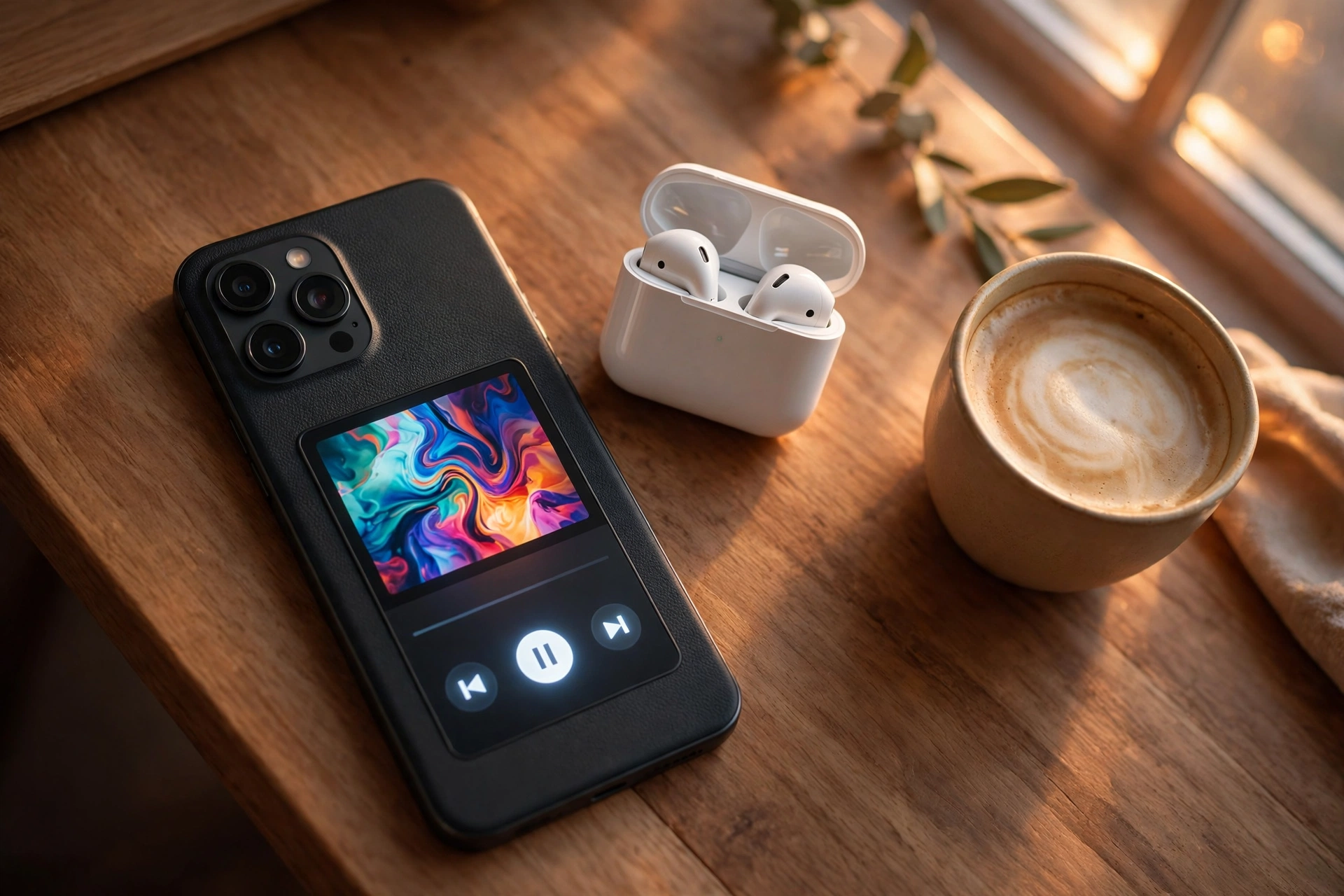
Spotify and YouTube Music work the same way, as remote controls for what is already playing. The rear screen shows the album art and the name of the song, with prominent play, pause and skip buttons. You can change tracks or pause playback without waking the main display.
Beyond those three, Xiaomi has confirmed the rear display handles notifications, weather, and a live viewfinder for selfies taken with the rear cameras. That last one is arguably the cleverest trick in the package. The 18 Pro’s rear cameras are far better than its front camera, and the rear display lets you frame a selfie with them, watching yourself on the back of the phone while the main lenses do the work. It is, in effect, a smartwatch-sized screen on the back of the phone — for the same glanceable jobs, backed by the phone’s full hardware.
Back Display GenAI Apps: Make Your Own Mini-Apps
The most interesting part of Xiaomi’s announcement is not the three named apps. It is the tool that lets owners build their own. Xiaomi calls it Back Display GenAI Apps, and the idea is simple: describe what you want in plain text, and the phone generates a small app for the rear display. In the demonstration shared by Xu Fei on November 12, three descriptions produced three different mini-apps — a water reminder, an egg timer, and recipe recommendations — each running on the small screen.
That is a genuine attempt to solve the problem every second screen has ever had. A manufacturer can only build so many first-party widgets, and third-party developers rarely bother optimising for a display that exists on one phone series. Letting users generate their own apps with AI sidesteps both problems.
How well it works in practice is still an open question. Xiaomi has shown the feature working in controlled demonstrations, but nobody outside the company has tried it yet, and the quality of AI-generated mini-apps will depend on how much the tool can actually do beyond simple timers and reminders. The feature is confirmed for the global models, and it will be one of the first things reviewers test once the phones are in hand. The rear display runs selected apps adapted for a small screen — it is a glance-and-control surface, not a second phone.
The Hardware Behind the Second Screen
The rear display is the headline, but the phones around it are full flagships. The Xiaomi 18 Pro has a 6.4-inch main display and a 2.7-inch rear display, while the 18 Pro Max steps up to a 6.9-inch main display and a 2.9-inch rear panel. Both rear screens run at 120Hz, and GSMArena reports the panel measures 976 by 596 pixels at 400 pixels per inch, peaking at 4,000 nits of brightness and refreshing anywhere from 1Hz to 120Hz to save power on still images.
Both phones carry a Leica-tuned dual 200-megapixel rear camera system, and both run on Qualcomm’s Snapdragon 8 Elite Gen 6 family of chips. The Pro Max, as launched in China, pairs that with an 8,500mAh battery, 100W wired and 50W wireless charging, up to 1TB of storage and 16GB of RAM. The two models launched in China on September 23, 2026, so the hardware itself is not new — what is new is that it is leaving China. GSMArena already has global review units in hand.
The Paris Launch and What Is Still Unknown
The global launch event takes place in Paris on Tuesday, November 17, 2026, starting at 2 PM CET (6:30 PM IST), livestreamed on YouTube and X. Xiaomi confirmed the date on its official X account on November 9. Two phones will be on stage: the 18 Pro and the 18 Pro Max. The rumoured standard Xiaomi 18 is not expected to appear, and Xiaomi is also skipping an Ultra-tier model for this cycle, choosing instead to make the rear display its signature upgrade across the two Pro models.
What Paris will not necessarily give us is a sale date. Xiaomi has not set one, and several reports describe November 17 as a reveal rather than a release: the event introduces the global models, and buyers will have to wait for the first day of sales. The same applies to pricing — Xiaomi has yet to confirm global prices for either phone, and the full specifications, regional pricing and availability windows are only expected to be confirmed when Xiaomi takes the stage. Xiaomi has also confirmed an India launch, with no date announced yet.
The Battery Question Nobody Has Answered Yet
The one shadow over the global launch is the battery. The Chinese Pro Max ships with an 8,500mAh cell, but multiple reports based on European regulatory filings and entries in Xiaomi’s own HyperOS code say the global models will be smaller. Tipster Kacper Skrzypek, citing HyperOS code entries, lists the global 18 Pro at 6,000mAh and the global 18 Pro Max at 7,050mAh — the Pro Max figure is roughly 17% smaller than the Chinese version.
Xiaomi has not confirmed any of those figures, and the company has not announced the global battery capacities at all. That is the honest position: the smaller-battery reports come from regulatory filings and code, they are consistent with each other, and they are serious enough to take seriously — but they are not confirmed by Xiaomi, and the real numbers will only be settled in Paris or in the first reviews. If the reports are right, it would mean the headline 8,500mAh figure attached to the Pro Max since September does not apply to the phones most readers will actually be able to buy — worth knowing before launch day.
Why a Second Screen, and Why Now
Xiaomi is not the only company putting a screen on the back of a phone. Honor’s 700 series, launching in China on November 23, also has a rear display on every model. The difference is that Xiaomi is the first to take the concept global with real apps attached. A second screen with only a clock and notifications is a novelty; a second screen that runs Google Maps and Spotify is a tool, and the GenAI app builder is Xiaomi’s attempt to make sure it keeps growing after launch day instead of freezing on the day the phone ships.
There is a risk, of course. Second screens have failed before, usually because developers ignored them and owners forgot they were there. Xiaomi’s answer is to give the display the three apps people use most on the move — navigation and music — and then hand the rest to AI generation. The most interesting hardware idea of the year is about to be sold outside China for the first time, and it arrives with Google’s apps on it. Paris will fill in the rest.
Related Guides
- OnePlus 15 Goes Global: 7,300mAh Battery, 120W Charging, $899 Price
- Motorola Signature 27 Launches in the US at $1,599.99 — Pre-Orders November 19
- Xiaomi Clip Earbuds Go Global With 38-Hour Battery
Frequently Asked Questions
What apps work on the Xiaomi 18 Pro rear display?
Xiaomi has confirmed that Google Maps, Spotify and YouTube Music run on the 18 Pro rear display. Google Maps shows navigation progress and the next turn, while Spotify and YouTube Music show album art, the song name, and play, pause and skip controls. The rear display also handles notifications, weather and a live selfie viewfinder for the rear cameras, and a built-in “Back Display GenAI Apps” tool lets owners create custom mini-apps for it from a text description.
When is the Xiaomi 18 Pro global launch?
The Xiaomi 18 Pro and 18 Pro Max launch globally in Paris on Tuesday, November 17, 2026, at 2 PM CET (6:30 PM IST), livestreamed on YouTube and X. Xiaomi confirmed the date on its official X account on November 9, 2026. November 17 is the launch event, not necessarily the first day of sales — Xiaomi has not announced a sale date yet.
How big is the Xiaomi 18 Pro rear display?
The Xiaomi 18 Pro has a 2.7-inch rear display and the 18 Pro Max has a slightly larger 2.9-inch panel, both running at 120Hz. GSMArena reports the panel measures 976 by 596 pixels at 400 pixels per inch, peaks at 4,000 nits of brightness, and refreshes from 1Hz to 120Hz. The main displays are 6.4 inches on the 18 Pro and 6.9 inches on the Pro Max.
Will the global Xiaomi 18 Pro have a smaller battery?
Possibly, but Xiaomi has not confirmed it. Reports based on European regulatory filings and entries in Xiaomi’s HyperOS code say the global 18 Pro will have a 6,000mAh battery and the global Pro Max a 7,050mAh battery, versus 8,500mAh on the Chinese Pro Max — roughly 17% smaller. The figures are consistent across reports but unconfirmed by Xiaomi, so the real global battery sizes will only be settled at the Paris launch or in the first reviews.
How much will the Xiaomi 18 Pro cost globally?
Xiaomi has not announced global prices for the 18 Pro or 18 Pro Max. Prices are expected to be revealed at the Paris launch event on November 17, 2026. The phones launched in China on September 23, 2026, and no global sale date has been announced yet, so November 17 is a reveal rather than a release.
Sources
GSMArena, “Xiaomi confirms Google Maps, Spotify and YouTube Music for the 18 Pro rear display” (Nov 13, 2026); 9to5Google, “The Xiaomi 18 Pro’s rear display is getting Google and Spotify apps” (Nov 13, 2026); Xiaomi official X account (Nov 9, 2026, global launch date announcement).
