


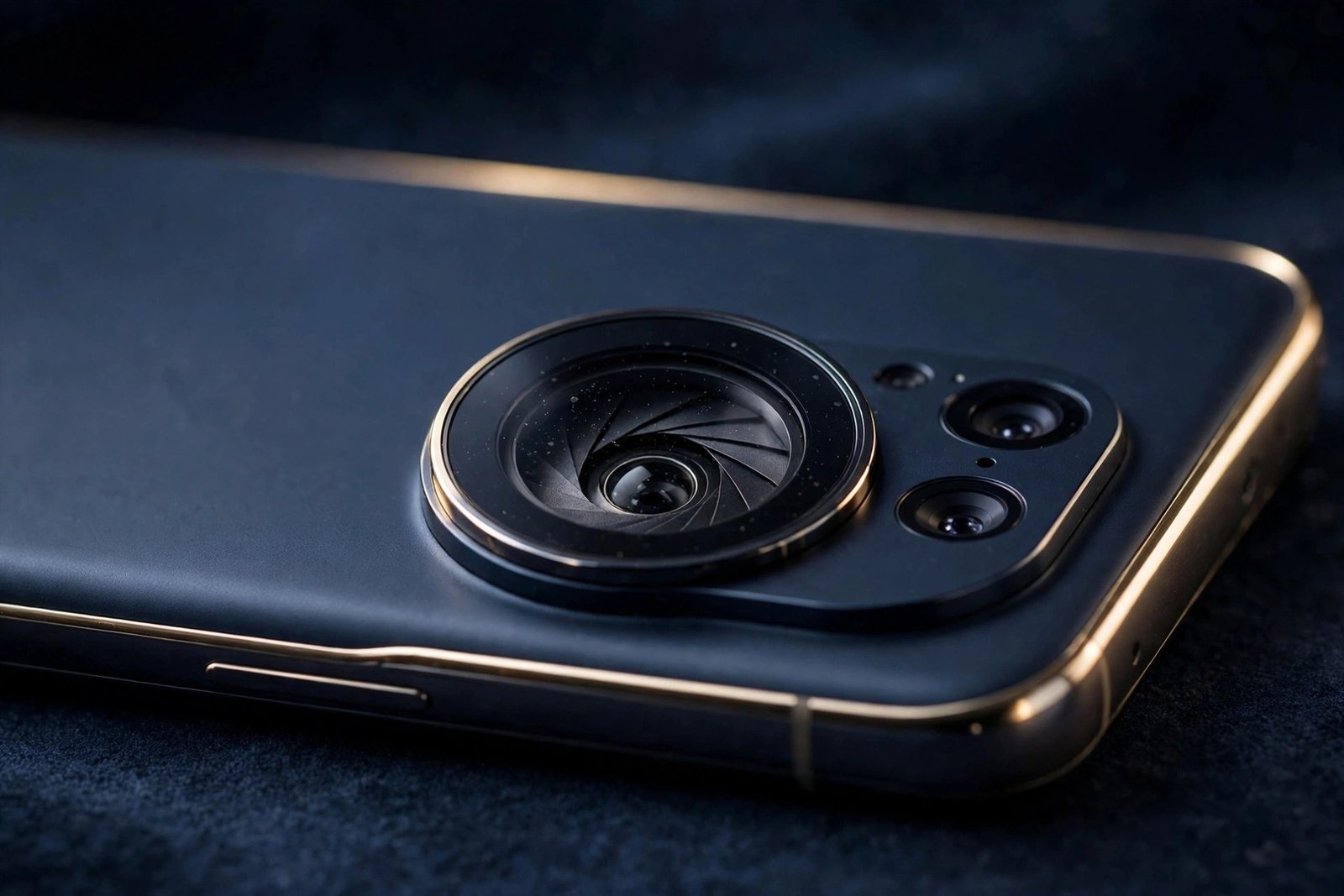
Samsung has not even launched the Galaxy S27 yet, but the camera rumours have already moved one generation ahead. A new leak claims the Galaxy S28 Pro and Galaxy S28 Ultra could bring back a feature Samsung abandoned seven years ago: a variable aperture camera.
The claim comes from tipster Yogesh Brar, who posted on X on November 16, 2026, that variable aperture “could be making a comeback with the Galaxy S28 Pro/ Ultra.” It is a short post with no specifications attached — no sensor size, no f-stop range, no supplier names and no mention of the standard Galaxy S28. But it is the clearest sign yet that Samsung is at least considering a return to the mechanical camera hardware it last shipped in 2019.
If the leak is right, Samsung would be following Apple rather than leading it. Apple has already put a variable aperture primary camera on the iPhone 18 Pro lineup this year, and other phone makers are reportedly exploring the same hardware. For Samsung, the question is no longer whether the technology works — it built it years ago — but whether the cost and the camera bump are worth it this time.
What the leak actually says
Brar’s post is exactly one line long, and that matters. He says variable aperture “could be making a comeback with the Galaxy S28 Pro/ Ultra,” adds that Samsung is not the only smartphone maker exploring the hardware, and ends with a jab that Samsung “just need[s] to add a bigger battery.”
That is the entire leak. Brar names no suppliers, gives no f-stop values, and does not even give a year. The 2028 date is inference, not part of the post: the Galaxy S27 series is expected in early 2027, so its successor would plausibly arrive in early 2028.
SamMobile, which covered the leak on November 16, was blunt about the evidence. “As of this writing, there is no supporting evidence that Samsung will introduce variable aperture on the Galaxy S28 Pro and the Galaxy S28 Ultra in 2028,” the site wrote. “So take this with a pinch of salt.”
That caution is fair. A single tipster post about a phone that is more than a year away is the weakest kind of leak. But this one lands on top of a longer paper trail, and that trail is what makes it worth taking seriously.
Why the Galaxy S27 misses out
The most useful context for the S28 leak is what happened to the S27. Samsung reportedly tested variable aperture camera modules for the Galaxy S27 series and then decided not to use them.
ETNews reported in August 2026, citing industry sources, that Samsung had decided against putting variable aperture cameras in its Galaxy phones. The report said Samsung had tested modules built by MCNEX and Samsung Electro-Mechanics, but concluded the image quality gains were not worth the higher cost — and the extra thickness the moving parts add to the camera module.
That decision covers the whole Galaxy S27 series, due in the first half of 2027. It does not close the door on the S28. If anything, it explains the timing of Brar’s leak: the hardware was developed, tested and shelved for one generation, which leaves it available for the next one if the economics or the competitive pressure change.
The competitive pressure has already changed. Apple shipped a variable aperture camera on the iPhone 18 Pro lineup earlier this year, and Chinese Android brands are exploring similar hardware. Samsung proved the concept in a mainstream phone back in 2018 — watching rivals adopt it now is a strong reason to reopen a file it closed three months ago.
Samsung has done this before
This would not be new technology for Samsung. It would be a comeback.
The Galaxy S9 and Galaxy S9+, launched in 2018, shipped with a Dual Aperture primary camera that could physically switch between f/1.5 and f/2.4. The Galaxy S10 series kept the same system in 2019. It was the last time Samsung put a mechanical variable aperture in a phone.
The idea is simple: the aperture is the opening that lets light into the sensor, and a variable aperture changes its size depending on the scene. In low light, the lens opens wide — f/1.5 on the old Galaxy S9 — to gather as much light as possible. In bright daylight, it stops down to f/2.4, keeping more of the scene in focus and avoiding the soft, washed-out look of a wide-open lens in harsh light.
Samsung dropped the system after the S10 and bet on computational photography instead. Software night modes, multi-frame processing and AI sharpening did the job a mechanical iris used to do, without the moving parts, the cost or the thickness. For seven years, that bet looked correct — but the competition has started moving the other way, and the marketing value of real camera hardware is hard to match with software alone.
There is also a telling detail in Samsung’s own software. The Expert RAW app, Samsung’s pro camera tool, already offers a Virtual Aperture control that simulates f-stops from f/1.4 to f/22 in the redesigned version built for the Galaxy S27 and One UI 9.5. That is a software effect, not a physical aperture adjustment — but it shows Samsung believes photographers want aperture control. A real variable aperture on the S28 Pro and Ultra would be the hardware version of a feature the company is already selling in software.
What a variable aperture would actually change
For everyday photos, the honest answer is: less than the marketing suggests, but more than nothing.
A wider aperture in low light means brighter night shots with less noise, because the sensor receives more light in a single exposure instead of relying on multi-frame stacking. That matters most in dim restaurants, concerts and night streets, where computational night modes can smear fine detail and make skin look waxy.
A narrower aperture in daylight means sharper photos across the whole frame. Phone cameras with fixed wide apertures often have soft edges and a shallow depth of field that blurs the background even when you do not want it blurred. Stopping down keeps more of the scene sharp, which is what most people actually want from a landscape or group photo.
The catch is that none of this is new — modern phones already handle both situations well through software. The difference a mechanical aperture makes is at the margins: cleaner detail in extreme low light, and a more natural look to bright-daylight shots. It is a photographer’s upgrade, not a revolution, and that is exactly why Samsung reportedly balked at the cost for the S27.
There is also the physical price. A moving iris needs space, and phone camera modules are already fighting for every millimetre — the other reason ETNews cited for the S27 decision. It is worth remembering that the S27 Ultra is already getting a redesigned camera housing — the familiar vertical column of separate camera rings is reportedly being replaced by a wide horizontal camera bar — so Samsung is already rethinking how much space its cameras occupy.
What to watch next
The leak is early, thin and unconfirmed, so the sensible way to read it is as a roadmap signal rather than a product announcement. Here is what would turn it from a rumour into something solid.
First, supply chain reporting. Brar’s post names no suppliers. If Korean outlets like ETNews report that Samsung Electro-Mechanics or MCNEX have restarted variable aperture module development, that would be the strongest confirmation available — the same kind of reporting that told us the S27 would not get the feature.
Second, the Galaxy S27 launch itself. Samsung is expected to unveil the S27 series in early 2027, and the cameras it ships with will set the baseline. If the S27 Ultra leans heavily on software aperture effects while keeping a fixed physical aperture, the case for a hardware change on the S28 gets stronger, not weaker.
Third, what Apple does next. Apple adopted variable aperture on the iPhone 18 Pro this year. If the feature shows up in reviews as a genuine advantage — and if it spreads to more iPhone models — Samsung will face the same pressure it faced when Apple popularised the periscope zoom and the titanium frame: match the hardware, or explain why software is enough.
One more thread is worth watching. Separate reports this week suggest the Galaxy S28 Ultra could also get a 200MP telephoto camera using Samsung’s ISOCELL HP9 sensor, another upgrade reportedly held back from the S27. If both reports point the same way, the 2028 flagship is shaping up as a camera-first phone in a way the S27 is not.
None of this is confirmed, and Samsung has said nothing about the Galaxy S28 at all — no phone, no cameras, no launch date. But the pattern is familiar: a feature gets tested, shelved for cost reasons, and returns one generation later when the market shifts. Samsung’s variable aperture already followed that pattern once, rumoured for years before it appeared on the Galaxy S9. If Brar is right, it is about to follow it again.
Related reading
- Dummy units of Samsung’s next flagship phones have surfaced online — the S27 Ultra, S27 Pro and S27 Plus models point to the biggest Galaxy design change in years.
- Expert RAW has always been Samsung’s camera app for people who want control — and the rebuilt version for the S27 adds a Virtual Aperture range of f/1.4 to f/22.
FAQs
Will the Galaxy S28 Pro and S28 Ultra have a variable aperture camera?
It is possible, but not confirmed. Tipster Yogesh Brar posted on November 16, 2026, that variable aperture “could be making a comeback” on the two phones. Samsung has said nothing, and SamMobile notes there is currently no supporting evidence beyond the leak itself. Treat it as an early rumour, not a fact.
When will the Galaxy S28 launch?
Samsung has not announced a date. The Galaxy S27 series is expected in early 2027, so the Galaxy S28 would plausibly follow in early 2028 — but that is inference from Samsung’s usual yearly cycle, not something the leak states. Brar’s post gives no year at all.
Why won’t the Galaxy S27 get a variable aperture camera?
ETNews reported in August 2026 that Samsung tested variable aperture modules from MCNEX and Samsung Electro-Mechanics for the S27 series, then decided against using them. The report cited higher costs and the extra thickness the hardware adds to the camera module, and said the image quality gains were not worth it.
What is a variable aperture camera, and why does it matter?
It is a camera lens whose opening physically changes size based on the scene. It opens wide in low light to gather more light for brighter, cleaner night shots, and narrows in bright daylight to keep more of the scene in focus. Samsung last used the technology on the Galaxy S9 and S10, which switched between f/1.5 and f/2.4.
Did Samsung use variable aperture cameras before?
Yes. The Galaxy S9 and S9+ launched in 2018 with a Dual Aperture camera that switched between f/1.5 and f/2.4, and the Galaxy S10 series kept the system in 2019. Samsung dropped it after the S10 in favour of computational photography, so a return on the S28 would end a seven-year gap.
Sources: Android Authority, November 16, 2026; SamMobile, November 16, 2026; ETNews, August 2026 (via Android Headlines); DigitBin, November 16, 2026.
