


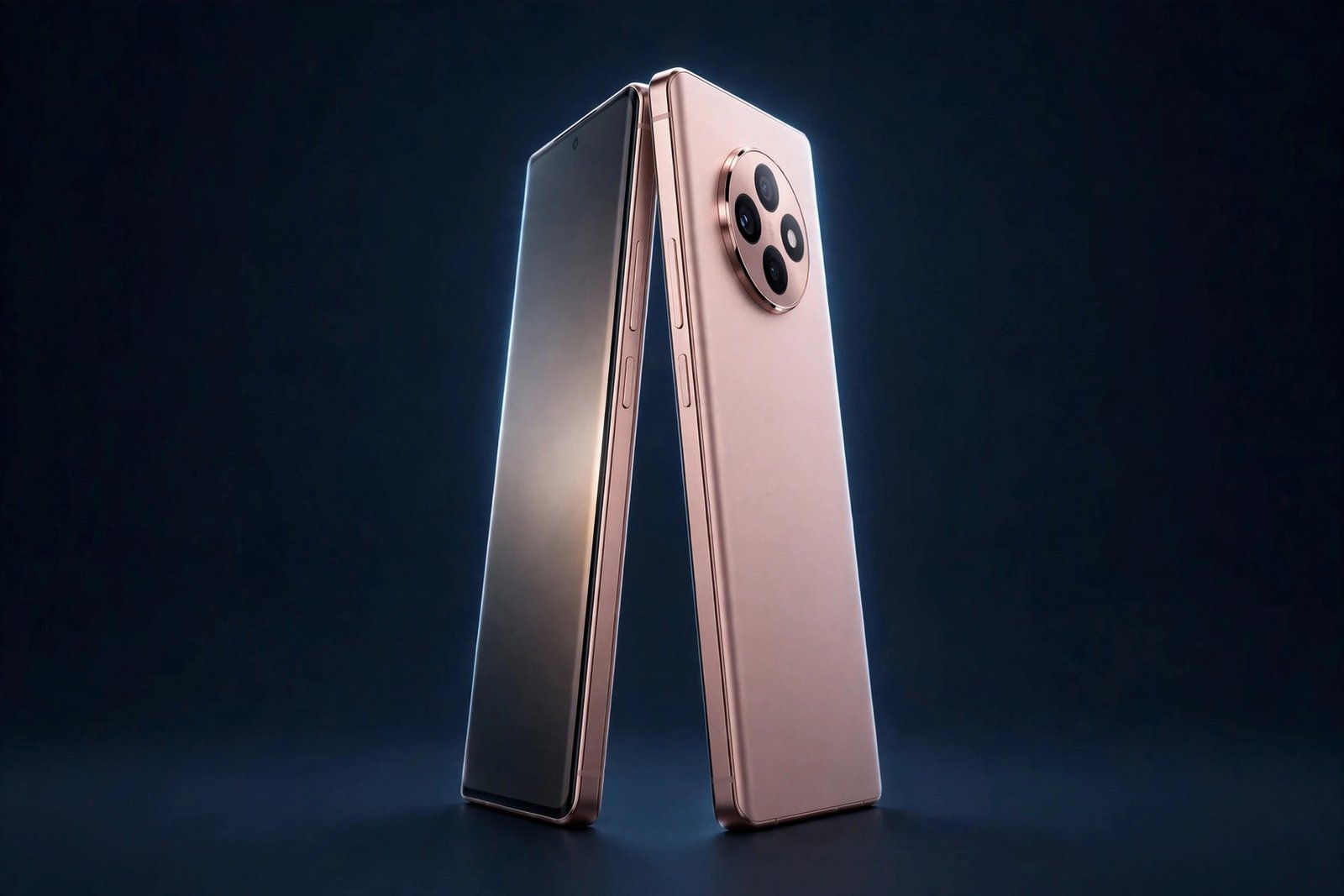
Huawei has officially launched the Mate 90 Air in China, and the headline number tells the story before anything else: 6.58mm. The new phone is the thinnest bar-shaped phone Huawei has ever put in the Mate family, yet it still packs a 6,500mAh battery, a 7-inch display and the company’s Kirin 9020 chip. It was unveiled on November 24, 2026, at Huawei’s Mate X8 and all-scenario event in China, which started at 2:30 p.m. Beijing time, alongside the foldable Mate X8.
The Mate 90 Air is Huawei’s second-generation slim flagship, following last year’s Mate 70 Air, and it follows the same formula: flagship-grade parts in a body that is thinner than most phones half its size. Pricing starts at CNY 4,999 (around $750) for the 12GB RAM and 256GB storage model, with a 512GB version at CNY 5,999 (around $901). Pre-sales open in China on the evening of launch day, and open sales begin on December 4.
Summary
- Huawei launched the Mate 90 Air in China on November 24, 2026, at the Mate X8 event.
- The phone is 6.58mm thick and weighs 208 grams, making it the thinnest Mate bar phone yet.
- It has a 7-inch 1.5K quad-curved display with a 120Hz refresh rate and 4,000-nit peak brightness.
- The Kirin 9020 chip is up to 36% faster in multi-core performance than the Mate 70 Air, according to Huawei.
- A 6,500mAh battery supports 66W wired charging and is rated for 23 hours of video playback.
- The rear camera system includes a 50MP main sensor, a 12MP 3x telephoto and a Red Maple color camera.
- Prices start at CNY 4,999 (around $750); open sales begin in China on December 4, 2026.
- Huawei has not announced international availability.
A 6.58mm body with a full-size battery inside
The Mate 90 Air measures 6.58mm thick, with a mid-frame as thin as 3.7mm, and weighs 208 grams. Huawei is calling it the thinnest Mate bar phone yet, a small but deliberate step under the 6.6mm Mate 70 Air. The phone uses a rounded design with a circular camera module on a spliced rear panel that follows the look of the wider Mate 90 family.
The engineering story here is the battery. Slim phones usually pay for their thinness with a small battery, but the Mate 90 Air carries a 6,500mAh cell — the same capacity as the thicker Mate 70 Air — inside a body that is 0.02mm thinner. Huawei has not detailed the cell chemistry in the launch materials, but the result is a phone that does not ask buyers to choose between a slim design and all-day battery life. The battery supports 66W wired charging and is rated for 23 hours of video playback on a single charge.
Huawei also says the phone uses a shock-resistant architecture with a dual-tone finish and an ultra-durable nylon fiber material, a nod to durability in a device this thin. Three colors are available: Rose Gold, Moon Silver and Obsidian Black.
A 7-inch display that stays bright outdoors
The front of the Mate 90 Air is dominated by a 7-inch 1.5K quad-curved display. It runs at a 120Hz refresh rate, reaches 4,000 nits of peak brightness and uses 2,160Hz high-frequency PWM dimming. The high peak brightness is aimed at outdoor visibility, while the fast PWM dimming is meant to reduce eye strain at low brightness, a detail that matters for a screen this large.
A 7-inch screen puts the Mate 90 Air in unusual territory. Most flagship phones sit between 6.7 and 6.9 inches, so the Mate 90 Air is closer to a small tablet in display size while still being a standard bar phone in shape. The quad-curved edges and the 208-gram weight are meant to keep that large screen comfortable in one hand.
Kirin 9020 brings a clear performance jump
Powering the phone is Huawei’s Kirin 9020 chip. Huawei says the chip delivers 9% higher single-core performance, 36% higher multi-core performance and 18% higher GPU performance than the Mate 70 Air. The company also says gaming performance is 30% better than the previous generation.
The phone comes with 12GB of RAM in both storage configurations, and Huawei says its memory technology is designed to make that 12GB feel closer to 16GB for keeping apps alive in the background. Storage options are 256GB and 512GB.
The Kirin 9020 is the same chip family used across Huawei’s recent flagships, and its presence here is significant: the Mate 90 Air is not a cut-down slim phone with a mid-range chip, but a full flagship in a thin body. That positioning matters because the slim-phone category has often meant compromises on performance or cameras. Huawei is arguing, with this phone, that buyers should not have to accept those trade-offs.
Cameras: 50MP main, 3x telephoto and a Red Maple sensor
The rear camera system starts with a 50-megapixel main sensor measuring 1/1.3 inches, with an f/1.8 aperture and optical image stabilization. It is joined by an 8-megapixel ultrawide macro lens at f/2.2, a 12-megapixel 3x telephoto camera with optical image stabilization, and a Red Maple color camera with 1.5 million multispectral channels. The front camera is 10.7 megapixels.
The Red Maple camera is Huawei’s color-sensing system, designed to capture more accurate color information so photos reproduce skin tones and scenes more faithfully. Huawei is also adding AI pose suggestions, composition assistance and custom color cards to the camera software, leaning on on-device AI to help users frame better shots rather than only improving the hardware.
The 3x telephoto gives the phone a real optical zoom option for portraits and distant subjects, something slim phones often leave out entirely. Combined with the large main sensor, the camera setup is closer to a standard flagship than to the stripped-down systems usually found in ultra-thin phones.
Connectivity and software
The Mate 90 Air supports 5A cellular speeds, Wi-Fi 7+, NearLink — Huawei’s short-range wireless technology — and two-way BeiDou satellite messaging. The satellite messaging support means the phone can send and receive messages via satellite when there is no mobile signal, a feature Huawei has been building into its flagships for several generations.
The phone runs HarmonyOS 7, Huawei’s latest software, based on pre-launch hands-on units that were already running HarmonyOS 7.0.0.115. HarmonyOS is Huawei’s own operating system, and the Mate 90 Air is part of the company’s push to deepen its software ecosystem across phones, tablets, wearables and cars — the same all-scenario theme as the launch event itself.
Price and availability
The Mate 90 Air is available in two configurations in China. The 12GB RAM and 256GB storage model costs CNY 4,999, around $750, while the 12GB RAM and 512GB storage model costs CNY 5,999, around $901. Both models come in Rose Gold, Moon Silver and Obsidian Black.
Pre-sales start in China at 6:08 p.m. China time on launch day, November 24. Open sales begin at 10:08 a.m. China time on December 4, the same morning as the Mate X8. Huawei has not announced international availability, and there is no word yet on a global launch or pricing outside China.
How it compares with the Mate 70 Air
The Mate 90 Air is, on paper, very close to its predecessor. The Mate 70 Air also had a 7-inch screen, a 6,500mAh battery with 66W charging, the same camera resolutions and the same 208-gram weight. The new model is 0.02mm thinner and moves to the Kirin 9020, where the Mate 70 Air used the Kirin 9020A and 9020B variants.
That closeness is the honest context for this launch. The Mate 90 Air is an evolution, not a reinvention: a thinner body, a faster chip, a newer software version and refined camera features on top of a formula Huawei already shipped last year. For Mate 70 Air owners, the upgrade case is thin. For everyone else, the Mate 90 Air is the most polished version of Huawei’s slim flagship so far.
The comparison also highlights how competitive the slim-phone segment has become. Apple, Samsung and several Chinese brands have all pushed thinner designs this year, and Huawei’s answer is to keep the battery and camera specs at flagship level while shaving the thickness further. Whether buyers care more about 0.02mm or about the battery is an open question, but Huawei has at least refused to trade one for the other.
What happens next
The first real test for the Mate 90 Air comes on December 4, when open sales begin in China alongside the Mate X8. Early sales figures and the first hands-on reviews will show whether the Kirin 9020’s claimed performance gains hold up in daily use and whether the camera improvements are visible in real photos.
The bigger question is global availability. Huawei’s recent flagships have had limited releases outside China, and the Mate 90 Air has no international launch date yet. If it stays a China-only device, its impact will be limited to Huawei’s home market. If Huawei does bring it to other regions, it would enter a slim-phone segment that is getting crowded fast.
For now, the Mate 90 Air is a China launch with a clear message: Huawei believes a flagship phone can be 6.58mm thin without giving up battery life, performance or cameras. The December 4 sales date will show whether buyers agree.
Related reading
- Huawei launched the foldable Mate X8 at the same event — read the full launch details in Huawei Mate X8 Launches With 8.2-Inch Creaseless Display, Kirin 9050 Pro and 6,200mAh Battery.
- The Mate X8 was first spotted in Huawei executive Richard Yu’s hand ahead of the launch — see Huawei Mate X8 Spotted in Richard Yu’s Hand as Late-November Launch Nears.
- Another November 24 launch with a huge battery: Motorola Edge 70 Neo India Launch Confirmed for November 24: Full Specs, Expected Price and What to Know.
Frequently asked questions
When was the Huawei Mate 90 Air launched?
Huawei launched the Mate 90 Air in China on November 24, 2026, at the Mate X8 and all-scenario event, which started at 2:30 p.m. Beijing time. Pre-sales open the same evening, and open sales begin on December 4, 2026.
How much does the Huawei Mate 90 Air cost?
The Mate 90 Air starts at CNY 4,999 (around $750) for the 12GB RAM and 256GB storage model. The 12GB RAM and 512GB storage model costs CNY 5,999 (around $901).
How thin is the Huawei Mate 90 Air?
The Mate 90 Air is 6.58mm thick, with a mid-frame as thin as 3.7mm, and it weighs 208 grams. Huawei calls it the thinnest Mate bar phone yet, slightly thinner than the 6.6mm Mate 70 Air.
What are the Huawei Mate 90 Air specifications?
The phone has a 7-inch 1.5K quad-curved display with a 120Hz refresh rate and 4,000-nit peak brightness, a Kirin 9020 chip, 12GB of RAM, a 6,500mAh battery with 66W wired charging, and a 50MP main camera with a 12MP 3x telephoto and a Red Maple color camera. It runs HarmonyOS 7.
Will the Huawei Mate 90 Air launch globally?
Huawei has not announced international availability for the Mate 90 Air. The launch so far is for China only, with pre-sales from November 24 and open sales from December 4, 2026.
Is the Mate 90 Air better than the Mate 70 Air?
The Mate 90 Air is thinner (6.58mm versus 6.6mm) and has a faster Kirin 9020 chip, with up to 36% higher multi-core performance according to Huawei. The screen size, battery capacity, charging speed, weight and camera resolutions are the same as the Mate 70 Air, so it is an evolution rather than a major redesign.
Sources: GizmoChina (November 24, 2026), Huawei Central (November 24, 2026), GSMArena (November 24, 2026).
