


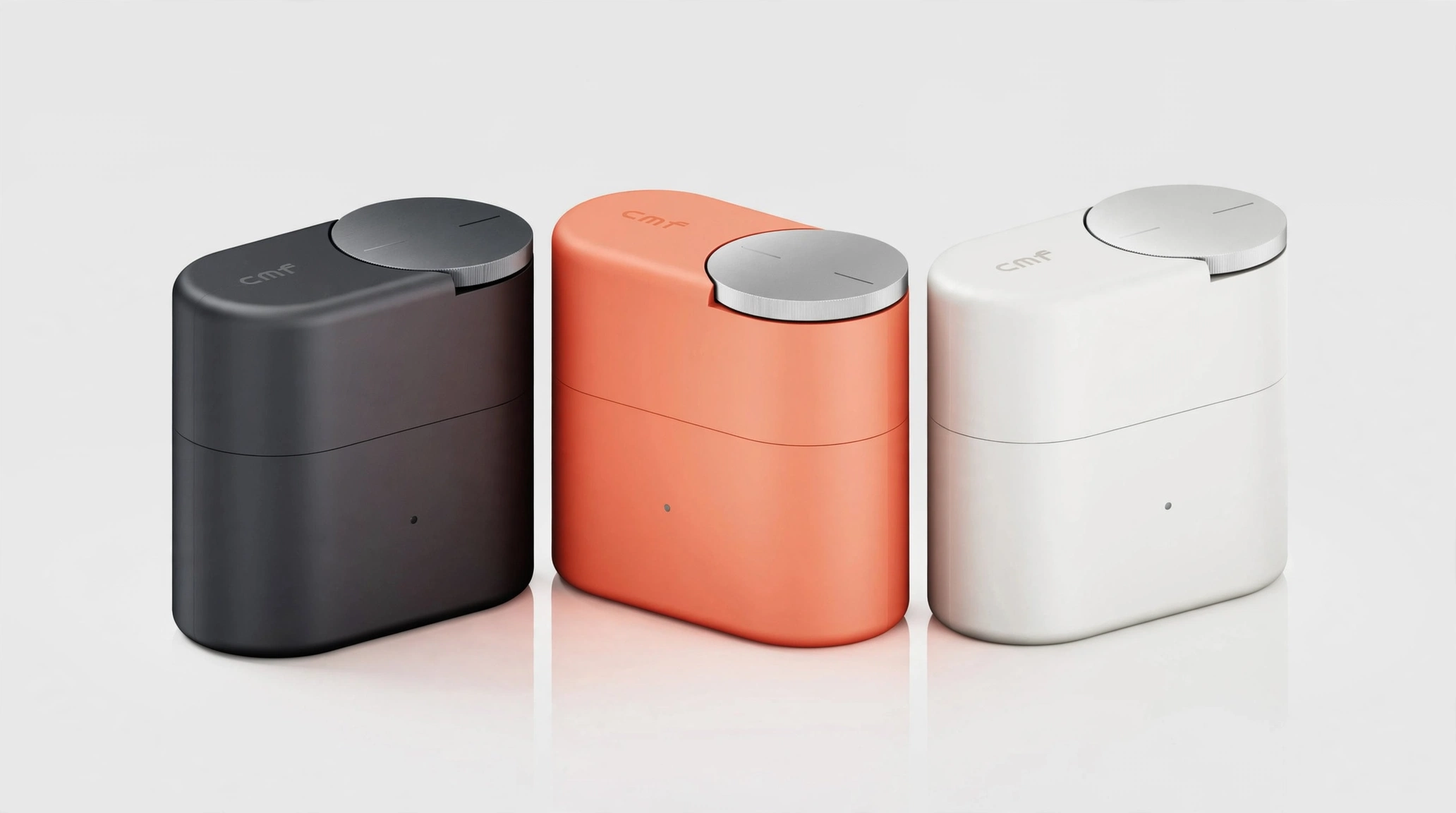
CMF Clip Pro is CMF by Nothing’s first open-ear clip-on earbuds. Instead of sealing inside your ear canal, it clips onto the outer cartilage and directs sound toward the canal while leaving it open. You hear your music and your surroundings at once. It ships with a Smart Dial charging case, 10.8mm drivers, LDAC support, and up to 32.5 hours of total playback. Price is $99. Launch is August 15, 2026 in the US, UK, and Japan, with a wider global rollout September 15.
What is CMF Clip Pro?
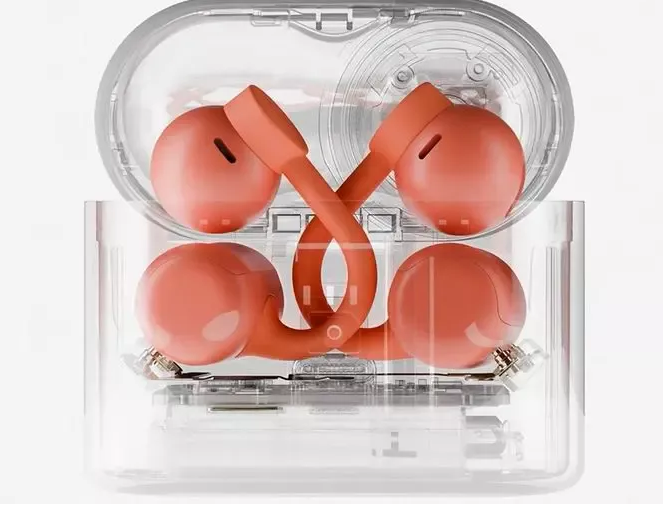
CMF Clip Pro is an open-ear clip-on earbud designed to sit on your ear, not in it. It uses air conduction. A small speaker fires sound toward your canal from just outside, so nothing ever seals.
Traditional buds create bass by sealing your ear. Clip-ons do the opposite. You get music plus traffic, announcements, or a coworker asking you a question. CMF’s version uses a C-shaped clip: the driver housing in front, a counterweighted back behind the ear fold, and a flexible memory-wire bridge connecting them. No silicone tips, no tip rolling, no pressure buildup.
If you know the CMF Buds Pro 2, think of the inverse. The Buds Pro 2 is sealed with ANC to block the world out. The Clip Pro is open by design to keep you in it.
CMF Clip Pro Design: How the Clip Actually Works
The Clip Pro stays on by gripping the outer cartilage lightly, not by friction inside the canal. That distinction matters. In-ear buds rely on the seal inside. Hooks rely on the top of the ear. This relies on balanced clamping.
The front holds the driver. The back acts as a counterweight. Because weight is split front-to-back, it doesn’t swing when you turn your head or tug like lobe-clip designs do. CMF kept the finish matte and the controls physical – a small clicker on the housing rather than a capacitive pad. When your hands are sweaty mid-run, you want to feel the click.
Is It Comfortable for Glasses Wearers and Long Listening Sessions?
Yes, and this is the quiet reason people switch to this form factor. The clip sits on the mid-cartilage, not where glasses arms rest. With thin wire or medium acetate frames, most people won’t feel a conflict. With thick, heavy acetate, you will notice some crowding behind the ear after an hour or two, but it is still more comfortable than a traditional ear hook that fights your glasses for the same real estate.
For long sessions, the advantage is the lack of occlusion. There is no sealed thump when you walk, no sweat trapped under a silicone tip. That makes it genuinely easy to wear for three to four hours while working. The mistake first-time users make is pushing it in like an in-ear bud. Don’t. It should hover.
What Does the Smart Dial Case Do?
The Smart Dial is a physical controller on the charging case, and it’s the feature that separates this from every other $99 clip bud. The dial turns to adjust volume, clicks to play/pause, and long-presses to call up your voice assistant. It works even when the buds are docked, so the case becomes a Bluetooth remote for your phone in your pocket.
You also get instant battery feedback from the dial and a lanyard loop built into the housing. When you are constantly taking open buds on and off – at a coffee shop, at your desk, crossing a street – reaching for the case dial is faster and more reliable than tapping your ear.
It connects over Bluetooth 5.4 and all of it is configured in the Nothing X app.
CMF Clip Pro Sound Quality and Core Specs Explained
For an open design, the story is bass retention. Open buds always lose low-end because you lose the seal. CMF’s answer is a larger 10.8mm dynamic driver that can move more air than the typical 11-12mm drivers in sealed buds would need to. It is tuned with a low-end lift to compensate for leakage, without burying vocals.
Bluetooth is 5.4, which should help with stability and efficiency. Multi-point is expected via Nothing X, with final firmware features confirmed at launch.
Does LDAC Make a Difference on Open-Ear Earbuds?
It does, but not how you expect. LDAC can transmit up to 990 kbps, about three times AAC. On sealed buds you hear that as extra detail. On open buds, some of that detail escapes into the environment anyway.
The real benefit here is avoiding a double loss. Standard codecs already compress. Then the open design leaks more. LDAC reduces the first loss, so in a quiet office or at home you get cleaner vocals and less harshness in acoustic instruments compared to AAC. Outside on a busy road, you won’t hear a difference. Leave LDAC on Auto in the Nothing X app and it will scale down for stability when you are moving and give you full resolution when you are still. At this price, no other clip bud offers it. Bose Ultra Open and Huawei FreeClip don’t.
Battery Life, Charging and Durability
CMF rates it at 7.5 hours per bud and 32.5 hours total with the case. That total puts it at the top of the clip category. The case charges over USB-C. No wireless charging at $99, which is expected. A ten-minute quick charge should add about two hours of playback.
Durability is IP55. That means dust protected and resistant to low-pressure water jets. For you, that translates to sweat-proof and rain-proof for running. It does not mean waterproof. Don’t swim in it, don’t rinse it under a faucet. Wipe it down after a sweaty workout.
Read Also: Apple iPhone 18 Pro Max Release Date, Price, Specs, Design & Leaks 2026
Calls, Controls and Nothing X App
Calls on open buds live or die by wind handling, and the Clip Pro uses beamforming mics with wind-noise reduction to handle it. Because the mic sits outside, it catches wind directly. Indoors and in light wind you should be clear. In strong wind, the caller will hear more background than with sealed buds. That is inherent to the form factor.
Controls are physical clicks on the bud body plus the Smart Dial on the case. In the Nothing X app you can remap clicks, adjust EQ, toggle LDAC, and update firmware. The app includes a positioning guide, not a seal test, which actually helps new clip users get the placement right.
CMF Clip Pro Price and Release Date
CMF Clip Pro costs $99 in the US and launches August 15, 2026 in the US, UK, and Japan. Global rollout including the EU and India follows September 15.
To put that in context: Sony’s upcoming LinkBuds Clip is expected around $179, Soundcore AeroClip is $129, and Bose Ultra Open is $299. CMF is pricing this as an entry point for people curious about clip buds. It will be available on cmf.tech and nothing.tech first, then Amazon and major retailers. CMF usually offers a small launch perk through the Nothing X app, so check there if you plan to buy day one.
CMF Clip Pro: Who Should Buy It?
Buy the Clip Pro if you want audio all day without blocking the world out. Runners and cyclists who need to hear traffic, office workers who need to hear colleagues, or anyone whose ears hurt after 30 minutes with silicone tips – this design was made for you. It excels for podcasts, audiobooks, and calls where awareness matters.
It is not for you if you commute on a loud train and want ANC and heavy isolation. This design leaks sound at high volumes. In a quiet library, someone next to you will hear a faint version of your music. If you need silence, get the sealed CMF Buds Pro 2 or Nothing Ear instead.
CMF Clip Pro vs The Best Open-Ear Competition
The Clip Pro’s argument is not that it beats $300 buds on refinement. It’s that it gets you 90% of the comfort and adds features those premium buds skip, for a third of the price.
CMF Clip Pro vs Sony LinkBuds Clip
The most direct rival. Sony’s LinkBuds Clip also clips to the cartilage and leans hard into ambient awareness. Sony will likely have an edge in spatial audio processing and long-term comfort polish. CMF counters with $99 versus an expected $179, longer total battery, and LDAC support. If you are already deep in Sony’s ecosystem, Sony makes sense. For pure value, CMF leads.
CMF Clip Pro vs Bose Ultra Open and Soundcore AeroClip
Bose Ultra Open remains the most disappear-on-your-ear design. The flexible joint is superb and the sound is more refined, but it costs three times more and lacks LDAC. Soundcore AeroClip at $129 is extremely comfortable with great battery life, but it has no dial case and no hi-res codec. At $99, CMF is alone in combining LDAC with a case that adds real controls.
Should You Wait for CMF Clip Pro?
The Clip Pro isn’t trying to replace your ANC buds. It replaces all the moments you take them out. At $99 with a 10.8mm driver, LDAC, IP55 sweat resistance, and 32.5 hours total battery plus a Smart Dial case that works as a remote, it fixes the three things that have held affordable clip buds back: thin sound, awkward controls, and forgettable design.
If awareness and comfort are what you need for running, work, or all-day wear, wait for August 15. If you need silence and deep bass isolation on a train, buy sealed.
Our hands-on review with fit testing for glasses wearers, sound leakage measurements at 50% and 100% volume, and real-world battery drain with LDAC on goes live on launch day.
CMF Clip Pro FAQs
Does CMF Clip Pro have active noise cancellation?
No. It is an open-ear design with no ANC. It is built to let you hear your surroundings.
Does CMF Clip Pro fall off while running?
It is designed not to. The counterweighted clip grips the outer cartilage rather than relying on friction inside the canal. For steady runs and cycling it stays stable. For explosive movements like box jumps, any clip bud can shift and need a quick adjust.
Is CMF Clip Pro waterproof?
It is IP55 rated, so sweat-proof and rain-proof. You can train hard and run in the rain, but don’t submerge it or wash it under a tap.
Does CMF Clip Pro work with iPhone?
Yes. It pairs with iPhone and Android over Bluetooth. On iPhone it uses AAC, because iOS does not support LDAC. On Android phones that support LDAC, you can enable hi-res audio in the Nothing X app.
What is the battery life on a single charge?
7.5 hours on the buds themselves, 32.5 hours total with the charging case.
Is CMF Clip Pro better than CMF Buds Pro 2?
They serve different purposes. Choose Clip Pro for comfort and awareness. Choose Buds Pro 2 for ANC and isolation.
