


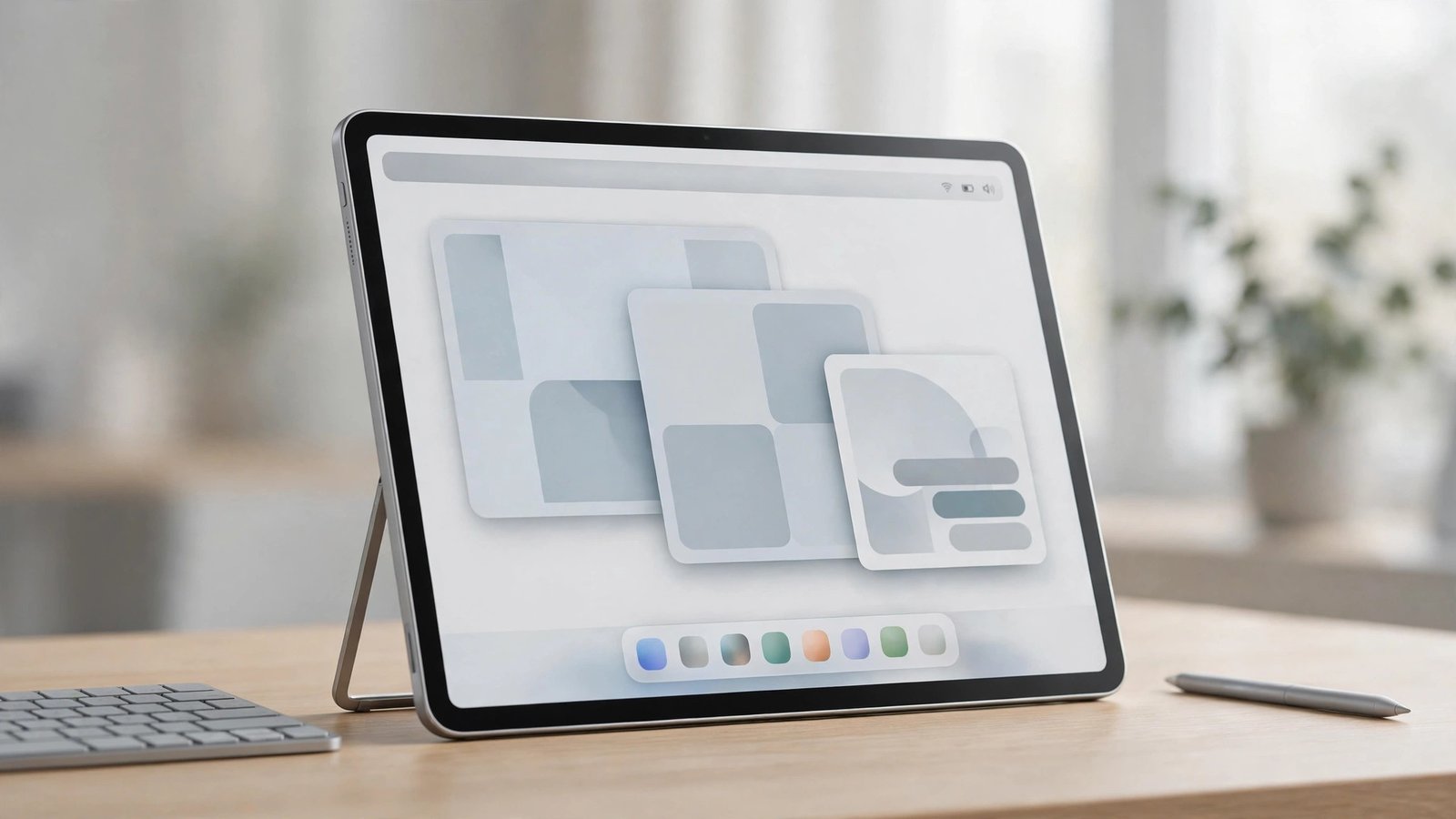
Apple has iPads running macOS inside its own labs — and has had them for some time. That is the word from Bloomberg’s Mark Gurman, one of the most reliable Apple reporters in the business, speaking on the latest episode of his Power On podcast. Before iPad owners start dreaming of a Mac in tablet form, though, Gurman is blunt about the other half of the story: Apple has no plan to let you use one.
“Apple has iPads internally running macOS, and they’ve had that for some time,” Gurman said, answering a listener question on the podcast. “The fact that they have the underlying architecture of Apple Silicon that’s the same on the iPad and the Mac gives them the flexibility in order to test these types of things.”
It is the kind of revelation that sounds like a product announcement waiting to happen. It is not. Gurman says he has checked, and there is no project inside Apple to bring macOS to the iPad as a product. “In terms if they’re actually going to do it — would they bring macOS to the iPad itself — at this point I don’t think that’s going to happen anytime soon,” he said. “I’ve checked into this and there’s no ongoing operating system project right now in terms of a brand new operating system for the iPad — there is no work being done to consumerize macOS on the iPad.”
Why the rumour keeps coming back
The idea of macOS on the iPad refuses to die, and for good reason. Modern iPads run the same Apple Silicon chips as Macs. The iPad Pro carries the same class of processor as a MacBook, with the same memory architecture and the same performance headroom. On paper, the hardware stopped being the obstacle years ago.
The software has been the frustration. iPadOS has grown more capable with every release — split-screen multitasking arrived years ago, and iPadOS 26 finally brought full windowing to the tablet in 2025 — but the experience still feels clunky next to macOS. Windows overlap awkwardly, the menu system is limited, and professional workflows that are trivial on a Mac still require workarounds on an iPad. A significant number of iPad owners have been asking Apple for years to simply offer macOS as an option on the tablet, especially on the iPad Pro.
Apple’s own recent moves have weakened its arguments against convergence. The company has now launched a touchscreen MacBook Pro, crossing a line it once said it would never cross. If a Mac can have a touchscreen, the old logic goes, why can’t an iPad have a desktop operating system? Gurman’s report does not answer that question — but it confirms that Apple has at least explored the technical side of it.

What Apple is actually doing with it
If Apple is not building a macOS iPad for sale, why run macOS on iPad hardware at all? The answer, according to Gurman, is testing and development. Because iPads and Macs share the same underlying Apple Silicon architecture, Apple can run the Mac operating system on tablet hardware to test features, validate performance, and understand how the two platforms could borrow from each other — without ever intending to ship the combination.
That fits the pattern Apple has followed for years. Rather than merging the two systems, Apple has been bringing Mac capabilities to iPadOS piece by piece: professional apps like Final Cut Pro arrived on the iPad, the windowing system in iPadOS 26 borrowed heavily from the Mac, and desktop-style controls such as a menu bar and Exposé-style app switching have gradually made their way across. Gurman says that piecemeal approach is the plan going forward — more Mac features on the iPad, but no macOS on the iPad.
The regulation reason Apple stays separate
There is also a regulatory reason for Apple to keep iPadOS and macOS apart. Gurman pointed out that European Union rules evaluate compliance on a per-operating-system basis, which gives Apple an incentive to maintain distinct software platforms for each device rather than consolidating them. Merging the two systems could change how Apple’s platforms are classified under EU law, and Apple would rather not open that door.
Apple’s own executives have said the same thing in public. The company recently dismissed the idea of merging iPadOS and macOS, insisting the two systems are designed for different kinds of devices and different ways of working. Gurman’s report lines up with that position: the internal macOS iPads are an experiment, not a product in development.
The foldable iPad is still alive — but slipping
Gurman had a second iPad update in the same podcast appearance, and it is a familiar story of delays. Work on the long-rumoured giant folding iPad continues, he said — but the project, codenamed J312, keeps slipping. The device was once expected in 2027, then pushed to 2028, and has now slipped again to 2029.
The device itself sounds extraordinary: a 19-inch to 20-inch folding iPad that Gurman described as “basically like a gigantic iPhone Duo with no display on the outside.” In other words, a tablet that folds open into something close to a laptop-sized screen, with no external display when closed.
There is no guarantee it will ever launch. Gurman warned that both cost and manufacturing yield issues could still kill the project, and if it does reach the market, it is expected to cost anywhere from $3,000 to $5,000 — putting it firmly in the realm of a halo product rather than a mainstream iPad.
What else Gurman says is coming
The macOS-on-iPad revelation was part of a wider round of Apple reporting from Gurman this week. In his Power On newsletter, he said Apple plans to unveil the iPhone 18e, iPhone 18, an updated entry-level iPad, and new MacBook Neo and MacBook Air models around February or March 2027, with the iPhone Air 2 and new iPad Air and iPad Pro models also planned for the first half of the year. He also reported that Apple has changed how it develops iOS 28 and macOS 28, splitting each year’s software into three major development stages.
For iPad owners, the near-term picture is clearer: iOS 27.3 is expected in December, and Apple has confirmed the first Apple Intelligence features for users in China will roll out with it. The iPad’s software will keep getting more Mac-like — just not by becoming a Mac.
What this means for you
If you own an iPad Pro and have been waiting for the day it can run macOS, this report is both encouraging and disappointing. Encouraging, because it confirms the hardware can do it — Apple has literally done it in its own labs. Disappointing, because the company has no intention of letting you do it, and the people who would know say there is no project to change that.
The realistic path forward is the one Apple is already on: iPadOS will keep absorbing Mac features one release at a time. The windowing system in iPadOS 26 was the biggest step yet, and more desktop-style capabilities are likely to follow. What you will not get — not in 2027, and not on any timeline Gurman can see — is a toggle that turns your iPad into a Mac.
The dream of macOS on the iPad is alive inside Apple. It just is not coming to your iPad.
Is Apple really running macOS on iPads?
Yes, according to Bloomberg’s Mark Gurman. Speaking on his Power On podcast on November 25, 2026, Gurman said Apple has iPads running macOS internally and has had them “for some time.” The shared Apple Silicon architecture across iPads and Macs makes this technically possible.
Will Apple release an iPad that runs macOS?
Not anytime soon. Gurman says there is “no work being done to consumerize macOS on the iPad” and no operating system project inside Apple to bring macOS to the iPad as a product. Apple plans to keep adding Mac features to iPadOS instead.
Why won’t Apple put macOS on the iPad?
Apple says iPadOS and macOS are designed for different devices and different ways of working, and its executives have publicly dismissed merging them. Gurman also notes that EU regulation evaluates compliance per operating system, giving Apple an incentive to keep the platforms separate.
What is the foldable iPad Apple is working on?
The long-rumoured giant folding iPad, codenamed Project J312, is a 19-inch to 20-inch device Gurman describes as “a gigantic iPhone Duo with no display on the outside.” Its launch has slipped from 2027 to 2028 and now to 2029, and cost and manufacturing yield issues could still cancel it. If it launches, it could cost $3,000 to $5,000.
Can my iPad run macOS apps?
No. iPads run iPadOS, which cannot run Mac apps. Apple has brought some professional Mac apps to the iPad, including Final Cut Pro, and iPadOS 26 added full windowing and desktop-style controls — but the operating systems remain separate.
What is the latest iPad software update?
Apple is preparing iOS 27.3 for release in December 2026, with the first iOS 27.3 beta arriving on November 3. It is expected to bring the first Apple Intelligence features to users in China, along with the usual iPadOS improvements.
Related reading: iOS 27.3 Beta 2 Features, Apple Gemini-Powered Siri Confirmed: Private Cloud Compute, Apple iOS 28 Development Change
Sources: MacRumors (Nov 25, 2026), 9to5Mac (Nov 25, 2026), GSMArena (Nov 26, 2026).
