


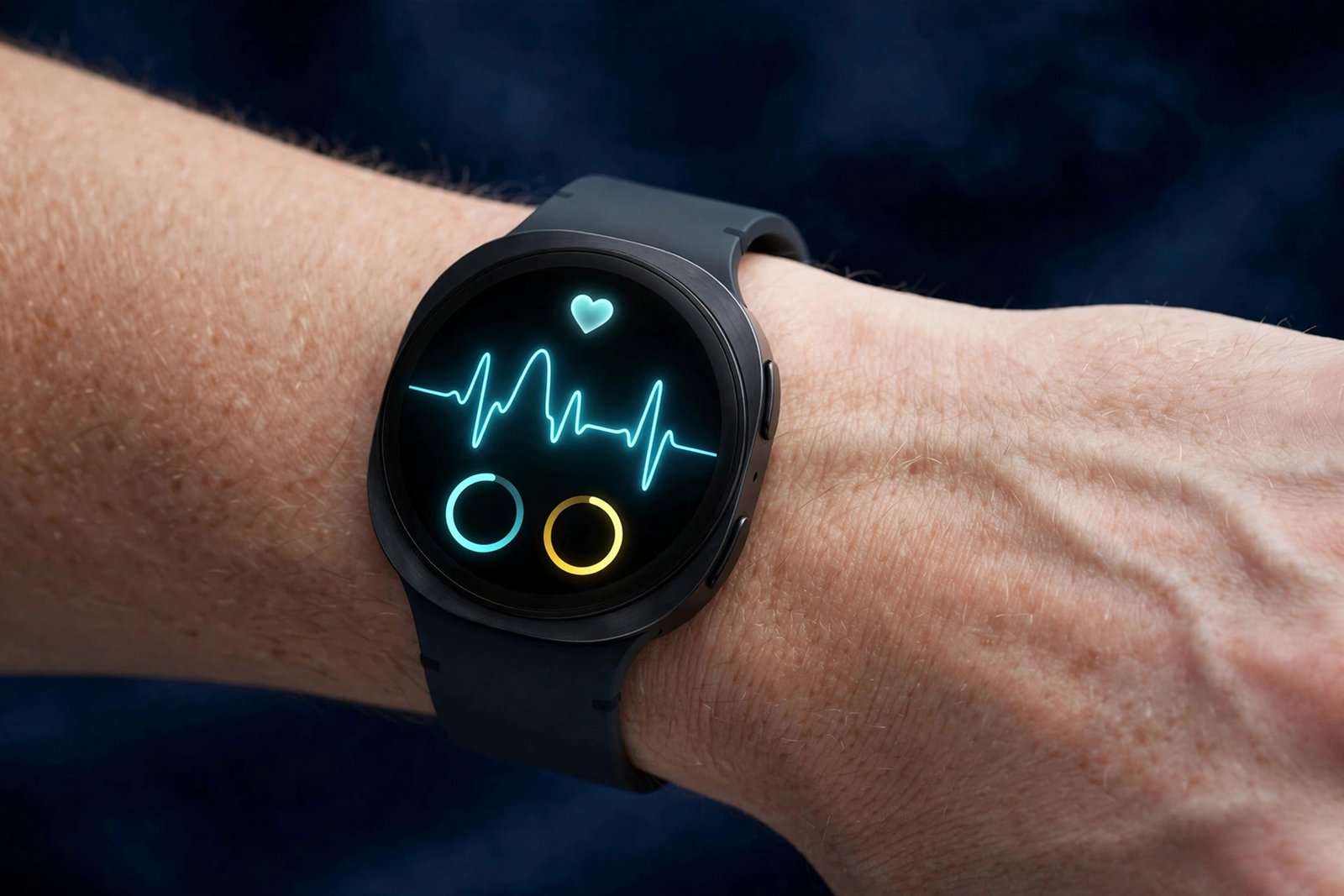
Samsung is bringing the Galaxy Watch 9’s best health features to the Galaxy Watch 8 and Galaxy Watch 8 Classic. In an announcement on November 24, 2026, Samsung said its One UI 9 Watch update — built on Wear OS 7 — will add six health and fitness features that were first introduced on the Galaxy Watch 9 and Galaxy Watch Ultra 2 to last year’s flagship watches.
The rollout has already begun. Samsung started pushing the update on November 23, 2026, with South Korea among the first markets — some reports put the first Korean builds as early as November 11 — and the United States followed shortly after. As with most Samsung updates, it arrives in waves, so it may take a few days to reach every watch in a country where the rollout has started.
The move matters because the Galaxy Watch 8 series is barely a year old, and Samsung is effectively giving its owners the health toolkit of the newest watch without asking them to buy new hardware. It also fits a wider pattern: reports suggest Samsung may skip a hardware refresh for its Galaxy Watch line in 2027 and focus instead on software and health features for the watches people already own. If that is true, updates like this one are the upgrade path.
What the update brings
The six features arriving on the Galaxy Watch 8 and Galaxy Watch 8 Classic are Vitals, Heart Health Score, Daily Cardio Load, Fitness Index, upgraded Sleep Coaching and upgraded Sleep Apnea detection. All six were headlining features of the Galaxy Watch 9 series, and all of them run on the same sensor hardware the Watch 8 series already has — the BioActive sensor — which is why Samsung can deliver them as a software update.
The update also includes two non-health extras, a new Portrait Watch Face and improved Compass tools, which are covered below.
Vitals: your overnight health snapshot
Vitals is the headline feature. Every night, while you sleep, the watch tracks five signals: heart rate, heart rate variability, respiratory rate, skin temperature and blood oxygen saturation. Each morning, Vitals turns those readings into a single view of how your body recovered overnight, and it flags readings that sit outside your normal range.
The key word there is “your”. Vitals needs seven nights of sleep data before it can set a personal baseline, because a heart rate that is normal for one person can be unusual for another. Until that baseline is set, the feature collects data quietly; after it, deviations show up as alerts so you can spot a change — say, a resting heart rate running higher than usual while you are fighting off a cold — before you would otherwise notice it.
Vitals lives in the Samsung Health app, which needs to be version 7.0 or later. Samsung is clear about the limits, though: Vitals is not intended to diagnose or treat any medical condition. It is a trend tracker, not a medical device.
Heart Health Score: one number for your heart
Heart Health Score takes the idea further and combines several indicators — sleep, activity and other health data — into a single unified score for your heart health. Instead of checking five separate readings and trying to work out what they mean together, you get one number that sums up where you stand, plus guidance on what is pulling the score up or down.
The score updates as your habits change, so a week of better sleep or more consistent activity should show up in it. Like Vitals, it is a general-wellness tool rather than a medical diagnosis, and Samsung says it is not intended to diagnose or treat any condition.
Daily Cardio Load: how hard your heart is working
Daily Cardio Load measures the strain your workouts and daily activity place on your heart, and suggests a load range to aim for — enough to make progress, but not so much that you overdo it. It is the kind of guidance that used to need a dedicated sports watch or a coach: the watch looks at how much effort your heart has been under and tells you whether today is a day to push, hold steady or recover.
The feature needs a Samsung account login to work, and it is also coming to the Galaxy Watch 7 as part of the same One UI 9 Watch update — one of two features the older watch gets, alongside Fitness Index.
Fitness Index: a single view of your fitness
Fitness Index combines multiple fitness metrics into one overview and recommends workouts based on it. The idea is similar to Heart Health Score, but aimed at training rather than general heart health: instead of juggling separate numbers for endurance, recovery and activity, you get a single picture of your fitness level and suggestions for what to work on next.
Like Daily Cardio Load, Fitness Index is also reaching the Galaxy Watch 7 with One UI 9 Watch, so owners of Samsung’s 2024 flagship watch get two of the six new features even though they do not get the full set.
Sleep Coaching gets more personal — and faster
Sleep Coaching is not new, but One UI 9 Watch makes it meaningfully better. The coaching is now more personalised, with weekly tips that adapt to how you are actually sleeping rather than repeating generic advice.
Just as important, it now needs far less data to get started. Previously, Sleep Coaching needed a longer run of sleep data before it could begin; now it needs only three nights of data within a two-week window. That means new users — or anyone who has reset their watch — can get personalised coaching within days instead of weeks.
The improved Sleep Coaching reaches further back than the other features. It is coming not only to the Watch 8 series but also to watches as old as the Galaxy Watch 4 series, as well as the Galaxy Fit 3 and the Galaxy Ring. Samsung Health needs to be version 7.1 or later for the upgraded coaching.
Sleep Apnea detection gets smarter
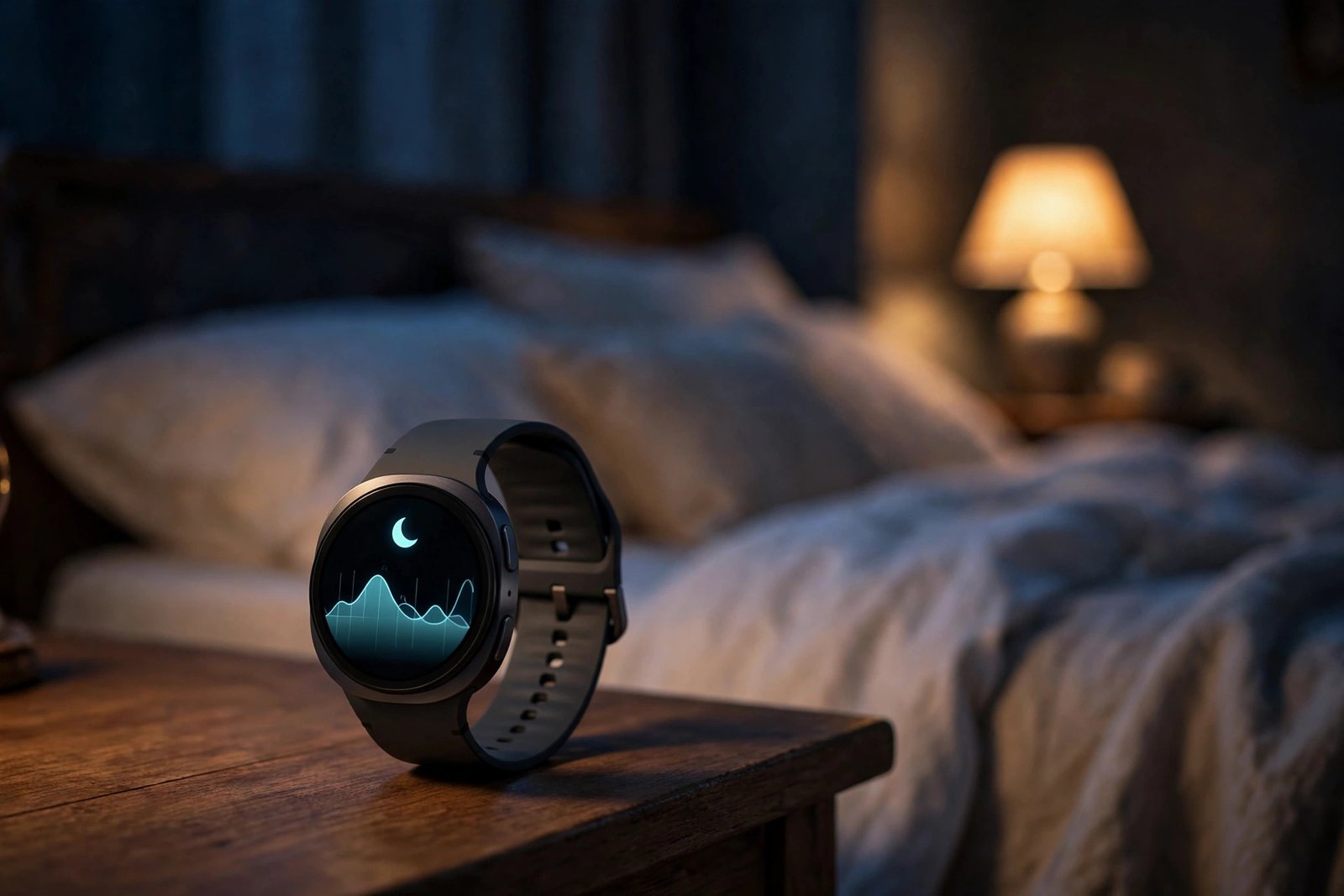
The upgraded Sleep Apnea feature uses AI to analyse breathing disruptions during sleep and sort them into three levels: minimal, occasional or frequent. The watch counts how many breathing disruptions happen per hour of sleep and presents the result in the Samsung Health Monitor app after two valid nights of data within ten days.
This is the feature with the clearest regulatory backing. Samsung received US FDA clearance for its sleep apnea detection in July 2026, and Korea’s Ministry of Food and Drug Safety (MFDS) approved it in October 2026. That matters because sleep apnea detection sits closer to medical territory than step counting: it is a feature that can prompt someone to see a doctor about a condition they did not know they had.
Which watches get what
Not every watch gets every feature, and Samsung’s own breakdown is worth reading carefully before you check for the update:
- Galaxy Watch 8 and Galaxy Watch 8 Classic — the full set. Vitals, Heart Health Score, Daily Cardio Load, Fitness Index, upgraded Sleep Coaching and upgraded Sleep Apnea detection, all with One UI 9 Watch.
- Galaxy Watch 7 — two features. Daily Cardio Load and Fitness Index arrive with One UI 9 Watch. The Watch 7 does not get Vitals, Heart Health Score or the upgraded Sleep Apnea detection in this update.
- Galaxy Watch 4 series and newer — Sleep Coaching. The improved Sleep Coaching reaches back to the Galaxy Watch 4 series, and also to the Galaxy Fit 3 and the Galaxy Ring.
- Galaxy Watch Ultra, Galaxy Watch 7 and Galaxy Watch 6 / Galaxy Watch 6 Classic — beta. These watches are on the One UI 9 Watch beta programme, so their owners will get the update through the beta channel first rather than as a stable release.
The wider reach of Sleep Coaching is the most generous part of the announcement: a feature that improves sleep guidance is going to watches that are up to five years old, which is rare for any smartwatch maker.
Two non-health extras in the update
One UI 9 Watch is not only about health. The update also adds a Portrait Watch Face, which arranges the clock around people in your photos, so a photo of a family member or friend becomes a watch face with the time wrapped around them. And the Compass app gains waypoints — the ability to save a spot, like a parking space or a campsite — plus Track Back, which retraces a recorded route so you can find your way back along the path you came.
Both are small additions, but they fit the same theme as the health features: making the watch you already own more useful without new hardware.
What you need, and how to get the update
The requirements are modest. You need a Galaxy phone running Android 11 or later, the Samsung Health app (version 7.0 or later for Vitals, version 7.1 or later for the upgraded Sleep Coaching), and a Samsung account login for Daily Cardio Load. Some features also need a separate update to the Samsung Health or Samsung Health Monitor app, so if a feature does not appear after the watch update, check the Galaxy Store or Play Store for app updates too.
To check for the update on your watch, open the Galaxy Wearable app on your phone, go to Watch settings, then Watch software update, and tap Download and install. You can also check directly on the watch under Settings, then Software update.
If nothing shows up yet, there is no need to worry. Samsung releases updates in waves by country, model and carrier, and the rollout may take a few days to reach every watch in a country where it has already started. Checking again after a day or two is usually enough.
Why this update matters
Samsung’s announcement lands at an interesting moment for its watch business. The Galaxy Watch 9 series launched with these health features as its main selling point, and the company is now giving them to the previous generation within months. That is good news for Watch 8 owners, but it also says something about where Samsung thinks the value in a smartwatch now sits: in the software and the health data, not just in new sensors.
If the reports that Samsung will skip a Galaxy Watch hardware refresh in 2027 are right, updates like this one become the product. A watch that keeps getting meaningfully better through software is a very different proposition from one that needs replacing every year — and for Watch 8 owners, this update is the first real test of that promise.
The next thing to watch is the beta programme. The Galaxy Watch Ultra, Galaxy Watch 7 and Galaxy Watch 6 series are already on the One UI 9 Watch beta, and their stable rollout will show whether Samsung can keep the same pace for its older watches. For now, Watch 8 and Watch 8 Classic owners should check for the update — the Watch 9’s health features are waiting.
Frequently Asked Questions
What health features is the Galaxy Watch 8 getting in One UI 9 Watch?
The Galaxy Watch 8 and Galaxy Watch 8 Classic are getting six health and fitness features that debuted on the Galaxy Watch 9: Vitals, Heart Health Score, Daily Cardio Load, Fitness Index, upgraded Sleep Coaching and upgraded Sleep Apnea detection. The update is One UI 9 Watch, based on Wear OS 7, and it was announced by Samsung on November 24, 2026.
When will the One UI 9 Watch update reach my Galaxy Watch 8?
Samsung began the rollout on November 23, 2026, starting in South Korea, with the United States following shortly after. Availability varies by country, model and carrier, and Samsung releases updates in waves, so it may take a few days to reach your watch. Check the Galaxy Wearable app under Watch settings, then Watch software update.
What is Vitals on the Galaxy Watch 8?
Vitals tracks five overnight signals while you sleep — heart rate, heart rate variability, respiratory rate, skin temperature and blood oxygen saturation — and flags readings that fall outside your normal range. It needs seven nights of sleep data to set a personal baseline first. Vitals is not intended to diagnose or treat any medical condition.
Does the Galaxy Watch 7 get the new health features too?
The Galaxy Watch 7 gets two of the six features with One UI 9 Watch: Daily Cardio Load and Fitness Index. It does not get Vitals, Heart Health Score or the upgraded Sleep Apnea detection in this update. The improved Sleep Coaching reaches even further back, to the Galaxy Watch 4 series, the Galaxy Fit 3 and the Galaxy Ring.
What do I need for the new health features to work?
You need a Galaxy phone running Android 11 or later, Samsung Health version 7.0 or later for Vitals (version 7.1 or later for the upgraded Sleep Coaching), and a Samsung account login for Daily Cardio Load. Some features also need a separate update to the Samsung Health or Samsung Health Monitor app.
Is the Galaxy Watch 8 sleep apnea detection approved by regulators?
Yes. Samsung received US FDA clearance for its sleep apnea detection in July 2026, and Korea’s Ministry of Food and Drug Safety (MFDS) approved it in October 2026. The upgraded feature analyses breathing disruptions per hour of sleep, sorts them into minimal, occasional or frequent, and shows results in the Samsung Health Monitor app after two valid nights within ten days.
Related on TechInKey:
- Galaxy Watch8 Gets Stable One UI 9 Watch Update — the initial Wear OS 7 rollout this new update builds on.
- Samsung Is Building a Private Cloud for Galaxy AI — Samsung’s private-cloud project for Galaxy AI, found in One UI 9.5 beta code.
- Samsung Memory App, One UI 9.5 AI and Screenshots Leak — what Samsung’s next software version is bringing to Galaxy phones.
Sources: Samsung Newsroom (24 Nov 2026) https://news.samsung.com/uk/samsung-expands-advanced-health-features-to-galaxy-watch8-series-with-one-ui-9-watch ; 9to5Google (24 Nov 2026) https://9to5google.com/2026/11/24/samsung-galaxy-watch-wear-os-7-rollout/
