


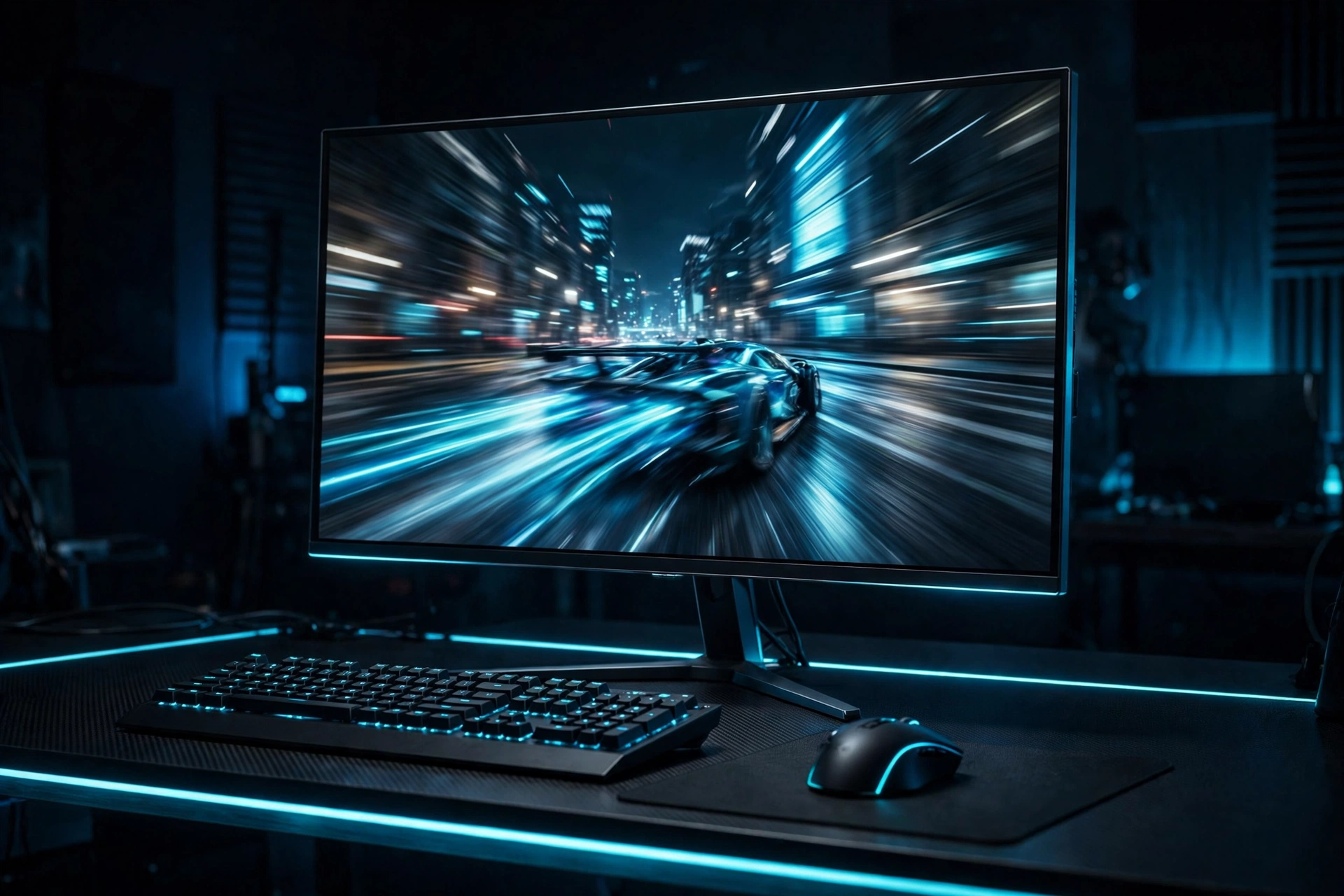
Samsung has launched the Odyssey G6 (G60H), a 27-inch gaming monitor that refreshes its screen up to 1,100 times per second — the fastest refresh rate ever offered on a retail gaming monitor. The monitor costs $899.99 in the US and will reach American retailers in December 2026.
The headline number is real, but it comes with a trade-off that buyers need to understand before spending nearly $900. To reach 1,100Hz, the monitor has to drop its resolution from 1440p down to 720p. At its native QHD resolution, it tops out at 600Hz — still extremely fast, but a very different proposition from the 1,100Hz figure in Samsung’s marketing.
Samsung first showed the monitor in December 2025 as a 1,040Hz prototype, then raised the specification to 1,100Hz when it presented the final version at Gamescom 2026. The US launch was announced on November 23, 2026, and the monitor is already listed on Amazon in the US, where it has briefly appeared slightly below its $899.99 list price.
Samsung Odyssey G6 specs: two modes, one screen
The Odyssey G6 uses a flat 27-inch Fast IPS panel with Samsung’s Dual Mode feature, which lets the owner switch between two very different operating modes:
- QHD mode: 2,560 x 1,440 resolution at up to 600Hz.
- HD mode: 1,280 x 720 resolution at up to 1,100Hz.
At 1,100Hz, the display refreshes roughly every 0.91 milliseconds, compared with 1.67 milliseconds at 600Hz. That is a difference of less than one millisecond between screen updates — measurable in a lab, but far harder to notice with the human eye, especially when the faster mode also shows just one-quarter as many pixels. On a 27-inch screen, the drop from 1440p to 720p makes fine details noticeably less sharp, which is exactly the trade-off competitive players have to weigh.
Samsung rates the panel’s response time at 1ms grey-to-grey, measured under its own internal test conditions using Extreme mode. The panel has a typical brightness of 400 nits, a 1,000:1 contrast ratio and 99% sRGB colour coverage — solid, but not the headline-grabbing HDR brightness figures seen on premium OLED gaming monitors.
The monitor also introduces Odyssey Clear Motion, a new blur-reduction feature that uses an optimised algorithm to keep fast-moving scenes easier to follow. Samsung says it plans to bring Clear Motion to more of its gaming monitors, though independent testing will be needed to show how much it actually improves visibility in real games.
For picture quality, the G60H supports HDR10 and HDR10+ Gaming, which adjusts brightness and contrast in compatible games, plus a Black Equalizer setting that lifts detail in dark areas — useful in competitive shooters where enemies hide in shadows.
Ports, sync and the fine print
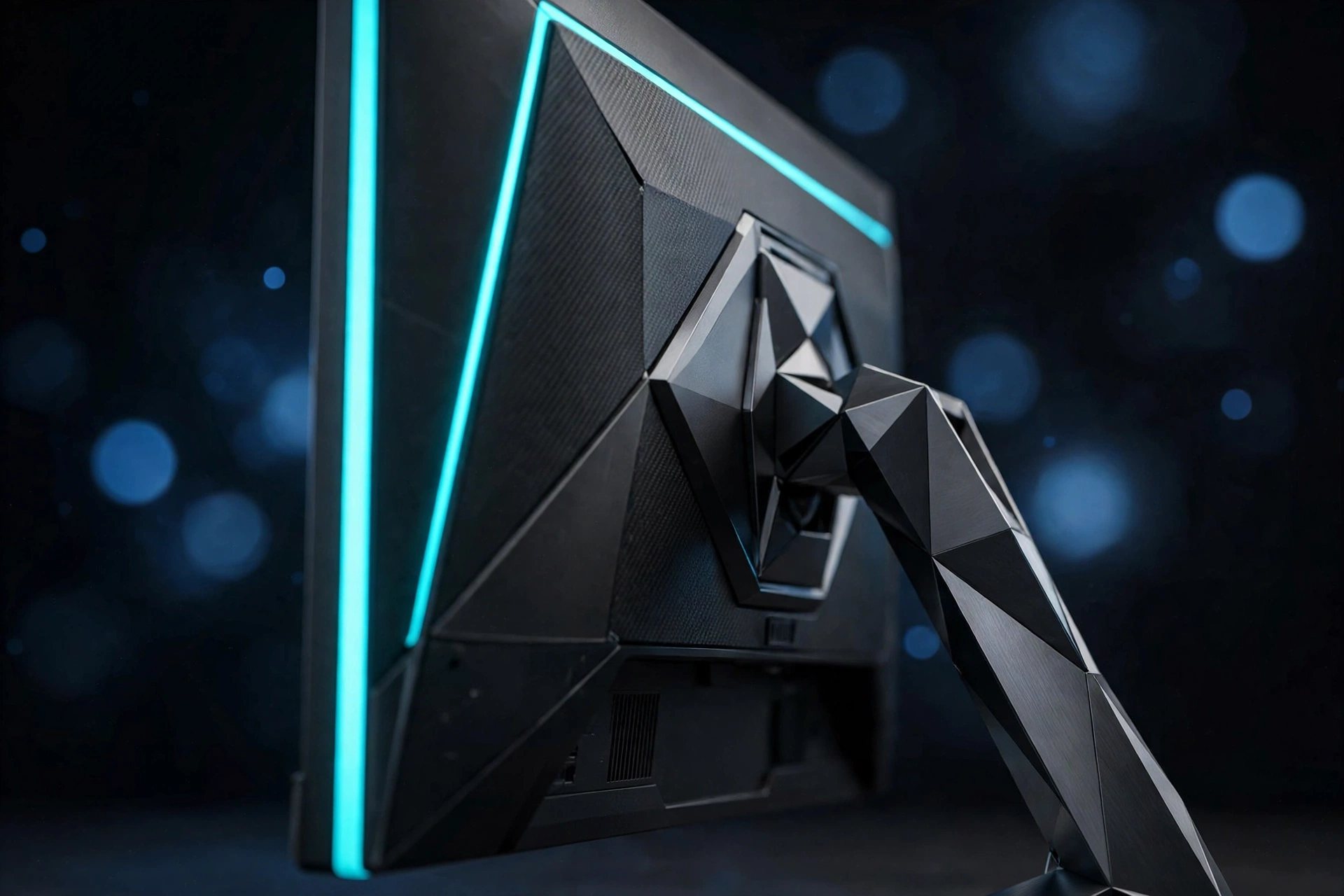
Connectivity is generous for a desktop gaming monitor: one DisplayPort 2.1 port, two HDMI 2.1 ports, one USB-B port, two USB-A ports and a 3.5mm headphone jack. The stand adjusts for height, tilt, swivel and pivot, and the monitor accepts 100 x 100 mm VESA mounts.
One notable omission is a USB-C video input. That will not bother most desktop gamers, but it makes the monitor less convenient for anyone hoping to connect a laptop through a USB-C docking station.
The G60H is Nvidia G-Sync Compatible and supports AMD FreeSync Premium — with two important limits. Samsung confirms that FreeSync Premium does not work in the 1,100Hz mode, and AMD Radeon RX 6000-series and older graphics cards cannot drive refresh rates of 1,000Hz or higher at all. Mac users face another restriction: macOS supports neither Dual Mode nor the monitor’s native 600Hz maximum, so this is strictly a Windows gaming investment.
That last point is worth remembering because the wider ecosystem only recently caught up. Microsoft updated Windows 11 earlier in 2026 to support monitors reporting refresh rates above 1,000Hz, paving the way for displays like the G60H.
Is it really the world’s first 1,100Hz monitor?
Samsung describes the Odyssey G6 as the world’s first 1,100Hz gaming monitor, but that claim needs a footnote. LG’s competing UltraGear 25G590B already supports 1,100Hz through overclocking. The LG panel runs natively at 1,000Hz at Full HD (1,920 x 1,080) on a smaller 24.5-inch IPS screen, and it costs $999.99 — $100 more than Samsung’s monitor. It went on sale in the US in August 2026.
Samsung’s approach offers a different balance: a sharper 1440p mode for everyday gaming, and a lower-resolution option for maximum speed. LG’s monitor, by contrast, is a dedicated speed-first display with no QHD mode at all. Whether Samsung’s “world’s first” wording holds up depends on how strictly you read it — native 1,100Hz out of the box, without overclocking, is genuinely new. But anyone shopping in this segment should know the LG alternative exists, and that it reaches the same headline number at a higher resolution, albeit through an overclock.
Who should actually buy it?
The most important thing to understand about a 1,100Hz monitor is that the number on the box is not the number you will see in your games. A monitor refreshing 1,100 times per second does not mean every game will deliver 1,100 frames per second. Your graphics card, processor, game settings and the game itself determine how quickly new frames are produced. A faster monitor cannot create frames the computer has not rendered.
That makes the G60H most interesting for competitive players in titles like Counter-Strike 2 or Valorant, where players already lower their resolution and settings to chase maximum frame rates. In those games, on a powerful modern GPU, the 1,100Hz mode could shave motion blur and input latency to the lowest levels ever available on a consumer display. For everyone else — story-driven single-player games, general desktop work, or any setup without a high-end graphics card — the 600Hz QHD mode is the one that will actually get used, and the 1,100Hz mode may sit untouched.
Before spending nearly $900, buyers should check three things. First, can their PC produce enough frames? If a favourite title runs at 350 frames per second, a 1,100Hz monitor will not suddenly turn that into 1,100 frames per second. Second, is their graphics card compatible? Older AMD cards cannot reach 1,000Hz at all, and FreeSync Premium is unavailable in the fastest mode. Third, will the faster mode actually look better? The lower resolution makes small text and distant objects harder to distinguish, so the speed gain comes at a real visual cost.
Samsung has confirmed the $899.99 US price and the December 2026 rollout, but it has not announced an exact nationwide release date, and it has not announced pricing or availability for the Odyssey G6 outside the US. Some outlets have reported a UK price of £769.99, but Samsung itself has not confirmed pricing beyond the US. Independent reviews of both display modes will give a clearer picture of whether the extra speed delivers a worthwhile advantage — or whether 600Hz at QHD is the real sweet spot of this monitor.
What happens next
The Odyssey G6 reaches US retailers in December 2026, just in time for the holiday season and the winter esports calendar. Expect the first independent reviews within weeks of the retail launch, and watch for two things: measured motion clarity in the 1,100Hz mode, and whether Samsung brings Odyssey Clear Motion to the rest of its Odyssey lineup as promised.
The refresh-rate race is clearly not over. LG has already shown it can hit 1,100Hz through overclocking, and Samsung has now made it a native, out-of-the-box specification. The next step is likely to be a 1,100Hz panel that does not force a drop to 720p — and when that arrives, the $900 price of today’s G60H will look like the early-adopter premium it is.
Related reading
- Galaxy S27 Ultra Keeps 60W Charging (But Bigger Battery!)
- One UI 9.5 Beta Hides 80 Features Samsung Didn’t Mention
- How to Fix Laptop Overheating: 9 Fixes That Actually Work
FAQ
What is the Samsung Odyssey G6 G60H refresh rate?
The Odyssey G6 (G60H) reaches up to 600Hz at its native QHD resolution (2,560 x 1,440) and up to 1,100Hz in HD mode (1,280 x 720), using Samsung’s Dual Mode feature to switch between the two.
How much does the Samsung Odyssey G6 cost?
The Odyssey G6 costs $899.99 in the US. It has also been listed on Amazon slightly below that price. Samsung has not confirmed pricing outside the US.
When will the Samsung Odyssey G6 be available?
Samsung says the Odyssey G6 will reach US retailers in December 2026. It has not announced an exact nationwide release date, or availability in other countries.
Is the Odyssey G6 really the world’s first 1,100Hz monitor?
Samsung calls it the world’s first 1,100Hz gaming monitor, but LG’s UltraGear 25G590B already supports 1,100Hz through overclocking. The LG panel runs natively at 1,000Hz at 1080p and costs $999.99. Samsung’s 1,100Hz is a native, out-of-the-box mode — the first of its kind — but it only works at 720p resolution.
Can my PC actually use 1,100Hz?
Only if your graphics card can output close to 1,100 frames per second in the game you play. AMD Radeon RX 6000-series and older cards cannot drive refresh rates of 1,000Hz or higher, FreeSync Premium does not work in the 1,100Hz mode, and macOS does not support Dual Mode or the 600Hz maximum. A modern high-end GPU and a DisplayPort 2.1 connection are needed for the top speeds.
Does the Odyssey G6 have USB-C?
No. The Odyssey G6 has one DisplayPort 2.1 port, two HDMI 2.1 ports, a USB hub (one USB-B, two USB-A) and a 3.5mm headphone jack, but no USB-C video input, so it cannot be connected through a USB-C docking station.
Sources: Notebookcheck (November 24, 2026); TechRepublic; The Verge (November 23, 2026); HotHardware.
