


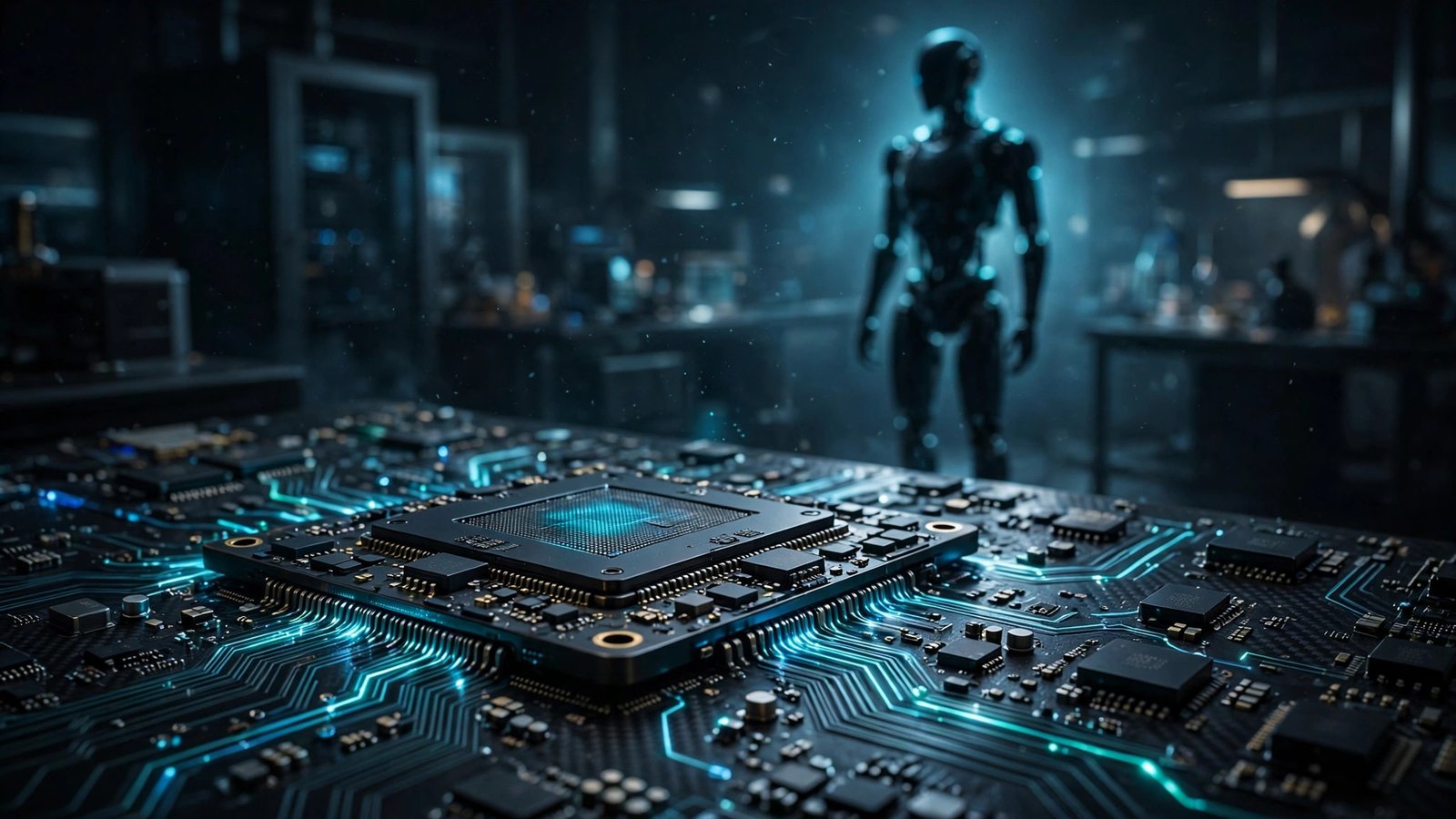
Tesla’s next-generation self-driving chip, AI5, will not reach the company’s cars until 2028, according to a new supply-chain report published on November 27, 2026. The reason is not that Tesla has changed its mind about the chip. It is that there simply will not be enough of them to go around — and the few AI5 chips Tesla can get next year are going to its Optimus humanoid robot instead.
The report, from Taiwan’s Commercial Times and covered in detail by Electrek and TrendForce on November 27, traces the problem to the factory floor. AI5 is built on TSMC’s 3-nanometre (N3) process, and the company that designs the chip for Tesla, Global Unichip Corp (GUC), is giving its limited 2027 allocation of that capacity to Google and Microsoft first. Tesla’s cars, which need millions of chips a year, will have to wait until more 3nm capacity comes online in 2028.
It is a sharp change from the plan Tesla laid out two years ago, and it means anyone buying a Tesla in 2027 will still be getting the current AI4 hardware — the same chip that is already being pushed to its limits by the latest self-driving software.
What the report says
GUC is a TSMC affiliate — TSMC is its largest shareholder — and it is the custom chip design house behind Tesla’s AI5 project. According to Commercial Times, GUC has secured the AI5 design work alongside orders from Microsoft and Google, but tightening N3 capacity at TSMC could constrain how fast the chip ramps up.
GUC’s 2027 allocation of TSMC’s 3nm wafers is much larger than this year’s, industry sources told the paper. Even so, with demand for AI computing exploding, it still cannot serve every big customer at once. So GUC is prioritising North American cloud projects, including Google’s Axion 2 and Axion 3 server processors and Microsoft’s in-house chips. Those orders carry high margins and good order visibility. Tesla’s robot and car chip does not make the front of the line.
The result, according to the report, is that Tesla’s initial 2027 wafer quota cannot support annual shipments for a fleet of millions of cars. The supply chain expects the limited AI5 volume to go first to Optimus, which needs a lot of computing power but ships in small numbers, and only expects large-scale adoption in cars after N3 capacity expands further in 2028.
TrendForce, reporting the same Commercial Times story, puts it the same way: large-scale AI5 deployment in electric vehicles may have to wait until 2028, when additional 3nm capacity comes online and supply constraints ease.
Musk’s version, and the supply chain’s version
Elon Musk gave his own version of events five days ago. Asked on Sunday, November 22, when AI5 would arrive in new cars, he replied: “It’s going to Optimus. Cars will remain at AI4. That’s enough to solve superhuman driving.”
On that telling, keeping AI4 in cars is a choice: the current chip is good enough, so the new chip can go to the robot. The supply-chain reporting tells a different story — one in which Tesla cannot get enough AI5 chips to put in cars anyway. As Electrek puts it, both versions can be true at the same time, but only one of them explains the timing.
The history supports the supply-chain reading. In June 2024, Musk said AI5 would be in vehicles in the second half of 2025. That did not happen. Tesla only taped out AI5 — the point where the chip design is finished and sent to the factory — in April 2026, and Musk had already started describing its focus as Optimus and Tesla’s supercomputer clusters. AI5 is roughly ten times as powerful as AI4, according to Musk, so it is a large step up that Tesla would presumably want in its cars if it could build enough of them.
There is also a pattern here that long-time Tesla watchers will recognise. Musk said similar things about HW3, Tesla’s previous self-driving computer, before the company eventually had to upgrade HW3 cars because the hardware could not run the newest software. Electrek makes the same point about AI4: if AI4 really were plenty, Tesla’s engineers would not be talking about squeezing the last few percent of performance out of the chip for the next software release.
Why Optimus gets the chips first
The numbers explain the decision. Tesla delivered roughly 1.6 million vehicles last year, and every one of them needs a self-driving computer. Optimus is a different story: Tesla now plans to put AI5 in the robot around April 2027 and push external Optimus deliveries to late 2027, and even an aggressive robot ramp next year is measured in thousands of units, not millions.
If the 2027 AI5 supply is only a fraction of what a car programme needs, Optimus is the only product Tesla has that can absorb it. A robot that ships in the low thousands can be built around a scarce chip. A car fleet that ships in the millions cannot.
The memory crunch behind the delay
The AI5 squeeze is part of a wider chip and memory crunch that is now hitting Tesla from several directions at once. This fall, Tesla cut the memory on its AI4.5 refresh from 32GB to 24GB of RAM, with Musk saying “RAM is super expensive”. The company has also said AI4 itself now costs twice as much as it used to, because of memory and storage price hikes. AI5’s own memory has been moving around too: Tesla cut its RAM from 144GB to 72GB, then bumped it back up to 96GB a day later.
That is a company rationing chips and memory, not one calmly leaving a major compute upgrade on the shelf because it is not needed. The same shortage is rippling across the whole tech industry: the AI-driven memory shortage is now severe enough that Counterpoint Research expects global smartphone shipments to fall a record 13.9 percent in 2026. When memory gets scarce and expensive, every device maker feels it — and a car that needs a powerful AI computer plus gigabytes of fast memory feels it more than most.
What fills the gap: more factories, but not soon
TSMC is adding 3nm capacity, but not fast enough to change the 2027 picture. Its new 3nm fab in Tainan is scheduled for volume production in the first half of 2027, and its second fab in Arizona — which Musk has said will produce AI5 — is scheduled for the second half of 2027. Both come too late, and in too small a volume at first, to supply a car fleet in 2027.
Tesla also has a second source. Samsung is building its own version of AI5 on its 2nm process at its Taylor, Texas fab, but it expects volume production of Tesla’s AI chips there only in the second half of 2027 either. So neither supply route opens up a meaningful number of car-ready AI5 chips next year.
That leaves 2028 as the realistic window for AI5 in cars, when TSMC’s extra 3nm capacity is online and both the Tainan and Arizona fabs are producing at volume. Until then, the plan is clear: Optimus gets AI5, and cars stay on AI4.
What it means for Tesla owners and buyers
For now, the practical effect is straightforward. Teslas bought in 2027 will ship with AI4 hardware, with the AI4.5 refresh bringing mostly a move to faster LPDDR5X memory and less RAM than originally planned. Tesla’s FSD v15 update is, in Electrek’s words, basically AI4’s last shot: engineers are already squeezing the last few percent of utilisation out of the chip. Read our coverage of that update here: Tesla’s FSD v15 update.
That does not mean self-driving stops improving on AI4. FSD v15 brings a new “Reality View” rendering and a new vision encoder, and it runs on the hardware already in the fleet. But the headroom is shrinking, and the step change — the roughly tenfold jump in computing power that AI5 promises — is now at least a year further away for cars than Tesla originally planned.
For buyers, the message is to set expectations accordingly. A Tesla ordered in 2027 will not have the company’s newest self-driving chip, and it will not get one later: the computer is built into the car. The AI5 upgrade, when it comes, will arrive with new cars in 2028 at the earliest, assuming TSMC’s capacity expansion stays on schedule.
The wider EV market, meanwhile, is not standing still. New electric SUVs are launching with faster charging and longer range every month — the 2027 Zeekr 7X, launched the same day as this report, charges from 10 to 80 percent in as little as 10 minutes — and driver-assistance hardware is becoming a selling point in its own right. Tesla’s bet is that AI4 is enough for now. The supply chain’s bet is that Tesla had no choice.
What happens next
The next milestones to watch are concrete. Tesla plans to put AI5 in Optimus around April 2027, with external robot deliveries following late in the year — that will be the first real-world test of the chip. TSMC’s Tainan fab should reach volume production in the first half of 2027, and the second Arizona fab in the second half, with Samsung’s Taylor fab also targeting volume production of Tesla chips in the second half of 2027. If those three ramps land on schedule, 2028 becomes the year AI5 finally reaches cars in volume.
Until then, the story to watch is whether AI4 can keep delivering meaningful self-driving improvements, or whether the chip that Musk calls “enough” starts to show its age the way HW3 did. The answer will come from FSD v15 and whatever follows it — running on hardware that is now officially the end of the line.
FAQs
Q1: When will Tesla AI5 come to cars?
A1: Not before 2028 at scale, according to a November 27, 2026 supply-chain report in Taiwan’s Commercial Times. Tesla’s chip design partner GUC is giving its limited 2027 TSMC 3nm capacity to Google and Microsoft data-centre chips first, so the scarce AI5 chips go to the Optimus robot in 2027, with large-scale use in cars expected only once more 3nm capacity comes online in 2028.
Q2: What is Tesla AI5?
A2: AI5 is Tesla’s next-generation self-driving computer, the successor to the AI4 chip in current Teslas. According to Elon Musk it delivers roughly ten times the computing power of AI4. Tesla taped out the chip — finished the design and sent it to the factory — in April 2026, after originally planning to have it in vehicles in the second half of 2025.
Q3: Why is Tesla AI5 delayed for cars?
A3: It is a chip supply problem, not a design problem. AI5 is built on TSMC’s 3-nanometre process, and Tesla’s design partner GUC does not have enough 2027 wafer allocation to supply both the cloud giants and Tesla’s car fleet. Google’s Axion 2 and Axion 3 server chips and Microsoft’s in-house chips get priority because of their high margins and order visibility, leaving Tesla with only a small AI5 allocation for 2027.
Q4: What chip will Teslas bought in 2027 have?
A4: Cars bought in 2027 will still use AI4 hardware, with the AI4.5 refresh bringing mostly a move to faster LPDDR5X memory — and less RAM than originally planned, cut from 32GB to 24GB because memory prices have soared. Elon Musk has said cars will remain on AI4 while AI5 goes to the Optimus robot.
Q5: Will Full Self-Driving keep improving on AI4?
A5: Tesla’s FSD v15 software is, in Electrek’s words, basically AI4’s last shot — engineers are squeezing the last few percent of performance out of the chip. FSD v15 still brings real improvements, including a new Reality View rendering, but the roughly tenfold compute jump that AI5 promises will not reach cars until 2028 at the earliest.
Q6: What is Optimus, and when does it get AI5?
A6: Optimus is Tesla’s humanoid robot. Tesla plans to put the AI5 chip in Optimus around April 2027, with external deliveries of the robot starting late in 2027. Because the robot will ship in the thousands rather than the millions, it is the only Tesla product that can be built around the small number of AI5 chips available in 2027.
Sources
- Electrek: Tesla AI5, Optimus and the real reason behind TSMC 3nm
- TrendForce: TSMC affiliate GUC reportedly lands Tesla AI5 ASIC project, but tight 3nm supply could limit near-term ramp-up
