


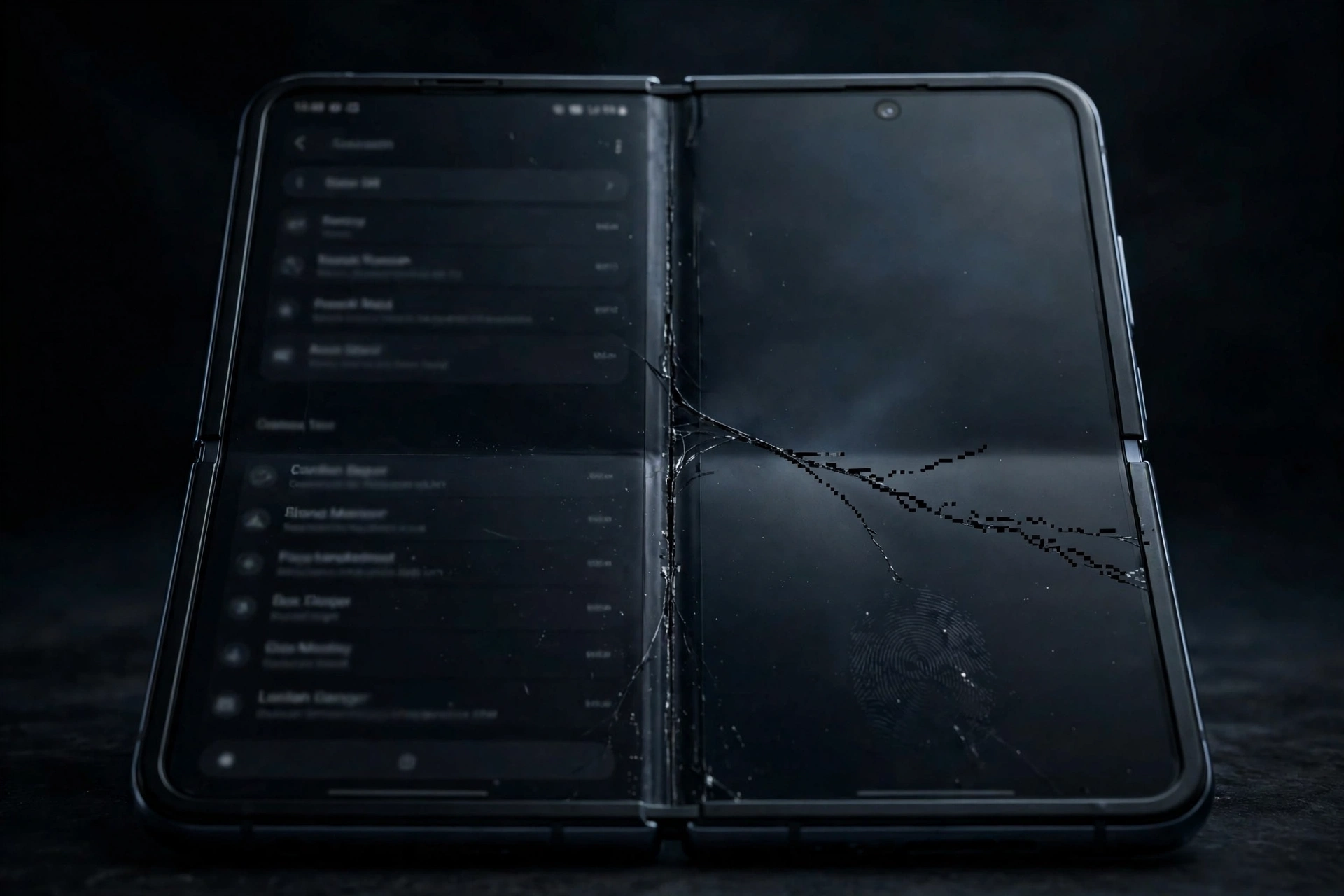
Just hours after the iPhone Duo went on sale, owners are reporting a worrying problem: the inner folding screen is cracking along the crease. The reports, backed by close-up photos shared online, raise serious questions about how durable Apple’s first foldable iPhone really is — especially after Apple reportedly refused one warranty claim. If you own an iPhone Duo, or are thinking about buying one, here is what is happening, what Apple is said to have done, and what you should do to protect yourself. For background on the device itself, see our guide to the iPhone Duo: Apple’s First Foldable iPhone — Price, Specs & Release Date.
Key Takeaways
- iPhone Duo owners report inner screens cracking along the fold within hours of launch day.
- Photos show cracks running along the crease, with at least one case also showing a dead pixel line.
- The most prominent photos were shared by leaker Ice Universe after the October 23 launch.
- One owner says Apple refused a warranty claim on a $2,199 512GB unit that broke after 3 hours, blaming a drop.
- Inspect your screen closely, document any damage immediately, and escalate any warranty denial in writing.
What the Photos Show
The photos circulating online show a thin crack running along the fold of the iPhone Duo’s inner display — exactly where the screen bends every time the phone is opened and closed. In some images the crack is visible even when the display is lit, cutting across the middle of the screen and making the fold impossible to ignore. It is the kind of damage foldable-phone owners fear most, because the crease is both the phone’s defining feature and its most vulnerable point.
At least one reported case also shows a dead pixel line running from the crack, suggesting the damage is not only cosmetic. A dead line of pixels points to a failure in the display panel itself, not just a surface scratch or a screen protector issue. The photos were shared by well-known leaker Ice Universe, and they began appearing shortly after the iPhone Duo launched on October 23, with owners saying the cracks developed within hours of first use rather than after weeks of wear.
The Warranty Refusal
The most alarming report so far involves an owner who says their $2,199 512GB iPhone Duo broke after just 3 hours of use. According to the account, the inner screen cracked along the fold during normal use on launch day. When the owner took the phone to Apple, the company reportedly refused the warranty claim, saying the damage was caused by the phone being dropped.
That explanation has frustrated many owners, who argue that a crack running neatly along the fold looks very different from impact damage from a drop. It is important to note the caveat here: these are unverified claims from individual owners and social media reports, not a confirmed Apple statement or a formal recall. Apple has not, at the time of writing, publicly confirmed a widespread defect. Still, the refusal — if accurate — sets a worrying precedent for other owners who may face the same problem and the same response.
What Should iPhone Duo Owners Do?

- Inspect your screen now: Open the phone fully, turn the brightness up, and look closely along the entire fold in good light. Check for hairline cracks, dead pixels, or discoloration, and repeat the check over the first few days.
- Document everything: Take dated photos and videos of any damage, keep your receipt and order confirmation, and note exactly when you first noticed the problem and how the phone had been used.
- Escalate denials: If a warranty claim is refused, ask for the decision in writing, request a senior advisor or manager, and keep a record of every conversation, case number, and name you are given.
- Get AppleCare+: If you do not already have it, consider AppleCare+ for accidental damage cover, which can make a cracked-screen repair far cheaper than paying out of pocket.
- Handle it gently: Avoid pressing hard on the crease, do not force the hinge, and keep the phone away from grit, sand, and sharp objects that could stress the folding display.
The Bigger Picture
This is not the first time a first-generation foldable has faced launch-day durability questions. Samsung’s original Galaxy Fold in 2019 suffered a famously troubled launch, with review units breaking within days and Samsung delaying the release to redesign the hinge and screen protection. Apple clearly hoped to avoid that fate, and most iPhone Duo owners so far have not reported cracks. But the comparison matters: foldable displays remain a new and demanding technology, and even a small number of early failures can shake confidence in a $1,999-and-up device. Whether this turns out to be a handful of isolated cases or a wider pattern will depend on how many reports emerge in the coming weeks — and how Apple responds to them.
Frequently Asked Questions
Are all iPhone Duo screens cracking?
No. The reports so far involve a small number of owners, and most iPhone Duo units appear to be working normally. The concern is that cracks have appeared so quickly, and along the fold itself, rather than the total number of cases.
Will Apple repair a cracked iPhone Duo screen under warranty?
That is currently unclear. At least one owner says Apple refused a warranty claim, blaming a drop, but warranty decisions can vary by store and case. Document your damage and escalate if you believe the crack was not caused by misuse.
Is the crack covered by AppleCare+?
AppleCare+ generally covers accidental damage, subject to a service fee, which should make a screen repair much cheaper than without cover. Check the terms of your own plan for the exact fee and conditions.
Should I still buy an iPhone Duo?
If you want a foldable iPhone, it is sensible to wait and see how widespread these reports become and how Apple handles them. If you already own one, inspect it carefully and keep your proof of purchase safe.
Bottom line: A foldable screen cracking on launch day is exactly what buyers feared, and a warranty refusal makes it worse. For now, the reports remain unverified and limited in number, but iPhone Duo owners should inspect their screens, document anything unusual immediately, and push back — in writing — if a legitimate claim is denied.
