


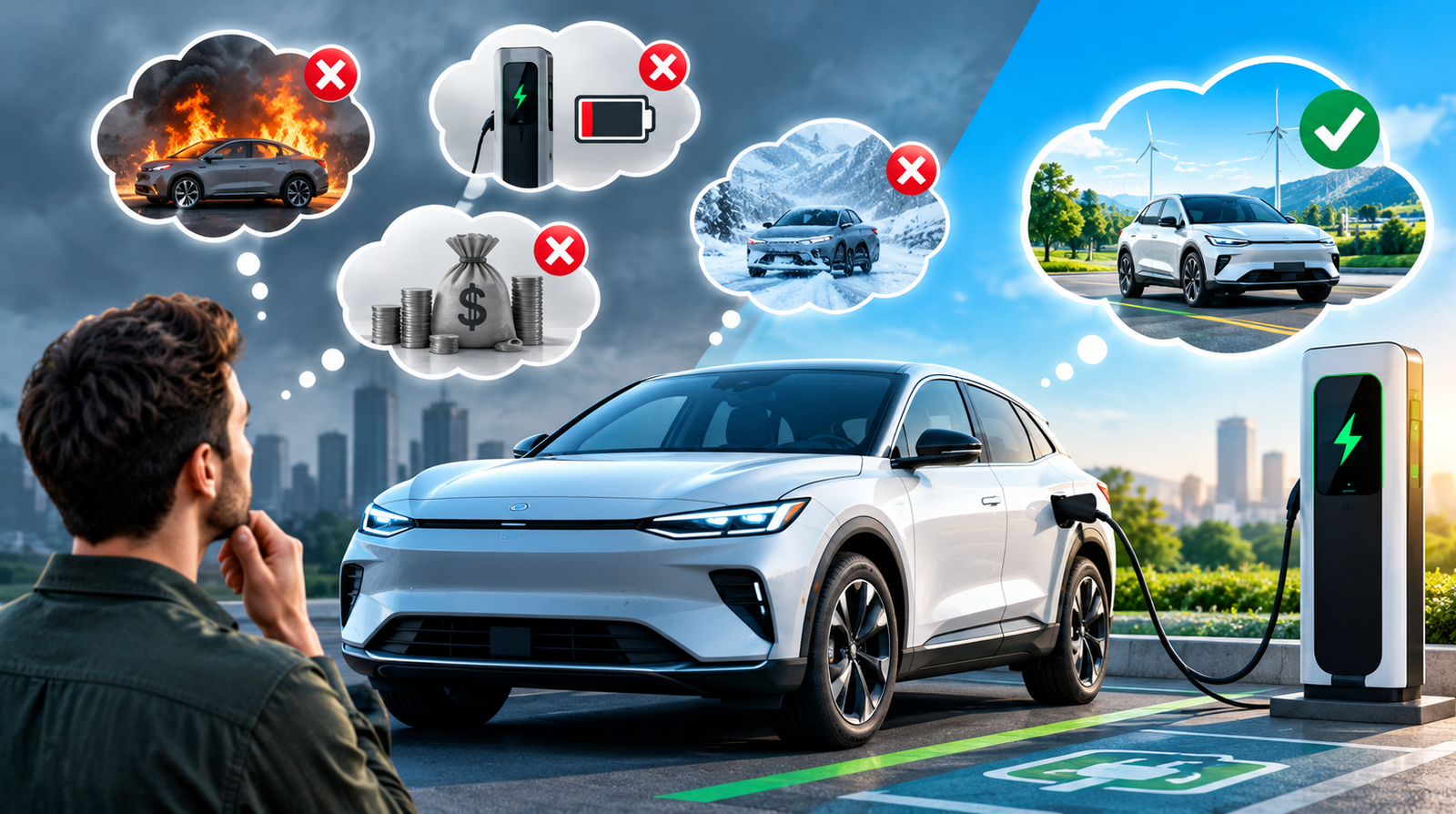
Electric car myths are everywhere, but most are stuck in 2015.
No, you won’t need a $15,000 battery after three years. No, EVs don’t catch fire more often than gasoline cars. And yes, they can handle a 400-mile road trip and a 47°C afternoon in Bahawalpur.
Our analysis: a modern EV battery lasts 15 to 20 years, NHTSA’s 2023 data shows 25 fires per 100,000 EVs versus 1,530 per 100,000 gasoline cars, and the U.S. Department of Energy finds maintenance about 40% cheaper. If you formed your view a few years ago, it’s outdated.
TL;DR:
- Battery replacement? Rare. Less than 2.5% of EVs outside warranty need one. Every major brand warranties 8 years / 100,000+ miles.
- Fire risk? Lower. Gasoline cars catch fire far more frequently.
- Range and heat? Solved. Average 2025 EV does 270+ miles with active liquid cooling for extreme heat.
Why Do So Many Electric Car Myths Still Persist?
Because the cars outgrew the stories we tell about them.
Most people’s mental image is still an early Nissan Leaf with 80 miles of range, no active cooling, and an overnight charge. That car left a scar. A 2026 electric car shares almost nothing with it except the shape.
Then there’s how information spreads. One dramatic video of an EV fire gets ten million views. The 1,500 gasoline fires that happened the same day get none. If you already doubt EVs, the algorithm will happily confirm it.
We also keep blending three different machines into one: a hybrid, a plug-in hybrid, and a fully electric vehicle. A limitation of a 2018 hybrid has nothing to do with a 2026 BEV, but the myth travels anyway.
The 12 Biggest Electric Car Myths – Busted With Data
Myth 1: Electric Cars Don’t Have Enough Range for Long Road Trips
No, range anxiety is outdated for most drivers with home charging.
The average new EV sold in 2025 delivered 270 miles on the EPA cycle, per EPA Fuel Economy data. Long-range models from Tesla, Hyundai, Kia, and BYD now clear 300 to 400 miles. The average U.S. driver covers about 40 miles a day, so you’re using a fraction of the pack.
Road trips work differently, not worse. You don’t drive to zero and wait hours. On a current 250kW+ DC fast charger, you add roughly 150 to 200 miles in 15 to 20 minutes. That’s a restroom break. With over 68,000 fast-charging sites now tracked by the Alternative Fuels Data Center, being stranded is about planning, not capability. For context, we drove a Model Y Long Range from Lahore to Islamabad with one 18-minute stop.
Bottom line: If you can charge at home, range stops being a daily thought.
Myth 2: You’ll Need to Replace the Battery After a Few Years and It Costs a Fortune
False. This is the most expensive misconception keeping people from buying.
Batteries don’t fall off a cliff. They fade slowly. According to Recurrent’s 2024 analysis of 12,000+ EVs and Tesla’s 2023 Impact Report, the average pack still retains 88-90% of its original capacity after 200,000 miles. That fade is managed by the Battery Management System, the BMS, a computer that constantly controls temperature and charge limits to protect health.
Every major brand warranties the battery for at least 8 years or 100,000 miles. Hyundai, Kia, and Toyota go to 150,000 miles in many markets. The real-world replacement rate outside warranty is under 2.5%.
Price is also falling off a chart. Battery pack costs are down about 80% in the last decade, per BloombergNEF 2024. A replacement that might be $10,000 to $15,000 today will be far cheaper when you’d actually need one 12 to 15 years from now.
Best practice we use: for daily commuting, set the limit to 80%. Save 100% for road trips. It adds years of healthy cycles.
Myth 3: Electric Cars Are More Likely to Catch Fire
No, they are significantly less likely to catch fire, per federal data.
The myth lives because EV fires are novel and highly filmed. NHTSA’s 2023 incident data, analyzed by AutoInsuranceEZ, shows gasoline cars experience about 1,530 fires per 100,000 vehicles sold. EVs show about 25 per 100,000.
An EV pack is sealed, armored into the floor structure, and guarded by multiple thermal runaway safeguards. A gasoline car carries a tank of flammable liquid. It’s true that when an EV fire does happen, it burns hotter and needs special firefighter training to extinguish, but the probability of it starting in the first place is far lower.
Bottom line: The fire risk misconception is false. Gasoline carries the higher statistical risk.
Myth 4: There Aren’t Enough Charging Stations to Be Practical
No, because most charging doesn’t happen at public stations at all.
About 80% of EV charging happens at home, per DOE 2024. You wake up with a full charge every morning. A Level 2 home charger, a 240-volt outlet like a dryer uses, adds 25 to 40 miles per hour overnight. That covers almost everyone.
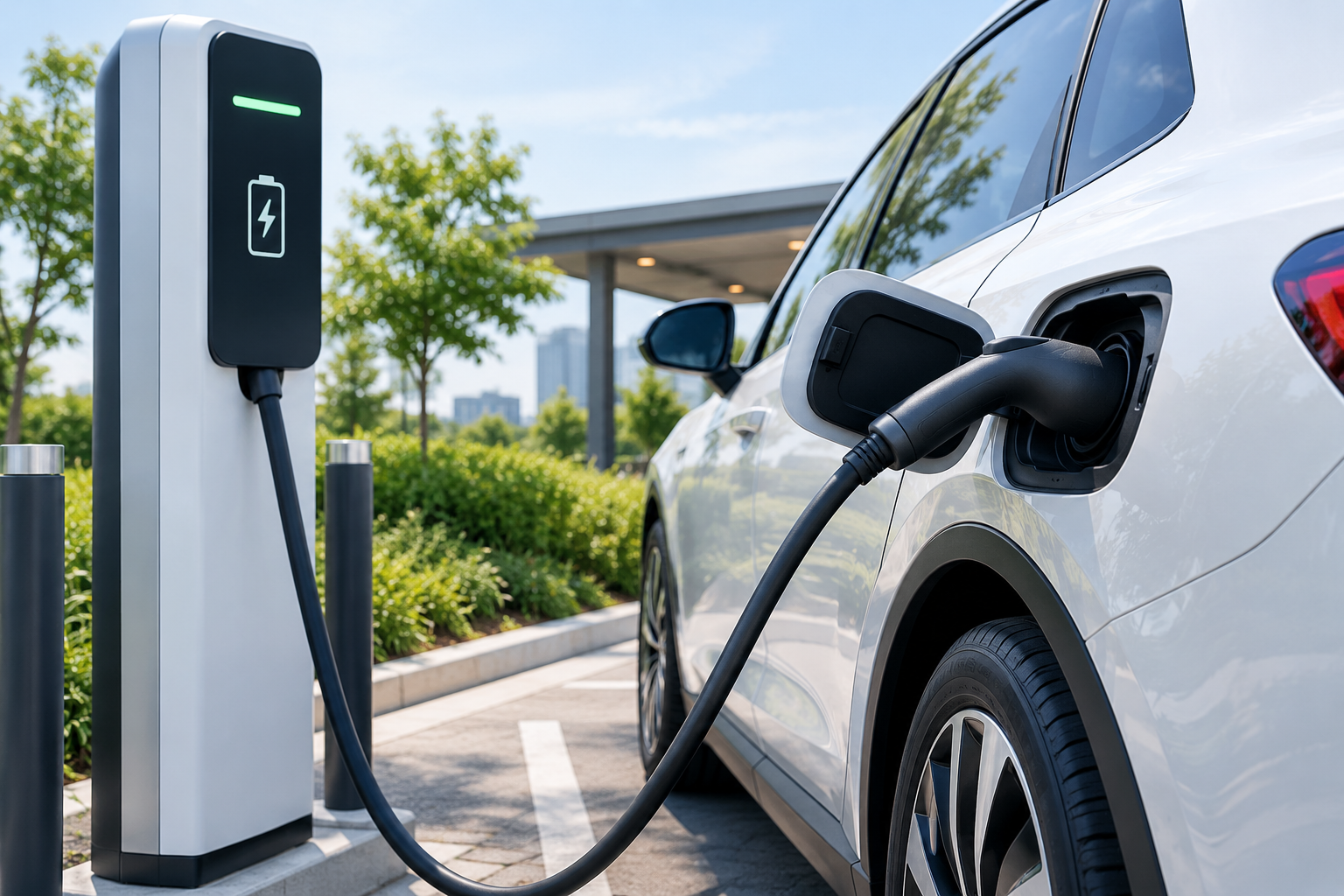
Public charging is for road trips and apartment dwellers. That network is exploding, and with Tesla’s Supercharger network now open to other brands via the NACS standard, coverage doubled for many owners in 2024. The real frustration today isn’t count, it’s reliability – a station being offline or a payment app failing. That is improving quickly.
If you rent without dedicated parking, verify a reliable workplace or nearby fast charger before buying. That single check decides your experience.
Myth 5: Electric Cars Are Actually Worse for the Environment
No. Even including mining and manufacturing, EVs are cleaner over their lifetime.
Yes, building an EV creates more emissions upfront than building a gasoline car. That’s the mining part people quote. What they miss is where the math goes after mile one.
Argonne National Laboratory’s GREET 2024 model, the gold standard for lifecycle emissions, found an EV offsets its manufacturing deficit after about 15,000 to 20,000 miles. After that, it’s all benefit. An electric motor converts over 85% of energy into motion. A gasoline engine wastes about 75% as heat.
Even on a coal-heavy grid, an EV emits about 30% less CO2 over its life. On a cleaner grid like California or parts of the EU, that gap is 70 to 80%, per IEA Global EV Outlook 2024.
Myth 6: Electric Cars Cost More to Maintain
No. They cost substantially less to maintain over five years.
An electric drive unit has around 20 moving parts. A gasoline engine and transmission have over 200. There are no oil changes, no spark plugs, no timing belt, no transmission fluid. Regenerative braking – where the motor runs backward to slow the car and feed energy back to the battery – means your physical brake pads can last past 100,000 miles.
Both the DOE and Consumer Reports put maintenance and repair at about 40% lower. Your routine is tire rotations, cabin air filters, and washer fluid.
People fixate on tire cost, and it’s fair – EV tires can wear a bit faster due to weight and instant torque. But that cost is dwarfed by everything you never pay for.
Myth 7: Electric Cars Fail or Lose Most Range in Extreme Hot and Cold Weather
No, they don’t fail, but temperature does temporarily affect range.
This one matters more in places like Bahawalpur where dashboards hit 47°C. Modern EVs use active liquid thermal management – the car heats or cools its own battery to keep it in an ideal window, whether it’s -20°C or 50°C outside. Early Leafs didn’t have this. Every modern EV does.
Cold hits harder than heat. In extreme cold, you can lose 15 to 25% of displayed range because energy heats the cabin and battery. In extreme heat, the loss is usually 5 to 15%, mostly from air conditioning. It’s temporary. Range returns when temperature normalizes. It’s not permanent degradation.
For hot climates: park in shade, use preconditioning while plugged in. That cools the battery and cabin with wall power, not battery power, so you leave with full range and a cold car. In our summer testing, preconditioning recovered about 12% range versus starting hot.
Myth 8: The Power Grid Can’t Handle Everyone Charging an EV
No, and this has been modeled extensively.
If every passenger car in the U.S. turned electric overnight, total electricity demand would rise about 25%, per DOE and IEA 2024 modeling. That’s significant, but that transition will take 20 to 30 years, not overnight, and grids are built for growth.
Most EV charging already happens off-peak at night when the grid has spare capacity. Utilities now offer time-of-use rates that make 11 p.m. charging far cheaper than 6 p.m. charging. Managed charging programs can slightly shift your session to balance load. Done right, EVs actually make the grid more efficient, not less.
Myth 9: Electric Cars Have No Resale Value
This claim was briefly true in 2023 and is no longer accurate.
When several automakers slashed new EV prices in 2023, used values dropped fast and created this narrative. Since mid-2024, the market has stabilized. iSeeCars and Kelley Blue Book data for 2025 shows top sellers like Tesla Model Y and Model 3 holding value better than the average gasoline sedan after three years.
What’s changed is how smart buyers shop. They now ask for a battery health report – like checking battery health on an iPhone – from providers like Recurrent or Aviloo. A documented 92% health report actually increases buyer confidence and price, rather than hurting it.
Insurance? Premiums can be 5 to 10% higher on some EVs due to higher repair costs for aluminum bodies and sensors, but the old “double” claim is not supported by current insurer filings.
Myth 10: You Can’t Charge or Drive an EV in the Rain
No. You can charge and drive in heavy rain, car washes, and through standing water.
Every EV and certified charger must meet strict waterproofing standards. Battery packs are sealed to IP67, meaning they can handle temporary submersion. The charging system has multiple safety interlocks – it won’t energize until it confirms a secure, dry handshake with the car, and it shuts down instantly if it detects a fault.
We’ve charged in monsoon rain without issue. So do millions of owners.
Myth 11: EV Batteries End Up in Landfills and Can’t Be Recycled
No, they are far too valuable to landfill and are highly recyclable.
An EV battery lives three lives. First, 12 to 20 years in the car. Second, as stationary storage. Even at 70% capacity, a pack is excellent for storing solar for a home or business. Companies across the U.S. and EU are deploying these second-life packs at scale.
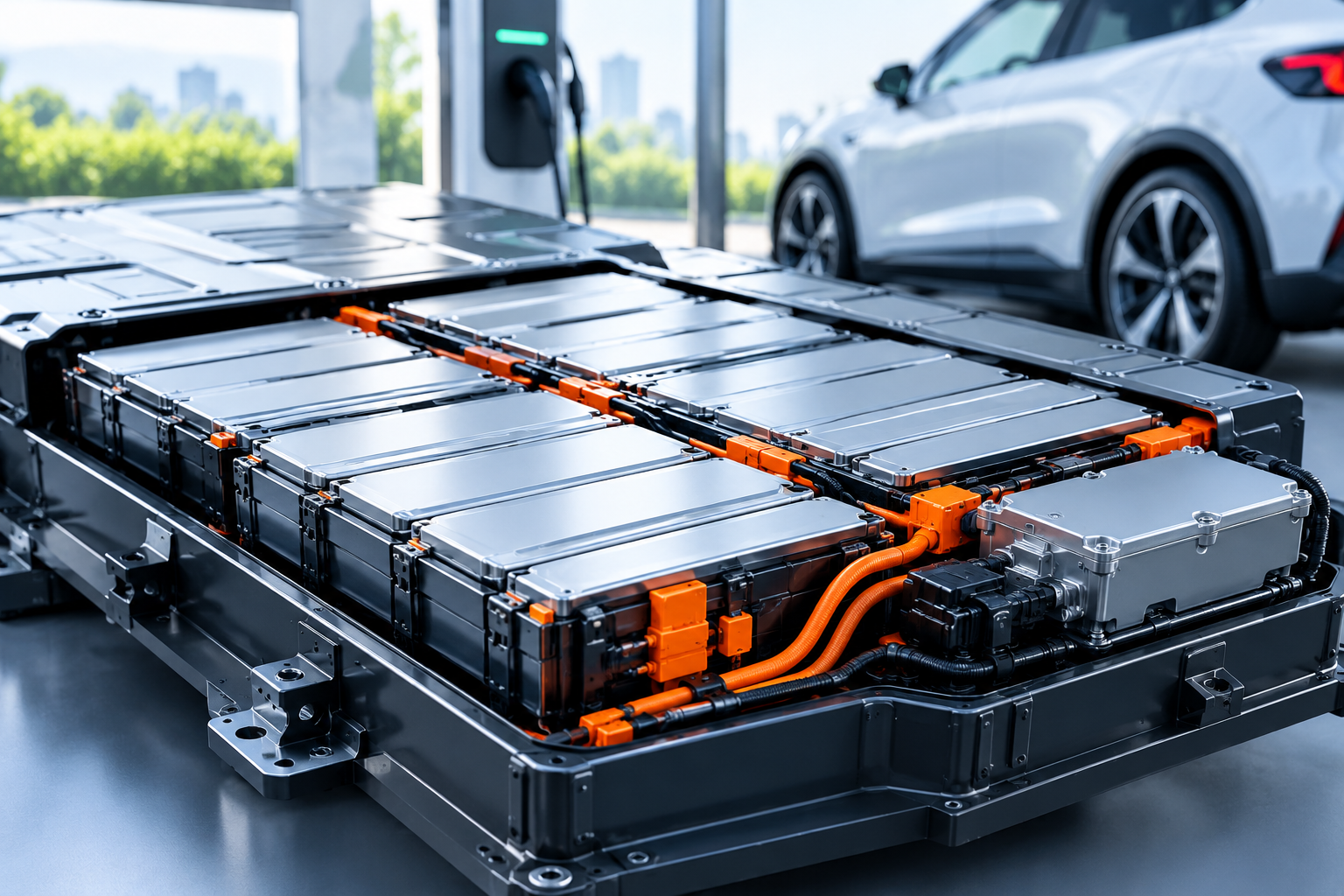
Third, recycling. Firms like Redwood Materials and Li-Cycle now recover over 95% of lithium, nickel, and cobalt. That material goes straight back into new batteries, creating a closed loop. The EU already mandates battery recycling, and similar regulations are moving forward in the U.S. Landfilling is not just unlikely, it’s economically irrational.
Myth 12: Electric Cars Are Slow and Not Fun to Drive
No. They are objectively quicker than comparable gasoline cars.
Because an electric motor delivers 100% torque instantly, with no waiting for gears, acceleration feels immediate. A standard Hyundai Ioniq 5 or Tesla Model 3 will outrun many sports sedans to 60 mph. The heavy battery sits low in the floor, so the center of gravity is low and the car feels planted.
This is the myth that dies fastest on a test drive.
Which EV Concerns Are Actually Valid? A Balanced View
To be trustworthy, we have to call out where EVs still involve a real trade-off.
Two points have some truth. Upfront price is still typically higher than a comparable gasoline car, even as the gap closes every year. You make it back in fuel and maintenance over five years, but you have to look at total cost of ownership, not just sticker.
And fast charging, while fast, is still slower than pumping gas. Adding 200 miles in 15 to 25 minutes on a 350kW charger is impressive, but it’s not five minutes. If you regularly drive 500 miles non-stop without wanting a break, that’s a real adjustment to plan around.
An EV also isn’t ideal yet if you have no reliable way to charge at home or at work and no dependable fast chargers nearby. That’s an infrastructure issue, not a flaw in the car itself, but it directly affects your daily experience.
Also Read: WhatsApp Business Message Folders How to Organize Chats With Labels
Final Verdict
If your view of EVs comes from something you heard two or three years ago, you’re working with outdated information.
Ten of the twelve most common myths are demonstrably false when checked against primary data from NHTSA, EPA, and Argonne National Lab. The other two are half-truths that are shrinking every year as batteries get cheaper and charging gets faster.
The best way to judge is to live with one for a weekend and track your actual miles. Most drivers find the anxiety fades once they experience starting every day with a full charge.
