


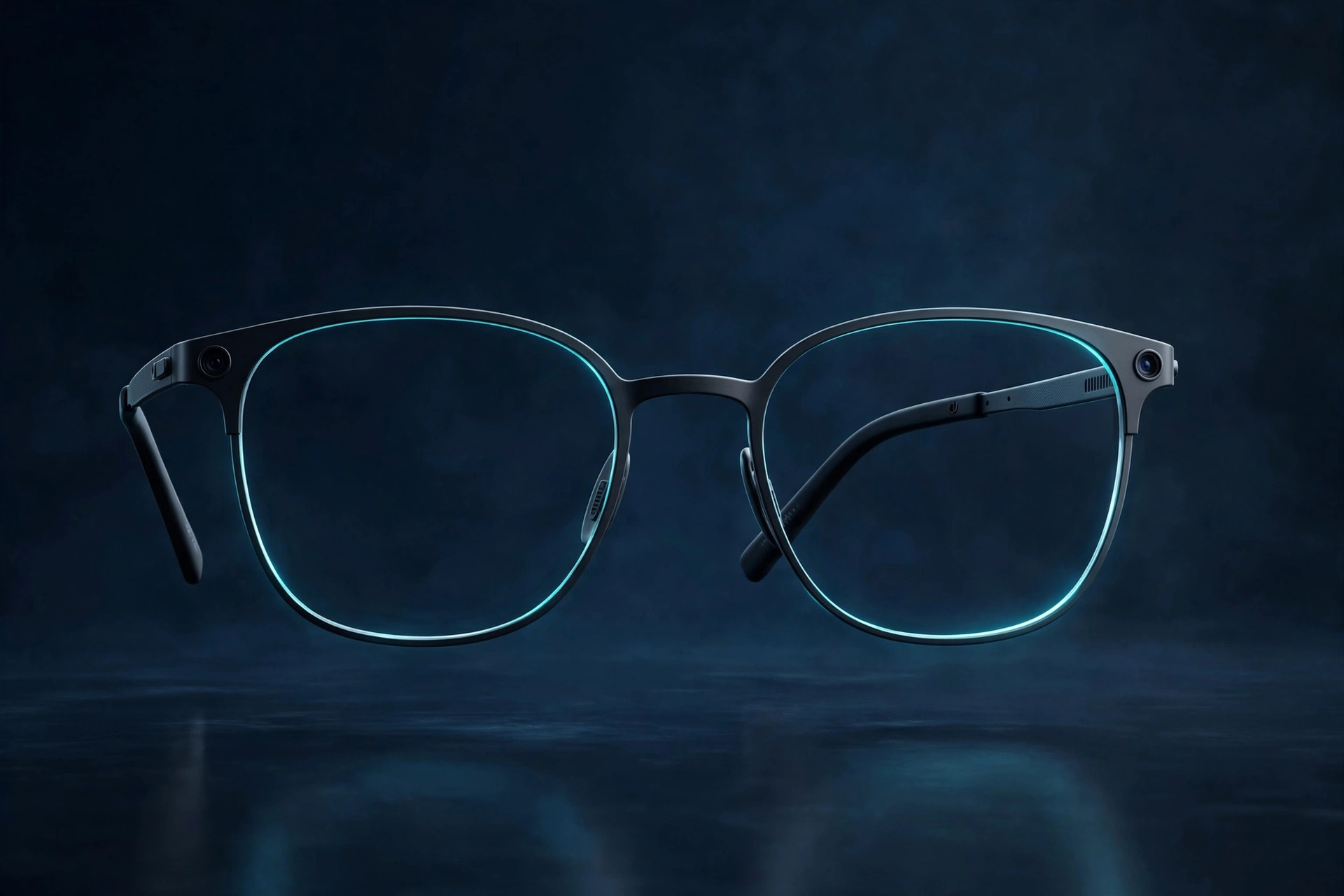
Apple’s first smart glasses are reportedly taking shape, with an unveiling planned at WWDC in June 2027 and shipments starting before the end of that year. The details come from Bloomberg’s Mark Gurman, writing in his Power On newsletter on Sunday, November 15, 2026, and summarized the same day by MacRumors and Digital Trends. Apple has not announced the device itself, so every date and feature here is reporting, not a product on sale.
The most important detail is what the glasses will not do. The first model will not show augmented reality images in the lenses. There is no display at all. Instead, the glasses are built around Siri and a paired iPhone: cameras watch the world, Siri answers questions about it, and the phone runs the apps. Gurman also warns that the hardware is largely settled, but the software and AI work is running behind, and that could still push both dates back.
Summary
- Apple reportedly plans to unveil its first smart glasses at WWDC in June 2027 and ship them before the end of the year, according to Bloomberg’s Mark Gurman.
- The glasses, developed under the codename N50, will have no display in the lenses and will not show augmented reality imagery.
- Wearers will interact through Siri, which will use the cameras to answer questions about their surroundings, identify buildings, translate signs, and give directions.
- The glasses will run no apps of their own. Developers will enable Siri control inside their existing iPhone apps, and the software will run on a paired iPhone. A recent iPhone will be required, with no Android support.
- Prototypes are reportedly slightly thinner than Meta’s second-generation Ray-Bans and run a pared-down version of visionOS 28 on a processor derived from older Apple Watch chips.
- The hardware is said to be largely settled, but the software and AI are running behind schedule and could delay the launch. Apple has not announced a price, a final name, or battery specifications.
No display, no apps — Siri does the work
The defining choice in Apple’s reported plan is restraint. The first Apple smart glasses will not put images in front of the wearer’s eyes. There is no augmented reality overlay, no floating notifications, and no screen of any kind. The glasses are a camera, a microphone, a speaker and a set of sensors in a frame, and the intelligence lives elsewhere: in Siri, and in the iPhone in the wearer’s pocket.
That makes the glasses closer in spirit to Meta’s Ray-Ban glasses than to Apple’s own Vision Pro. The wearer talks, Siri listens, and the cameras supply the context. Gurman reports that Siri will use the cameras to answer questions about the wearer’s surroundings: identifying a building, suggesting a meal based on the ingredients in a refrigerator, giving directions, or translating a sign or a conversation. The glasses will also handle calls, messages, iPhone notifications, calendars, reminders, music controls and smart home controls.
Apple’s own apps are the starting point. Visual Intelligence, Apple’s system for pointing a camera at something and asking questions about it, is set to be one of the core experiences on the glasses. The practical uses Gurman describes are deliberately ordinary: booking a restaurant table through OpenTable, requesting a ride through Uber or Lyft, ordering coffee through Starbucks, shopping on Amazon, or buying movie tickets through Fandango. The point is that they happen by voice, through glasses, without pulling a phone out of a pocket.
The iPhone is the computer
The second defining choice is that the glasses will not run apps at all. Third-party apps will not run directly on the first-generation product. Instead, developers will enable Siri control inside the iPhone apps they already ship, and the software will run on the paired iPhone, with the two devices working together to fulfil each request.
Apple is asking developers to build Siri AI integrations, known as App Intents, into their existing apps rather than writing new software for the glasses. The foundation is already being laid: Apple began introducing the necessary Siri controls in the first iOS 27.3 beta this month. The capability was originally demonstrated in 2024 and has since been rebuilt using newer AI models. Apple plans to release support for its own apps in December 2026, followed by third-party support in 2027.
That timetable is the glasses’ real dependency. Apple wants developers to have their integrations ready before the glasses arrive, and it sees access to its existing app ecosystem as a major selling point against rival smart glasses. There is also a hardware condition: the glasses will require a recent iPhone model, with no Android support. The paired phone compensates for the glasses’ limited processing power and memory. Wi-Fi will let some functions, such as audio playback, keep working without a nearby iPhone, but the glasses will not function as a fully independent device.
Thinner than Ray-Bans, with a light that says when the camera is on
On design, the prototypes are reportedly slightly thinner than Meta’s second-generation Ray-Ban glasses. Apple is developing multiple styles and colors, with an emphasis on materials, sensors and audio quality. Employees have described the sound as “industry-leading,” with the glasses supporting music playback, calls and FaceTime audio.
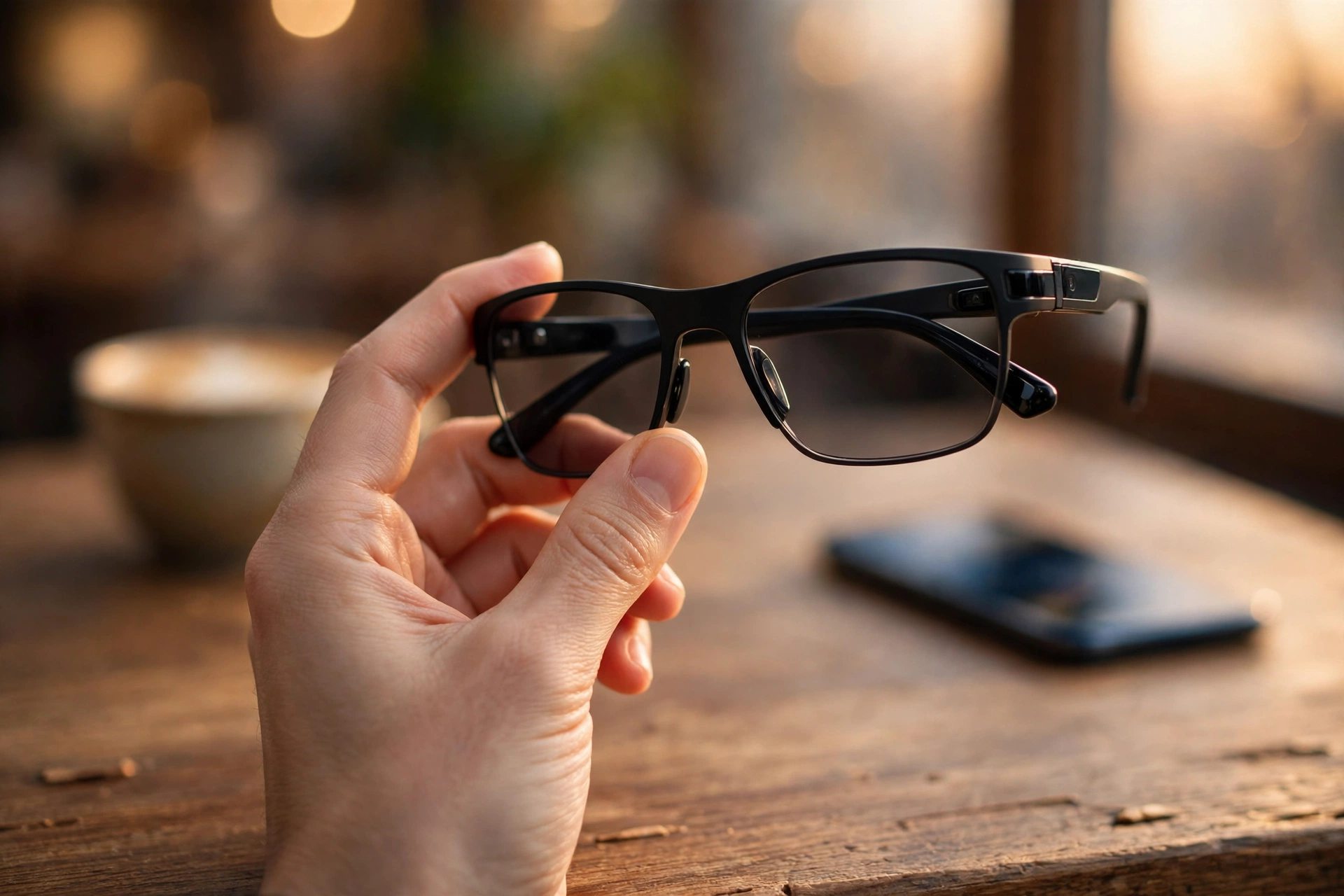
Some test units have oval camera openings integrated into the frame without protruding housings. A front light indicates use or charging, and Apple is experimenting with additional privacy features. That light answers the most persistent criticism of camera glasses: that the people around the wearer cannot tell when they are being recorded. Meta’s glasses carry a similar indicator light.
Charging is also unusual. Testers can charge the prototype glasses while wearing them, using a flat, three-pin magnetic connector “roughly the size of a Tic Tac” that attaches near the end of the left temple arm. Gurman said it remains unclear whether Apple will use this charging system in the shipping product. Inside, the prototypes reportedly run a reduced version of visionOS 28 and contain a processor derived from older Apple Watch chips. Work on the glasses started in the early 2020s.
The schedule has already moved once
The calendar is the least certain part of the story. Apple has wanted to unveil its smart glasses at WWDC 2027 and ship them before year-end, but Gurman is explicit that software running behind leaves both targets uncertain, even though both remain in place as of today. Much of the hardware is largely finalized; the software has to catch up.
The timeline has already shifted before. Earlier Bloomberg reporting had pointed to a late-2026 unveiling and early-2027 shipping, before the target moved to a June 2027 unveiling. A product whose schedule has moved once, and whose software is described as behind, should be read with that history in mind. A delay would not be a surprise; it would be a continuation of the pattern.
There is also overlap inside Apple’s own lineup. Camera-equipped AirPods remain scheduled for launch in late 2027, and they will also provide Siri with information about the user’s surroundings. The glasses should offer longer battery life and more sensors, with Apple seeing the potential for them to be worn throughout the day. What Apple has not said is as important as what Gurman reports: there is no official price, no final product name, and no battery specification. Every detail here comes from reporting based on people familiar with the work, and Apple could change the design, the features or the date before anything is shown in public.
Frequently Asked Questions
Q: When will Apple’s first smart glasses be unveiled?
A: Apple reportedly plans to unveil its first smart glasses at WWDC in June 2027 and begin shipping them before the end of that year, according to Bloomberg’s Mark Gurman. Both targets are uncertain because the software and AI work is running behind schedule, and the timeline has already moved once before.
Q: Will Apple’s smart glasses have a display?
A: No. The first model will not display augmented reality imagery and will have no display in the lenses at all. Wearers will interact through Siri, which will use the cameras to answer questions about their surroundings, while apps run on a paired iPhone.
Q: Do Apple’s smart glasses need an iPhone?
A: Yes. The glasses will require a recent iPhone model and will not support Android. Third-party apps will not run directly on the glasses; instead, developers will enable Siri control inside their existing iPhone apps, and the paired phone will compensate for the glasses’ limited processing power and memory.
Q: What can Apple’s smart glasses do?
A: According to the reporting, the glasses will identify buildings, suggest meals based on fridge ingredients, give directions, translate signs and conversations, and handle calls, messages, iPhone notifications, calendars, reminders, music controls and smart home controls. Planned app tasks include booking restaurant tables, requesting rides, ordering coffee, shopping and buying movie tickets.
Q: How much will Apple’s smart glasses cost?
A: Apple has not announced a price, a final product name, or battery specifications. No pricing was reported in Gurman’s newsletter, and Apple has not announced the device at all, so any price figure circulating online is speculation.
Related reading
- Samsung’s intelligent eyewear with Android XR
- iOS 27.3 beta 2
- Apple’s agentic Siri plans under John Ternus
Sources
- MacRumors, “Apple’s Smart Glasses Strategy Hinges on Siri and iPhone Apps,” November 15, 2026.
- Digital Trends, “Apple’s first smart glasses will have you talking with apps through Siri AI in 2027,” November 15, 2026.
- Bloomberg (Mark Gurman, Power On newsletter), November 15, 2026, as summarized by MacRumors and Digital Trends.
