


What happened
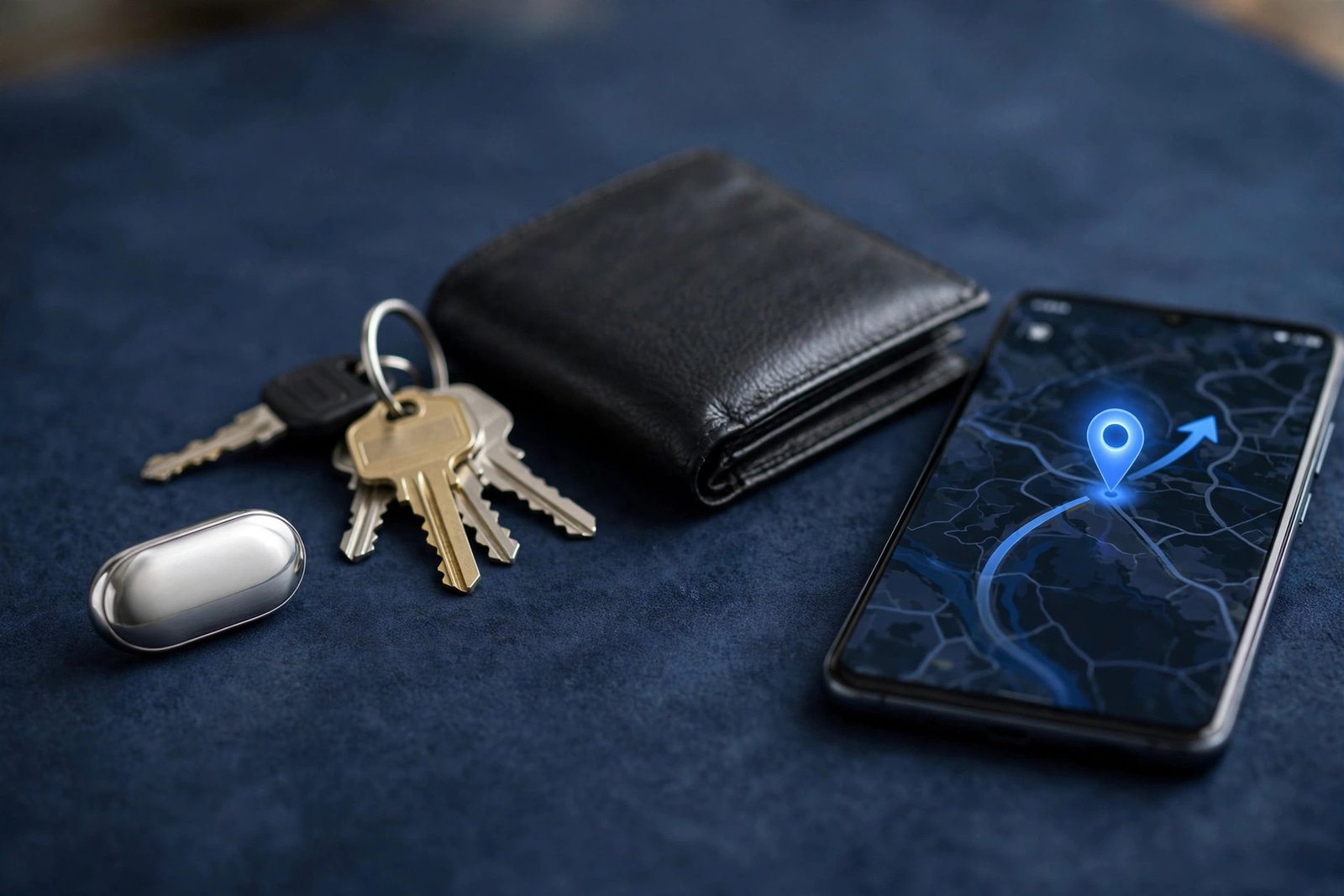
Google’s first tracker of its own is finally on sale. The Pixel Tag went on sale on Wednesday, November 11, 2026, for $29.99 for one tag or $99.99 for a four-pack, Google confirmed in its November Pixel Drop post. It is the first item tracker Google has built itself for Find Hub, its Android-wide finding network — the network that used to be called Find My Device.
Google first showed the tag in August 2026 at its Made by Google event, alongside the Pixel 11 series. It took three months to reach shops, and even the launch itself started messily: reviews and hands-on pieces landed on November 10, and several outlets, including TechCrunch and The Verge, headlined it as available that day. It was not. 9to5Google checked and found neither the Google Store nor outside retailers taking orders on November 10. Google’s own wording was plain — the tag was “available starting November 11” — and from that day it has been orderable in the US and seven other countries.
For Android users, this is a bigger deal than one more gadget. Apple has had the AirTag since 2021, and Android owners have had to rely on third-party trackers from Chipolo, Pebblebee and Motorola. Now Google sells the tracker, runs the network and builds the app — the same closed loop Apple has, but for Android.
What the Pixel Tag is
The Pixel Tag is a small stainless-steel oval tracker that clips to — or rather, sits inside a case attached to — the things you lose: keys, a wallet, a bag, a bike. It is 28 mm wide, 46.1 mm tall and just 5.4 mm deep, and it weighs 11.8 grams with its battery inside. That makes it noticeably thinner than Apple’s AirTag, which is 8 mm thick, and slim enough to slide into a wallet.
Inside is a user-replaceable CR2032 coin cell battery — the same kind the AirTag uses — which Google says lasts for more than a year. There is no charging cable and nothing to recharge; when the battery runs down, you swap the coin cell yourself. The tag is rated IP67 for dust and water, so it survives a dunk up to one metre deep for 30 minutes, and it carries a one-year warranty.
It also has a built-in speaker, an accelerometer and a physical button. The speaker plays a chime so you can hear the tag when it is hiding under a car seat or inside a bag, and 9to5Google found it loud enough at its highest setting. Double-pressing the button makes your phone ring, so the tag works in reverse too — useful when it is the phone that has gone missing down the back of the sofa.
One design choice will annoy some buyers: there is no keyring hole. To hang the tag on your keys you need a case, and Google does not make one of its own. Instead it sells two holders from Bellroy on the Google Store — a silicone Lite Case Duo at $24.99 for two, and a leather Tag Case at $29.99 in five colours. That adds to the real cost if you want it on a keyring.
Price and where to buy
In the US, a single Pixel Tag costs $29.99 and a four-pack costs $99.99, which works out to about $25 per tag. That is deliberate price parity with Apple’s second-generation AirTag, which costs $29 for one and $99 for four.
The tag is on sale in eight countries, according to Google’s support page as cited by 9to5Google: Australia, Canada, India, Japan, Singapore, Taiwan, the United Kingdom and the United States (not including Puerto Rico). Notably, no European Union country is on the list yet, so buyers in the EU cannot order one from Google for now. In India the Google Store lists it at ₹3,799, and in the UK the launch price was reported at £29 for one and £99 for four — check the local Google Store for the final figure before buying.
How the tracking works
The Pixel Tag works in two modes, depending on how far away your lost item is.
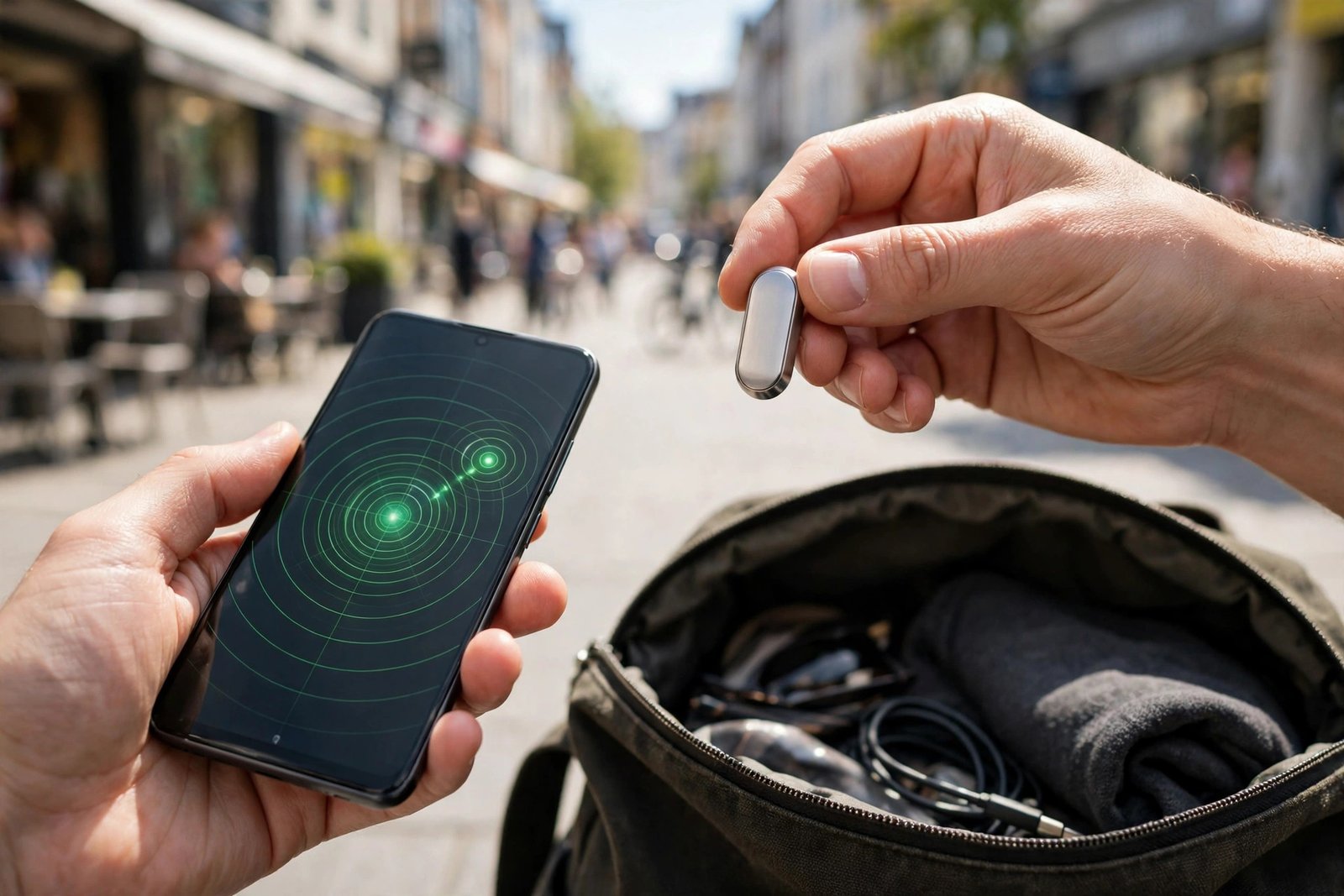
When the tag is nearby, your phone talks to it directly. Ultra-wideband (UWB) gives you both distance and direction in the Find Hub app — an on-screen arrow points you toward the tag, the way AirTag’s Precision Finding does. The tag also supports Bluetooth 6.0 Channel Sounding, a newer standard that measures distance more accurately than signal strength alone. Channel Sounding gives distance, while UWB adds the direction.
When the tag is far away, it leans on the Find Hub network: more than one billion Android devices that can detect the tag’s Bluetooth signal and report its approximate location back to you, with the location reporting encrypted end to end. You do not need a Pixel phone for any of this. The tag pairs through Fast Pair with any phone running Android 9 or newer, and the network does the rest.
There is a catch, and it is the most important thing to understand before buying. Precision finding — the arrow that points you to the tag — only works if your phone has the right hardware. Your phone needs a UWB chip for direction and distance, or Bluetooth 6.0 with Channel Sounding for distance. In Google’s own lineup, UWB has appeared on Pro models since the Pixel 6 Pro, while the base Pixel 10 and base Pixel 11 do not have it. Channel Sounding needs a Pixel 10-series flagship or newer, running Android 16. So on a Pixel 11 Pro, precision finding works as advertised; on a base Pixel 11, you get the network location and the ringer, but not the pointing arrow.
Even on a Pro phone, the arrow has limits. 9to5Google found the directional cues fading within about 10 to 12 feet on a Pixel 11 Pro XL — workable for a backpack, but less helpful for keys lost in a large room. Tom’s Guide measured the UWB connection holding to roughly 82 feet, against about 74 feet for an AirTag 2 in the same test, so the raw range is competitive. The last few steps are still a matter of listening for the speaker.
How to set it up
Setup is designed to take about a minute. Open the Find Hub app on your Android phone, bring the tag close, and Fast Pair should spot it. Tap to connect, give the tag a name — keys, wallet, backpack — and choose an icon. The tag then appears on the Find Hub map like any other tracked item, and you can ring it, share it or mark it lost from the same screen.
Sharing is one area where Google beats Apple: you can share a Pixel Tag with up to 10 people, double the five people an AirTag allows. That makes it practical for a family car key or a shared work bag.
If someone else finds your tag, they can tap their phone to it and NFC opens the tag’s Find Hub page, where they can see how to contact you. The tag also sends alerts if an unknown tag appears to be travelling with you, the same anti-stalking protection Apple built into AirTag.
Pixel Tag vs AirTag: which one should you buy?
On paper the two tags are near-identical, and the honest answer is that your phone decides for you. The Pixel Tag only works with Android, through Find Hub. The AirTag only works with iPhone and iPad, through Find My. There is no cross-platform winner — just the tracker that matches the phone in your pocket.
| Google Pixel Tag | Apple AirTag (2nd gen) | |
|---|---|---|
| Price (1 / 4-pack) | $29.99 / $99.99 | $29 / $99 |
| Works with | Android 9 or later | iPhone, iPad |
| Finding network | Google Find Hub | Apple Find My |
| Precision finding | UWB + Bluetooth Channel Sounding | 2nd-gen UWB chip |
| Battery | Replaceable CR2032, over 1 year | Replaceable CR2032, over 1 year |
| Water and dust | IP67 | IP67 |
| Weight | 11.8 g | 11.8 g |
| Keyring hole | No — case required | No — case required |
| Extra button | Yes — double-press rings your phone | No |
| Sharing | Up to 10 people | Up to 5 people |
The Pixel Tag’s edges are its thinner body, the ring-your-phone button and the wider sharing. The AirTag 2’s edges are its second-generation UWB chip, which Apple says lets Precision Finding work from up to 1.5 times farther away, and a speaker up to 50 percent louder. Both need a case for a keyring, and both cost the same.
For Android users, the real fight is not against the AirTag at all. The Moto Tag 2 is the only other Find Hub tracker with both UWB and Channel Sounding, and it is often discounted to $19.99. The Pixel Tag is the first-party, polished option; the Moto Tag 2 is the cheaper one with the same core radios.
The catches to know before you buy
The hardware is the easy part to praise. Every early verdict agrees on that: 9to5Google calls the Pixel Tag the obvious gold standard for Find Hub trackers after a week with it, and Android Authority’s real-world test found a left-behind alert in under five minutes on a busy downtown street, with ultra-wideband guiding the reviewer to the exact spot. Both verdicts come with the same caveat, and it is about the network, not the tag.
Find Hub has had a rough two years. Android Authority’s test also found the tag far less reliable on a quiet trail, where there are fewer Android phones around to report its location. Apple’s Find My network benefits from the sheer density of iPhones in many places; Find Hub is still catching up in coverage and consistency, especially outside busy cities. The tag is only as good as the phones around it.
The other catches are practical: precision finding needs a Pro-model Pixel or another UWB/Channel Sounding phone, the four-pack is the only way to get the $25 price, there is no keyring hole, and the tag is not sold in the EU yet. None of these are deal-breakers, but they are the difference between the tag working exactly as advertised and working as a simpler Bluetooth beeper with a map pin.
Who should buy it — and who should skip it
Buy the Pixel Tag if you are an Android user who loses things and wants the most polished tracker on Google’s network — especially if you own a Pixel Pro or another UWB phone, where precision finding actually works. The four-pack is the sensible buy if you want to cover keys, wallet, bag and luggage in one go.
Skip it for now if you own a base Pixel 10 or 11 and mainly want the pointing arrow, since that feature will not work on your phone, or if you live in the EU, where Google is not selling it yet. iPhone owners should buy the AirTag 2 instead — the Pixel Tag will not work with their phone at all.
What happens next
The Pixel Tag is now on sale alongside the November Pixel Drop, which also brought Gemini Intelligence features to the Pixel 10 series — including Rambler, the voice-to-text tool that cleans up spoken thoughts into formatted text. Google has not announced a Pixel Tag 2 or any new colours, and the tag’s own roadmap is really Find Hub’s roadmap: the more Android phones join the network and the more consistent its reporting becomes, the better every Pixel Tag gets without any hardware change. Watch for a wider country rollout — an EU launch is the obvious next step — and for the first price drops on the four-pack, which is where the real value sits.
FAQs
How much does the Google Pixel Tag cost?
A single Pixel Tag costs $29.99 in the US, and a four-pack costs $99.99, which works out to about $25 per tag. In the UK it launched at £29 for one and £99 for four, and in India the Google Store lists it at ₹3,799.
Does the Pixel Tag work with iPhone?
No. The Pixel Tag works only with Android phones running Android 9 or newer, through Google’s Find Hub app. iPhone owners need Apple’s AirTag, which works only with iPhone and iPad through Find My.
Does the Pixel Tag have precision finding?
Yes, but only on phones with the right hardware. Ultra-wideband gives you direction and distance in the Find Hub app, and Bluetooth 6.0 Channel Sounding gives distance. You need a UWB phone — Pro-model Pixels have it, base Pixel 10 and 11 models do not — or a Pixel 10-series flagship or newer for Channel Sounding.
How long does the Pixel Tag battery last?
Google says the user-replaceable CR2032 coin cell battery lasts for more than a year. When it runs down, you swap the battery yourself — there is no charging cable and nothing to recharge.
Does the Pixel Tag need a case for keys?
Yes, if you want it on a keyring. The tag has no keyring hole, so you need a holder. Google sells two Bellroy holders on the Google Store: a silicone Lite Case Duo at $24.99 for two, and a leather Tag Case at $29.99.
Sources: The Verge (10 November 2026); 9to5Google (10 November 2026); Android Authority (November 2026); Google, November Pixel Drop post (10 November 2026).
