


Summary
- CNET has been folding an iPhone Duo on its custom Fold-a-Phone machine for three weeks, and the phone has now survived more than 451,000 folds.
- The hinge started showing wear at around 390,000 folds, when it began feeling looser and lost the firm snap of its opening motion.
- At about 440,300 folds, the screen stopped opening fully on the machine, finishing 5 to 10 degrees short of flat — though it can still be opened fully by hand.
- The phone is still working. The display shows no cracking, holds its other angles, and has not met any of CNET’s failure conditions.
- Apple has never published a fold lifespan for the iPhone Duo, so this public test is the closest thing owners have to a durability rating.
Three Weeks of Folding, Non-Stop
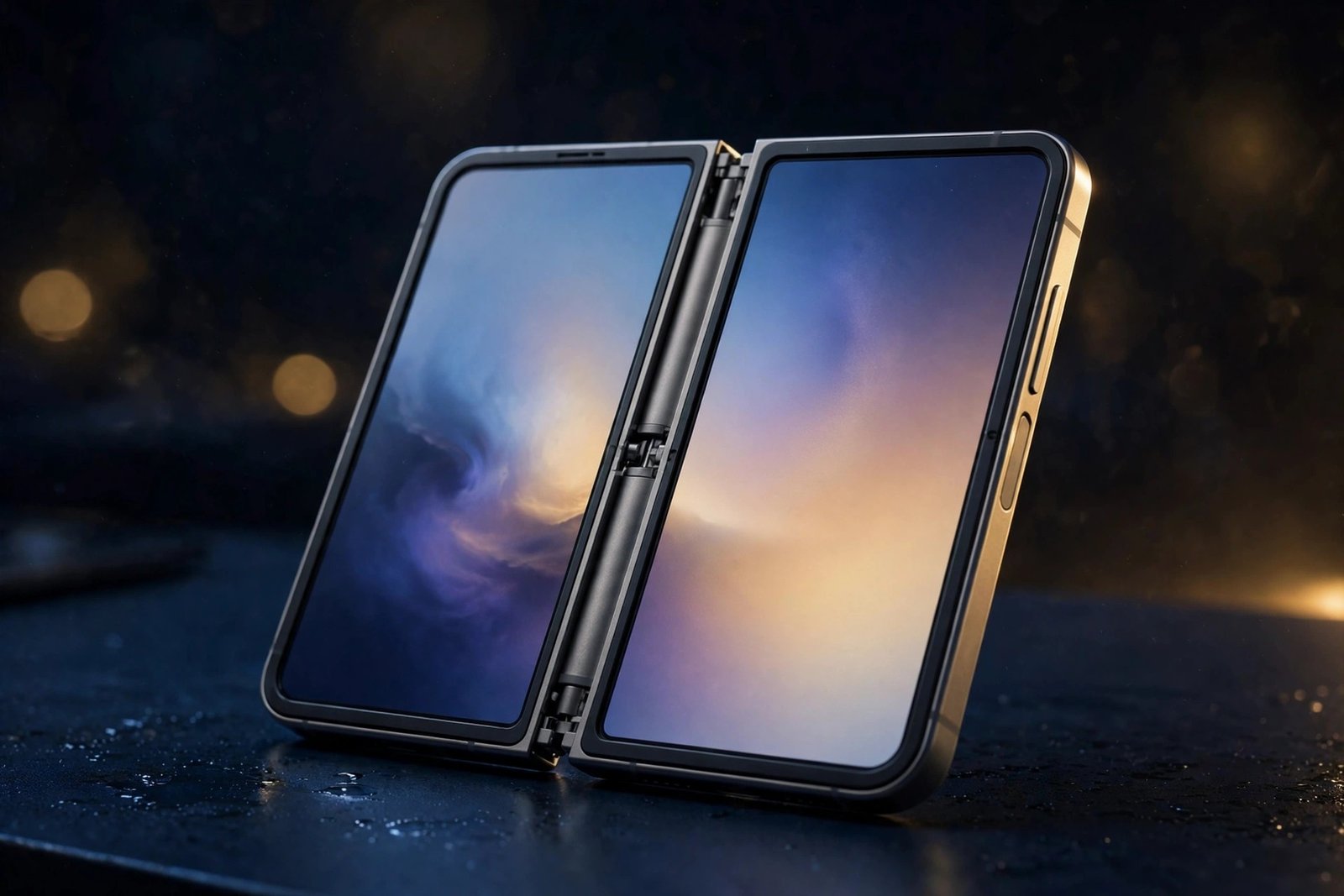
Apple’s first foldable phone has now been opened and closed more times than most people will manage in a decade. CNET put an iPhone Duo on its custom-built Fold-a-Phone machine three weeks ago and has been running it ever since, livestreaming the test on weekdays from 10 a.m. to 2 p.m. Pacific. By Friday 13 November, the counter had passed 451,000 folds — and for the first time, the phone was showing real signs of wear.
The iPhone Duo fold test matters because Apple has said almost nothing about how long the phone is supposed to last. The company has highlighted the Duo’s titanium construction and a precision hinge built from more than 100 components, but it has never published a fold rating, and it has not shared the results of whatever hinge testing it did internally. For a phone that costs $1,999, that silence leaves buyers guessing. CNET’s machine is filling the gap in public, one fold at a time.
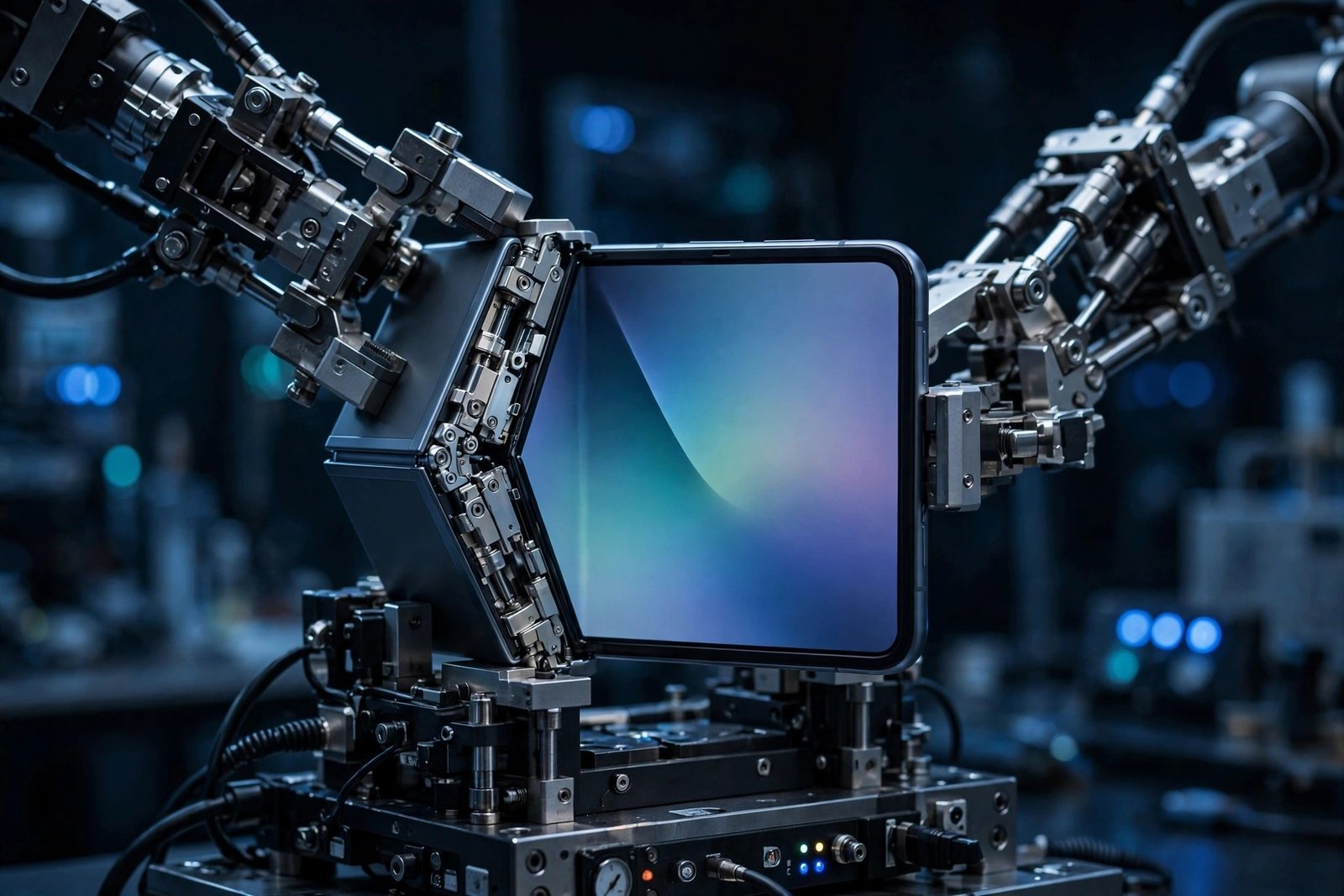
The machine itself is simple in concept: it opens and closes the phone on a loop, roughly 900 times an hour, which works out to around 20,000 folds a day. At that pace, 451,000 folds is the equivalent of more than 12 years of use for someone who opens the phone 100 times a day. That comparison is a useful yardstick, not a guarantee — a lab machine folds the same way every time, while real life adds dust, drops, pockets and temperature swings. Even so, the headline number is striking: after the equivalent of a dozen years of folding, the iPhone Duo still works.
The First Signs of Wear
For the first 390,000 folds, nothing much happened. The phone opened and closed cleanly, the screen stayed intact, and the hinge kept its firm, snappy feel. Then, around the 390,000-fold mark, CNET’s lab team noticed the first change: the hinge began feeling looser, and the distinctive snap that came with a full opening started to fade. It was a small shift, the kind of thing only someone watching the machine all day would catch, but it was the first evidence that the mechanism was wearing.
The more significant change came in the early hours of Friday morning, at about 440,300 folds. Between 12:30 and 1 a.m., the screen stopped having time to open all the way before the machine closed it again. The wire CNET uses to pull the screen open would withdraw before the display reached its fully open position, and the phone would coast the rest of the way — except now it was no longer making it. The screen was stopping 5 to 10 degrees short of flat, and the snap was gone entirely.
That sounds like a failure, but it is not — at least not by CNET’s own definition. The phone can still be opened fully by hand, it holds its other screen positions without issue, and the display shows no cracking, no worsened crease and no blackout. The hinge has loosened, but the phone has not broken. CNET put it plainly: the hinge has started to break down, but the device is not fully broken yet.
What Actually Counts as Failure
CNET set its failure conditions before the test began, and none of them has been met. The test ends when the phone loses power, when its sensors fail to detect the screen’s position within the required timeframe, or when the display goes black. A hinge that stops a few degrees short of flat does not trigger any of those conditions, so the machine keeps folding.
That distinction matters for anyone trying to read the result as a buying guide. A hinge that no longer snaps fully open on a machine is a real mechanical change, and it is the first step toward a failure that would matter. But it is also a long way from a dead phone. The test’s most useful data point has not arrived yet: whether the wear stabilises at a slightly angled opening, or whether it keeps degrading until one of the formal failure conditions is hit. Until then, the honest reading is that the Duo’s hinge is the part to watch, not the screen.
The Screen Is Holding Up Better Than the Hinge
The display is the quiet success story of the test so far. The iPhone Duo uses OLED panels sourced from Samsung Display, and Samsung’s foldable screens have already been through certified third-party testing — the display in the Galaxy Z Fold7 passed a 500,000-fold durability test. Apple is probably not using an off-the-shelf Samsung panel in the Duo, but CNET’s results suggest its screen is on track to match that standard: after 451,000 folds, there is no cracking and no sign of the crease getting worse.
That is a useful contrast with the Duo’s rocky first weeks on sale. Shortly after launch, some owners reported cracks appearing along the hinge, with bright lines of pixels across one side of the screen. Those reports, documented in late October, involved phones that had been opened fewer than 20 times in some cases — a completely different failure from anything CNET’s machine has produced. The lab test says the screen itself can survive hundreds of thousands of folds; the early owner reports suggest that a small number of units had a fault from the start. Both things can be true at once, and the difference is worth keeping in mind: a manufacturing fault in some units is not the same as a durability limit for the design.
What This Means for iPhone Duo Owners
For most owners, the practical takeaway is reassuring. At 100 folds a day — a heavy-use estimate for most people — 390,000 folds is roughly 10 years of use, and 451,000 folds is more than 12. Even at 200 folds a day, the hinge did not start loosening until past the five-year mark. The phone is not going to wear out its hinge in normal use within any realistic ownership period, and the screen looks good for far longer than that.
There are two caveats. The first is that a lab test is not real life. The Fold-a-Phone machine folds the Duo in a clean, controlled environment, at a consistent speed and angle. It does not drop the phone, sit on it, expose it to dust or grit, or fold it one-handed at an angle while walking. Real-world wear will be messier, and it may arrive sooner than the lab numbers suggest. The second caveat is that the hinge, not the screen, is now the known weak point. If you own a Duo, the hinge is the part worth watching over the years — stiffness, snap and full opening are the early warning signs.
It is also worth remembering what the test cannot tell us. Apple has not said how many folds the hinge is designed for, so there is no official figure to compare CNET’s numbers against. The lab team’s own guesses for the eventual failure point range from 500,000 to 1.5 million folds. The test will keep running until the phone fails, and that final number — whenever it comes — will be the closest thing to a fold rating the Duo ever gets.
What Happens Next
CNET is still folding. The livestream continues on weekdays, and the counter keeps climbing past 451,000. The next milestone to watch is 500,000 folds, the number Samsung’s Z Fold7 display was certified for — if the Duo’s hinge is still holding its position there, the mechanism will have matched the screen’s certified standard. If the opening angle keeps shrinking, the hinge will have set the phone’s real-world lifespan well before the screen gives out.
Either way, the test has already answered the question most buyers actually ask: will this expensive foldable survive daily use? After three weeks of non-stop folding and the equivalent of more than a decade of openings, the answer is yes — with a hinge that is starting to show its age, and a screen that is not.
Apple’s first foldable is still a new product, and this is still an unfinished test. More than 100,000 apps have now been optimised for the iPhone Duo, so the software side of the foldable is catching up fast. Owners who saw cracks along the hinge in the first weeks can read our coverage of the Duo’s screen-crack reports and warranty position to see where they stand. And for a lighter look at what else is new in Apple’s ecosystem, Siri Recap brings a Live Rewind to Apple Watch with the watchOS 27.3 beta. The fold test will keep running, and the final failure number — when it comes — will be worth reporting on its own.
FAQs
Q1: How many folds has the iPhone Duo survived in CNET’s fold test?
A: More than 451,000 folds as of 13 November 2026. CNET has been running the iPhone Duo on its custom Fold-a-Phone machine for three weeks, livestreaming the test on weekdays, and the phone is still working.
Q2: What went wrong with the iPhone Duo hinge during the test?
A: The hinge started feeling looser at around 390,000 folds and lost its firm opening snap. At about 440,300 folds, the screen stopped opening fully on the machine, finishing 5 to 10 degrees short of flat. It can still be opened fully by hand, and the phone has not failed.
Q3: Is the iPhone Duo broken after 451,000 folds?
A: No. CNET’s failure conditions are loss of power, sensors failing to detect the screen’s position, or a blacked-out display — none of these has happened. The display shows no cracking, holds its other angles, and the phone still works normally.
Q4: How long would 451,000 folds last in real-world use?
A: At 100 folds a day, 451,000 folds is more than 12 years of use. At 200 folds a day it is roughly six years. The hinge first loosened at about 390,000 folds, which is around 10 years at 100 folds a day.
Q5: Has Apple published a fold rating for the iPhone Duo?
A: No. Apple has not shared its internal hinge test results or given an estimated fold lifespan for the iPhone Duo. CNET’s test is the closest public measurement, and it will keep running until the phone meets one of the test’s failure conditions.
Sources: CNET, “iPhone Duo fold test” (13 November 2026); MacRumors, “iPhone Duo Survives 450,000 Folds, but Hinge is Weakening” (13 November 2026).
