


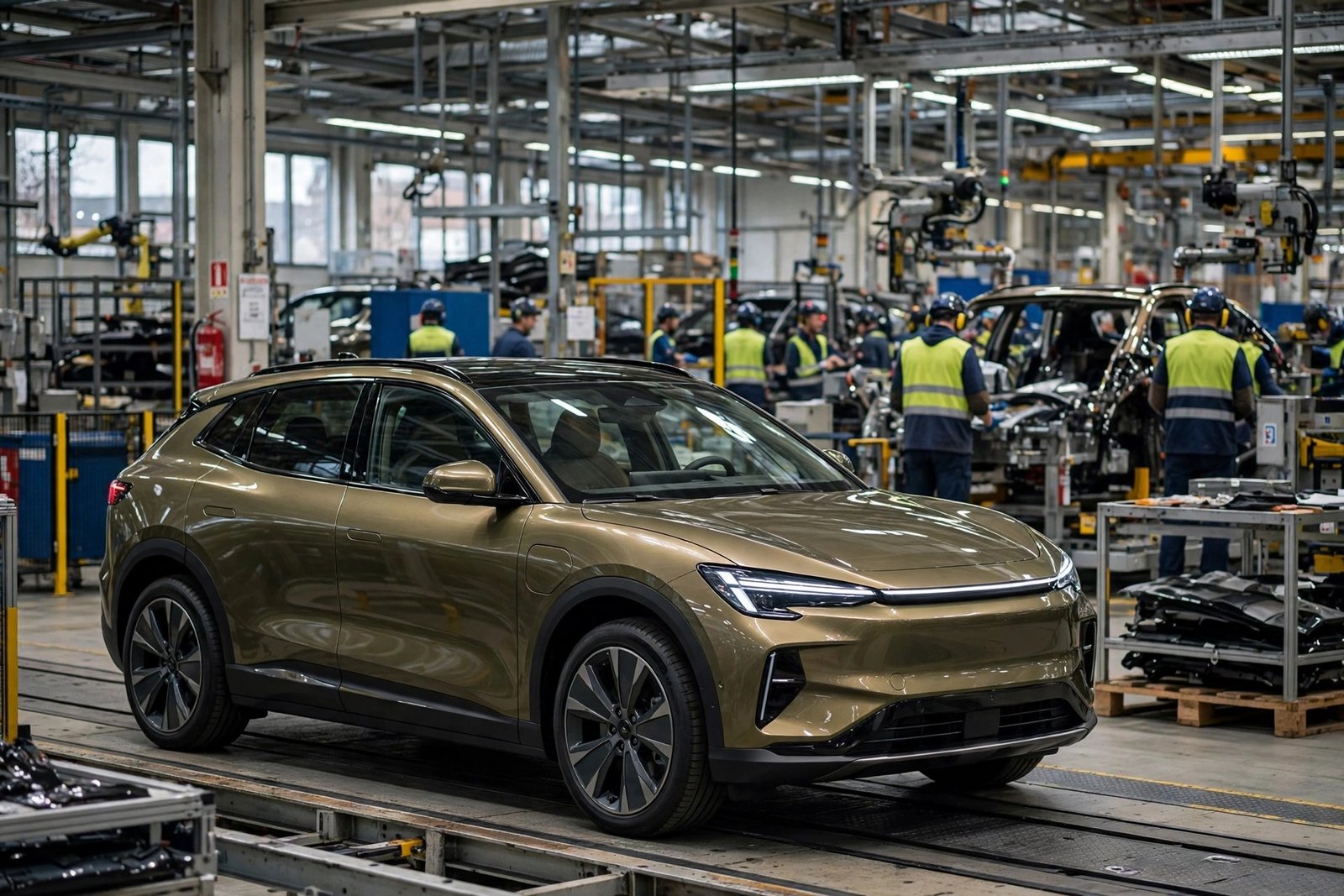
Volkswagen has started building the electric SUV that will carry its most important nameplate into the next decade. Series production of the Volkswagen ID. Tiguan began on November 12, 2026, at the company’s Emden plant in northern Germany, and the first car off the line — finished in Olive Bronze Metallic — is a customer car, not a showpiece. The milestone comes just five weeks after the model made its world debut on October 9, and it formally retires the ID.4 and ID.5, the two electric SUVs that have carried Volkswagen’s electric ambitions since 2021.
The ID. Tiguan is the successor to both models, and Volkswagen is not easing into the changeover. The first production cars are already heading toward European dealerships, order books have been open since October, and the company says it has taken several thousand pre-orders since the premiere. The first customer deliveries are planned for early 2027, which makes the next few months a test of whether Volkswagen can convert that early interest into the sales recovery it needs.
Summary
- Volkswagen started series production of the electric ID. Tiguan on November 12, 2026, at its Emden factory in Germany; the first car off the line was finished in Olive Bronze Metallic.
- The ID. Tiguan replaces the ID.4 and ID.5, which together sold more than 950,000 units since 2021.
- It is built on Volkswagen’s updated MEB+ electric platform and comes in three versions: a 140 kW rear-wheel-drive model with a 58 kWh battery, a 210 kW rear-wheel-drive model with a 77 kWh battery, and a 220 kW all-wheel-drive model with a 77 kWh battery.
- Volkswagen claims up to around 600 km of WLTP range for the best-equipped version; that is a manufacturer claim for a favourable configuration, not a figure for every version.
- Prices in Germany start at €42,695, with three trims — Trend, Life and Style — and order books have been open since October.
- First customer deliveries in Europe are planned for early 2027; North America follows after the European launch, with no confirmed US price or date yet.
Production begins at Emden
The Emden plant is no stranger to Volkswagen’s electric cars. It already builds the ID.7 sedan alongside the ID. Tiguan, and Volkswagen says more than 500,000 electric vehicles have already been produced at the facility. The first ID. Tiguan rolled off the line in Hall 20b on Thursday, November 12, and Volkswagen says the plant will gradually increase output over the coming weeks to meet expected demand.
That ramp-up matters because the ID. Tiguan is not a niche model. It takes over from the ID.4, Volkswagen’s best-selling electric car worldwide, and the ID.5 coupe version. Together the two outgoing models sold more than 950,000 units since 2021, according to reporting on the production start. Replacing a car that popular is a risk as much as an opportunity: the new model has to keep the buyers the ID.4 already had while winning over the ones who were waiting for something newer.
The timing of the production start is also deliberate. Volkswagen opened order books in Germany and a few other European markets in October, right after the world premiere, so the cars now coming down the line in Emden are not demonstrators or press vehicles. They are real cars bound for the driveways of early buyers, and the company says it has already received several thousand pre-orders since the premiere.
What the ID. Tiguan actually is
The ID. Tiguan is the first Volkswagen electric SUV to carry one of the brand’s best-known names. Until now, Volkswagen’s electric cars have used ID numbers — ID.3, ID.4, ID.7 — while the Tiguan name belonged to the combustion-engined SUV. Bringing the two together is a deliberate choice: Volkswagen is simplifying its model names so buyers can recognise the electric version of a car they already know, instead of learning a new numbering system. The ID. Polo and ID. Cross follow the same idea, and the ID. Tiguan is the next model in that line.
Underneath, the car sits on Volkswagen’s updated MEB+ electric platform, the evolution of the architecture that underpinned the ID.4. Volkswagen offers it with two battery sizes and three power outputs. The entry version is a rear-wheel-drive model with 140 kW (190 PS) and a 58 kWh battery. Above it sits a rear-wheel-drive version with 210 kW (286 PS) and a 77 kWh battery, and the range tops out with a 220 kW (299 PS) all-wheel-drive 4MOTION version, also with the 77 kWh pack.
Range is where buyers will pay closest attention, and here the numbers need careful reading. Volkswagen claims up to around 600 km of WLTP range for the best-equipped version, with some reports putting the figure at up to 607 km. That is a manufacturer claim for a favourable equipment and powertrain combination — the larger battery, the most efficient setup — and it does not apply to every version of the car. The entry model with the smaller battery will travel considerably less on a charge, and real-world range in cold weather, at motorway speeds, or with a loaded car will be lower than the WLTP laboratory figure in any case. Nobody outside Volkswagen has yet tested a production car, so there are no independent range figures to check the claim against.
What the car looks like is a clean break from the ID.4. The outgoing model had soft, rounded forms; the ID. Tiguan is more upright and SUV-like, closer in stance to the combustion Tiguan that shares its name. Volkswagen wants this car to feel like a Tiguan first and an electric car second, and the familiar name is doing the same job as the familiar shape.
The end of the ID.4 and ID.5
The production start at Emden is also a farewell. The ID.4 and ID.5 are now out of production, ending a run that began in 2021 and produced more than 950,000 cars between the two models. The ID.4 in particular was a landmark for Volkswagen: it was the company’s first electric car built on the MEB platform for a global market, and it became the brand’s best-selling electric vehicle worldwide.
Volkswagen had already ended ID.4 production at its plant in Chattanooga, Tennessee, earlier in 2026. That detail matters for American buyers, because it means the ID. Tiguan that eventually reaches the United States is expected to be supplied from the Emden line in Germany, at least initially. Volkswagen has not confirmed US pricing or a specific American launch date, and it has said only that the model will go on sale in North America after the European launch phase wraps up in early 2027.
The changeover also explains a weak spot in Volkswagen’s recent results. The company’s electric vehicle deliveries fell by almost 28 percent in the first half of 2026, and reporting on the production start links that drop directly to buyers holding off for the new model. When customers know a replacement is coming, they wait — and the longer the wait, the bigger the hole in the sales figures. Getting the ID. Tiguan into production on schedule was therefore not just a manufacturing milestone; it was the first step toward stopping that slide.
Why this launch matters for Volkswagen
Volkswagen is betting that the ID. Tiguan can do what the ID.4 could not: sell on the strength of a familiar name. The ID.4 was a good car that never quite became a household name, partly because its name told buyers nothing. The Tiguan, by contrast, is one of the best-selling SUVs in the world, and Volkswagen clearly hopes some of that recognition transfers to the electric version.
There is also a simpler, financial reason this launch matters. The ID. Tiguan starts at €42,695 in Germany, which puts it in the heart of the family SUV market — not a budget car, but not a luxury one either. At that price it competes directly with the electric SUVs from Tesla, Hyundai, Kia and a growing list of Chinese brands, all of which have been gaining ground in Europe while Volkswagen’s own deliveries slipped. The company needs the ID. Tiguan to hold its share of that market, not just to add a new model to the range.
The Emden plant itself is part of the story. Volkswagen has turned the factory into one of its main electric vehicle hubs, and the ID. Tiguan joins the ID.7 sedan on its lines. More than 500,000 electric vehicles have already been produced there, which means the plant has the experience to ramp up a new model without the teething problems that often accompany a fresh launch.
What buyers still don’t know
For all the detail Volkswagen has released, several important questions remain unanswered, and buyers should know that before placing an order.
The first is the American question. Volkswagen has confirmed that the ID. Tiguan will come to North America after the European launch, but it has not given a date, a price, or detailed US-market specifications. The German starting price of €42,695 converts to roughly $47,800, but that is not a US price — American pricing, equipment and even the final specification could differ, and import and tariff considerations could change the number further. Until Volkswagen announces US details, any figure quoted for the American market is a conversion, not a price.
The second is range in the real world. The headline figure of up to around 600 km WLTP applies to the best-case configuration, and WLTP figures are laboratory measurements. Cold weather, motorway speeds, roof boxes and full loads all reduce the distance a car will actually travel, and no independent test of a production ID. Tiguan exists yet. Buyers who need to know whether the car will cover their daily distance comfortably should wait for those tests rather than relying on the headline number alone.
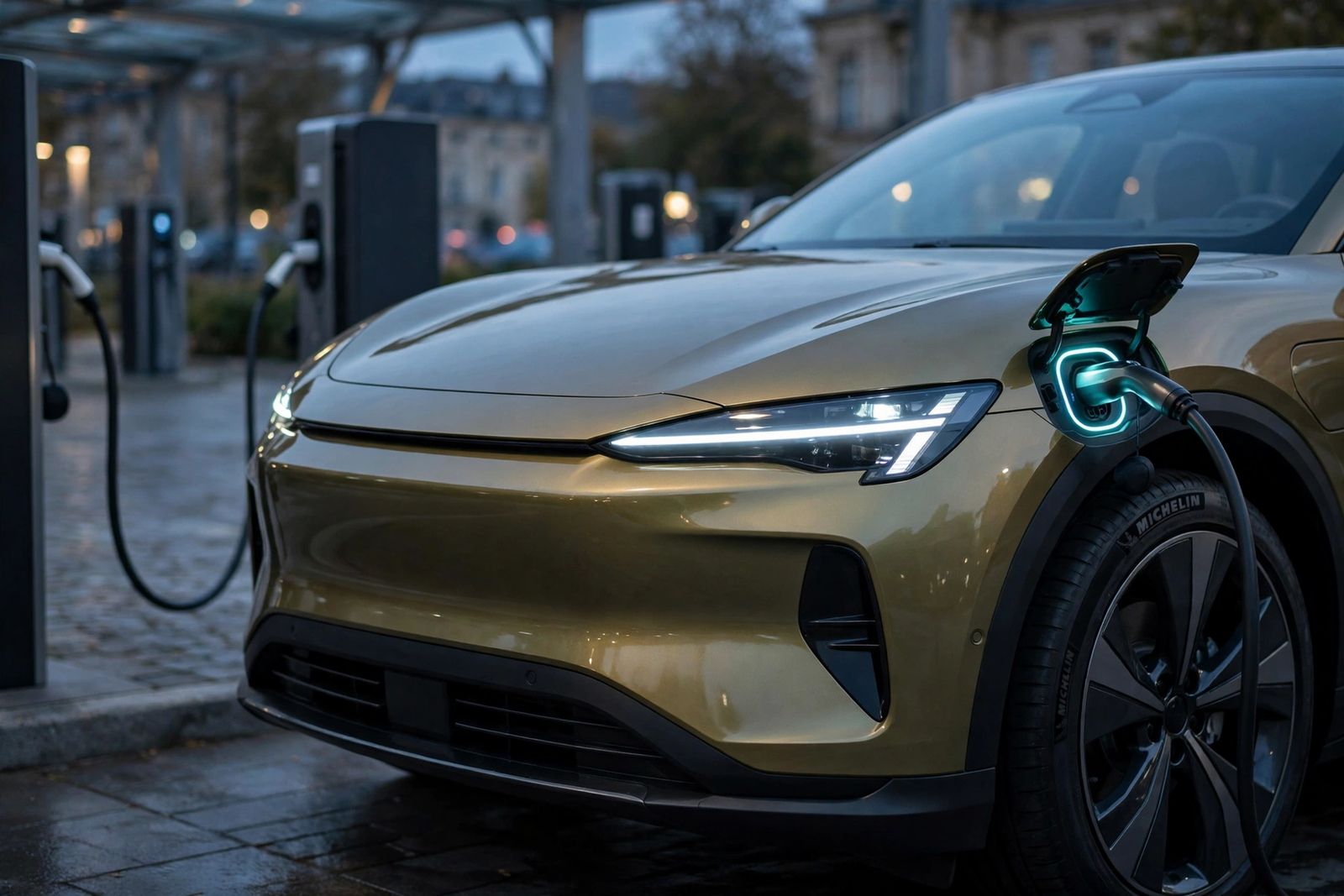
The third is charging. Volkswagen has not yet published detailed charging curves for the production car — how quickly it charges from 10 to 80 percent, and how that speed holds up across the charge. The battery sizes are known, but the charging experience is not, and for many buyers that matters as much as the headline range.
None of these gaps is unusual for a car that has only just entered production. But they are worth stating plainly, because the difference between a manufacturer claim and a tested fact is exactly the kind of detail that gets lost when a launch is reported as a list of impressive numbers.
When can you buy one?
In Germany and the first European markets, order books have been open since October, and the first customer cars are already being built. Deliveries are planned for early 2027, so buyers who ordered early should see their cars in the first months of the new year. European customers outside the first markets will get the car as production ramps up, and North American buyers will have to wait until after the European launch phase ends in early 2027. Volkswagen has not said when exactly that will be.
What is certain is that the ID. Tiguan is no longer a concept or a promise. It is a car coming down a production line in Emden, with a name buyers already know, a price in the middle of the family SUV market, and a range claim that will be tested in the real world within months. Whether it can reverse Volkswagen’s sliding electric sales is the question the next year will answer — and the first customer deliveries in early 2027 are the next milestone to watch.
Frequently asked questions
When did Volkswagen start building the ID. Tiguan?
Volkswagen started series production of the ID. Tiguan on November 12, 2026, at its Emden factory in Germany. The first production car, finished in Olive Bronze Metallic, rolled off the line in Hall 20b, and the plant is gradually increasing output over the coming weeks.
What is the Volkswagen ID. Tiguan?
The ID. Tiguan is Volkswagen’s new all-electric compact SUV, built on the updated MEB+ platform. It is the successor to the ID.4 and ID.5, and it takes its name from Volkswagen’s best-selling Tiguan SUV to make the electric model instantly recognisable to buyers.
How much range does the ID. Tiguan have?
Volkswagen claims up to around 600 km of WLTP range for the best-equipped version with the 77 kWh battery. That is a manufacturer claim for a favourable configuration, not a figure for every version — the entry model with the 58 kWh battery will travel less, and real-world range will be lower than the WLTP laboratory figure.
How much does the ID. Tiguan cost?
In Germany, the ID. Tiguan starts at €42,695, with three trims — Trend, Life and Style. Volkswagen has not yet announced pricing for other markets, including the United States, where the car will arrive after the European launch.
When will the ID. Tiguan be available in the US?
Volkswagen has not confirmed a US launch date. The company says the ID. Tiguan will go on sale in North America after the initial European rollout wraps up in early 2027, and US-bound cars are expected to be supplied from the Emden plant, since ID.4 production at Chattanooga ended earlier in 2026.
Related articles
- Volkswagen’s electric van push continues with the Renault Trafic E-Tech, a software-defined electric van
- BYD’s Denza brand has launched the D9 and Z9 GT in India, showing how Chinese luxury EVs are expanding abroad
- BYD’s Fang Cheng Bao Ti 9 brings nine-minute charging to the electric SUV market
Sources: Electric Cars Report, “Volkswagen ID. Tiguan Enters Production as First Deliveries Approach in 2027”, November 15, 2026; ArenaEV, “Volkswagen starts building the new ID. Tiguan as first customer cars roll out of Emden”, November 13, 2026; Root-Nation, “Volkswagen Starts Production of the New Electric ID. Tiguan”, November 13, 2026; Drive Tesla Canada, “Volkswagen Starts ID. Tiguan Production in Germany Ahead of 2027 Deliveries”, November 13, 2026.
By Anas Ali
