


Key Takeaways
- Performance is the biggest reason to upgrade. The Tensor G5 in the Pixel 10 Pro is faster, cooler, and far more efficient than the Tensor G3 in the Pixel 8 Pro.
- Cameras are evolutionary, not revolutionary. The same winning formula, but with better processing, a faster shutter, and cleaner zoom.
- Battery life improves even with a slightly smaller battery, thanks to the 3nm Tensor G5.
- AI features are the real gap. On-device Gemini experiences on the Pixel 10 Pro simply don’t exist — or don’t run as well — on the Pixel 8 Pro.
- Price is the deciding factor. At $999 new versus a heavily discounted Pixel 8 Pro, the upgrade only makes sense at the right deal.
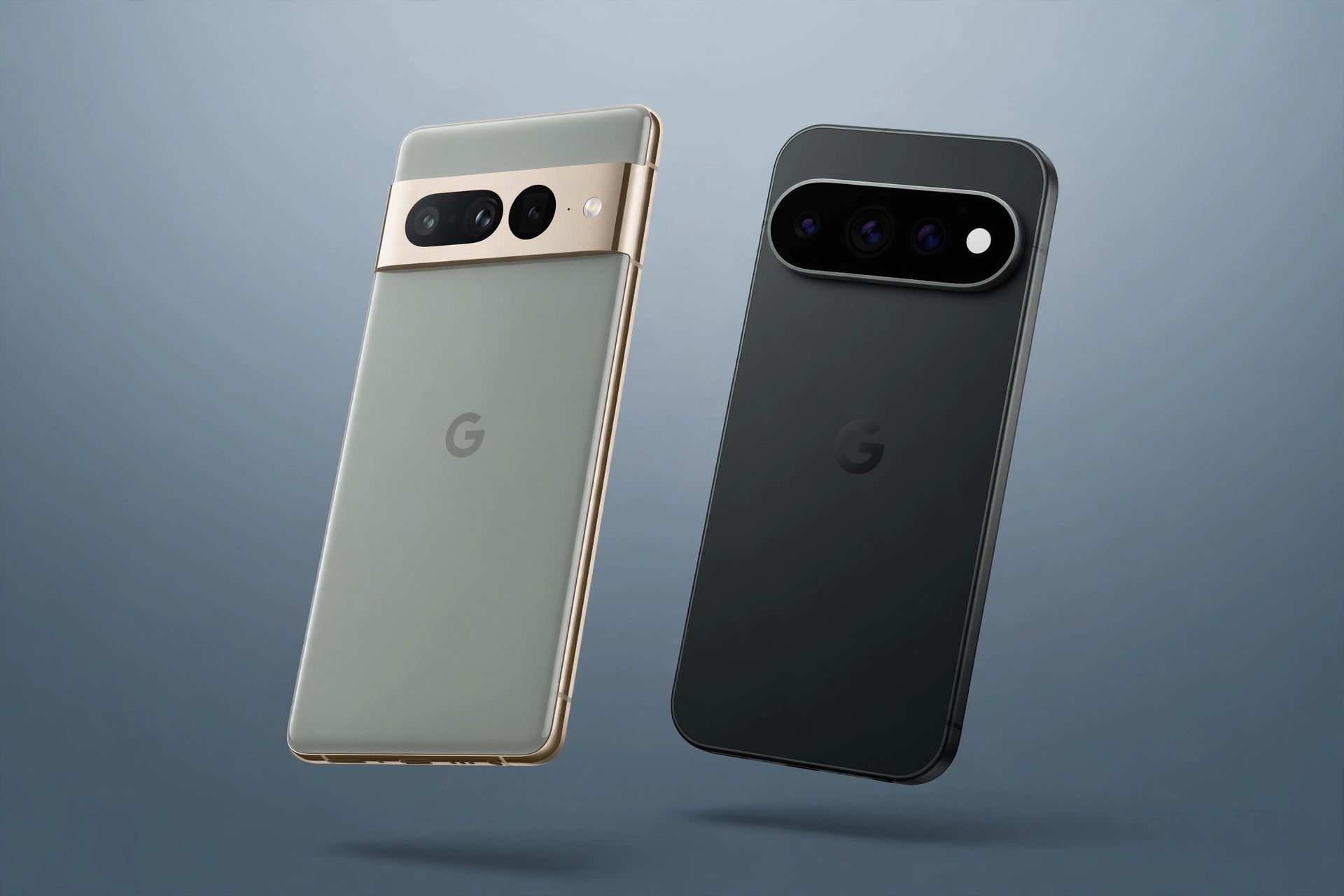
Two generations separate the Pixel 8 Pro vs Pixel 10 Pro, and in the age of on-device AI, two years is a long time. Google’s 2023 flagship launched with the Tensor G3 and a $999 price tag; the Pixel 10 Pro arrived with the TSMC-built Tensor G5 and the same $999 starting price.
So should you upgrade in 2026? The short answer: it depends on what you care about most. The Pixel 10 Pro is better in almost every measurable way, but the Pixel 8 Pro is still a very capable phone — and it costs far less now. Here is the full breakdown.
Specs at a Glance
| Pixel 8 Pro | Pixel 10 Pro | |
|---|---|---|
| Chip | Google Tensor G3 (4nm) | Google Tensor G5 (3nm, TSMC) |
| Display | 6.7-inch LTPO OLED, 120Hz, 2,400 nits | 6.3-inch LTPO OLED, 120Hz, 3,300 nits |
| RAM | 12GB | 16GB |
| Rear cameras | 50MP main + 48MP ultrawide + 48MP 5x telephoto | 50MP main + 48MP ultrawide + 48MP 5x telephoto |
| Front camera | 10.5MP | 42MP |
| Battery | 5,050mAh | 4,870mAh |
| Charging | 30W wired, 23W wireless | 30W wired, 25W Qi2 wireless |
| Software support | Android 14, updates through 2030 | Android 16, updates through 2032 |
| Launch price | $999 | $999 |
Performance: A Real Jump
The Tensor G3 was the Pixel 8 Pro’s Achilles’ heel. Built on Samsung’s 4nm process, it ran warm under sustained load and throttled sooner than rival chips. Day-to-day tasks were fine, but heavy gaming sessions and long 4K recordings exposed its limits.
The Tensor G5 flips the script. Built by TSMC on a 3nm process, it runs noticeably cooler and sustains peak performance far longer — it simply doesn’t get hot in your pocket the way older Tensor chips did. Combined with 16GB of RAM (up from 12GB), multitasking feels snappier and demanding on-device AI tasks run without breaking a sweat.
If you keep phones for years, this alone is a strong argument: the G5 has far more headroom for the AI-heavy Android versions coming down the pipeline.
Cameras: Evolutionary Not Revolutionary
On paper, the camera hardware looks familiar: a 50MP main sensor, 48MP ultrawide, and 48MP 5x telephoto on both phones. Google didn’t reinvent the wheel here — it refined it.
The real gains come from processing. The Pixel 10 Pro captures with a faster shutter, meaning fewer missed shots of kids and pets. HDR processing looks more natural, low-light shots are cleaner, and the 5x telephoto produces sharper zoomed images thanks to the G5’s upgraded image signal processor. The front camera jumps from 10.5MP to 42MP, a meaningful upgrade for selfies and video calls.
Is it a night-and-day difference? No. The Pixel 8 Pro still takes excellent photos. But side by side, the 10 Pro is more consistent — the keeper rate is simply higher.

Battery Life: Efficiency Wins
Here is a fun paradox: the Pixel 10 Pro has a slightly smaller battery (4,870mAh vs 5,050mAh) yet lasts longer. The credit goes entirely to the 3nm Tensor G5, which sips power where the G3 gulped it.
In real-world use, the Pixel 8 Pro was a one-day phone that sometimes needed a top-up by evening. The Pixel 10 Pro comfortably stretches through a full day with margin to spare. Charging speeds are unchanged at 30W wired, though the 10 Pro adds faster 25W Qi2 magnetic wireless charging.
AI Features: The Biggest Gap
This is where two generations genuinely show. The Tensor G5’s upgraded TPU runs on-device Gemini features that the G3 either can’t run or can only run via the cloud — slower, and with an internet connection required.
Smarter call screening, an improved Magic Editor, on-device summarization, and instant photo unblur all run locally on the Pixel 10 Pro. On the Pixel 8 Pro, several headline AI features are missing entirely or arrive in watered-down form. If you bought a Pixel for the “smart” in smartphone, this is the gap you will feel most. For a broader look at how the Pixel 10 Pro fares against Apple’s best, check out our iPhone 17 Pro vs Pixel 10 Pro comparison.
Software Support: Two Extra Years
Google promised seven years of updates for both phones, but the clocks started at different times. The Pixel 8 Pro gets updates through 2030, while the Pixel 10 Pro is covered through 2032.
In 2026, that means the 8 Pro still has roughly four years of support left — it is far from obsolete. But if you plan to keep your next phone for five-plus years, the 10 Pro’s longer runway matters.
Price: The Deciding Factor
Both phones launched at $999, but in 2026 they live in different price brackets. The Pixel 8 Pro now sells at steep discounts — often under $500 refurbished or on clearance — while the Pixel 10 Pro commands its full $999.
That makes the math interesting: is the 10 Pro twice the phone? For most people, no. The 8 Pro at clearance prices remains one of the best-value flagships you can buy — it even earned a mention in our best phones of 2026 roundup. The 10 Pro is worth full price only if you will actually use the performance headroom and AI features.
Who Should Upgrade?
Upgrade to the Pixel 10 Pro if:
- Your Pixel 8 Pro feels slow, runs hot, or its battery no longer lasts the day.
- You want the latest on-device AI features and Gemini experiences.
- You are a heavy camera user who will notice the faster shutter and better zoom.
- You plan to keep your next phone for 4–5 years and want updates through 2032.
Stick with the Pixel 8 Pro if:
- Your phone still runs well and the battery gets you through the day.
- You mostly use basic apps, browsing, and social media.
- You would rather save $400–$500 — or put it toward the Pixel 11 next year.
- You are happy waiting: Tensor G6 rumors suggest an even bigger leap is coming.
Frequently Asked Questions
Is the Pixel 10 Pro worth upgrading from the Pixel 8 Pro?
For most people, only if your Pixel 8 Pro is showing its age. The 10 Pro is faster, cooler, and smarter, but the 8 Pro remains capable — and much cheaper.
Does the Pixel 8 Pro still get software updates in 2026?
Yes. Google promised seven years of updates, so the Pixel 8 Pro is supported through 2030 with OS and security updates.
Which has the better camera, Pixel 8 Pro or Pixel 10 Pro?
The Pixel 10 Pro. The hardware is similar, but better processing, a faster shutter, and a 42MP front camera give it the edge in real-world shooting.
Should I wait for the Pixel 11 instead of buying the Pixel 10 Pro?
If your Pixel 8 Pro still works fine, waiting is reasonable. The Pixel 11 is rumored to bring the 2nm Tensor G6, which could be a bigger leap than the move from G3 to G5.
Bottom line: The Pixel 10 Pro is the better phone in every category that matters — performance, efficiency, AI, and longevity. But “better” isn’t the same as “worth $999 to you.” If your Pixel 8 Pro still serves you well, hold on to it and let prices drop; if it is struggling, the 10 Pro is a genuinely worthwhile upgrade.
