


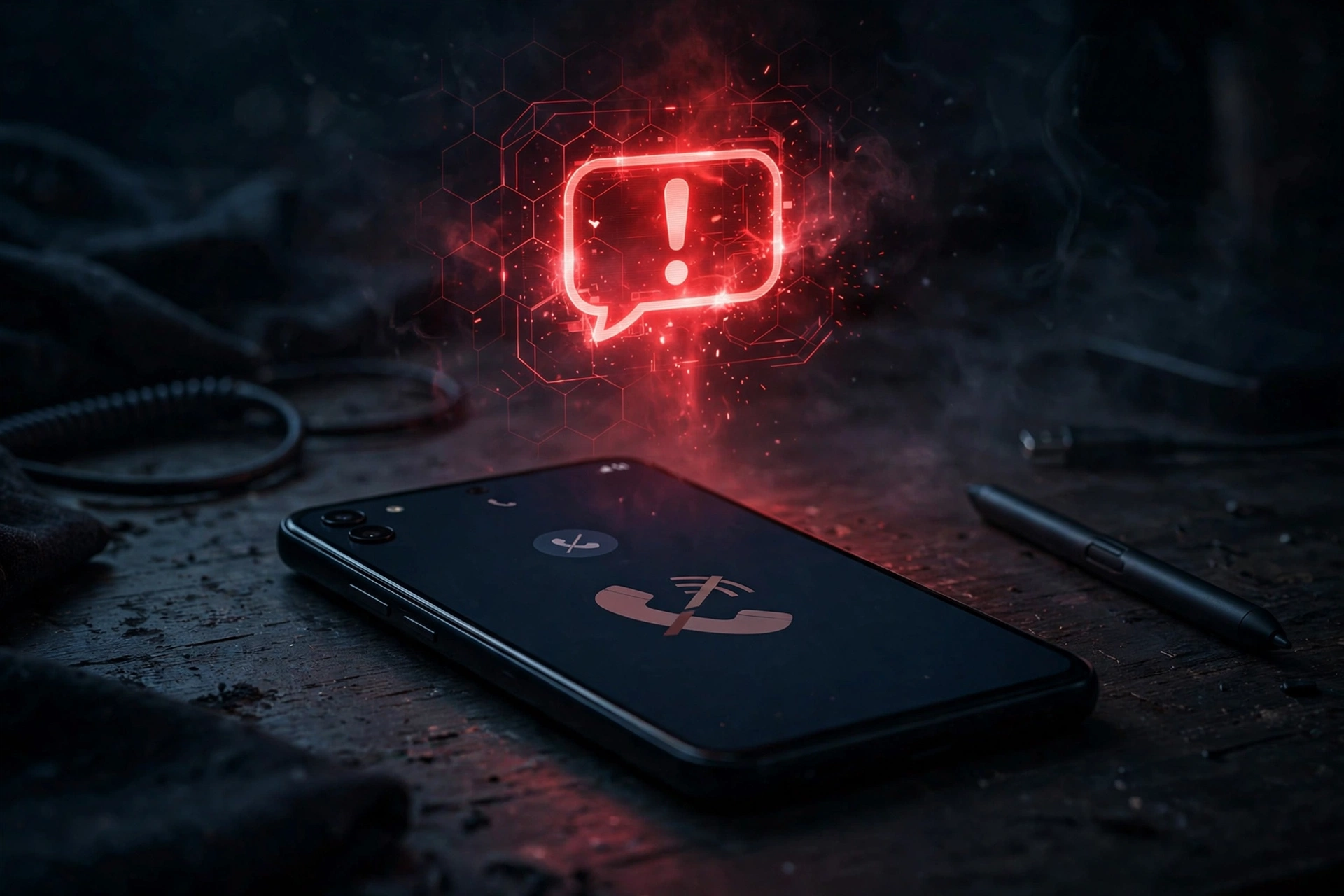
A security researcher has published a working exploit for an Android flaw nicknamed the SMS of Death — and the scary part is that you never see the message that triggers it. One specially crafted text, sent to your number, can crash the system process that handles your calls, cutting off a conversation in progress — including a call to emergency services. You don’t have to tap, open or even receive a notification.
The flaw is tracked as CVE-2026-58882 and rated Critical. Here is what is actually confirmed, who is at risk, and the one step that protects you.
Key Takeaways
- The SMS of Death is a zero-click flaw: a malformed WAP Push message crashes Android’s
com.android.phoneprocess, dropping calls and mobile service for a few seconds at a time. - The vulnerable code goes back to Android 12. The researcher reproduced the crash every time on a Pixel 9 and several Samsung Galaxy phones.
- Google’s fix reportedly shipped in the October 2026 security updates for Android 14 to 17 — Android 12 and 13 did not get it and likely never will.
- There are no confirmed attacks in the wild so far. The 100% reproduction figure is the researcher’s own test result, not evidence of a live attack wave.
- The only real protection is installing your phone’s latest security update — there is no setting that blocks these messages.
How the SMS of Death Works
The attack abuses WAP Push, an old SMS format that mobile networks still use behind the scenes for things like MMS notifications and carrier settings. Android processes these messages automatically in the background, before anything reaches your messaging app.
According to researcher Mark Blaszczyk’s published analysis, the bug sits in Android’s WapPushOverSms component, which decodes these messages. A malformed eight-byte message makes Android read a header-length value that, once converted, becomes a negative number. Android then tries to allocate memory using that negative size, throws an uncaught error — and the com.android.phone process crashes.
Because carriers keep trying to deliver the message, the crash can repeat. Blaszczyk found that around 20 such messages could leave a device effectively unusable, stuck re-processing the poisoned queue after every restart. The message never appears in your inbox, and the sender’s number is never shown.
Who Is Affected — and Who Gets the Fix
The vulnerable code is present from Android 12 through Android 16. Blaszczyk tested a Pixel 9 on April 2026 firmware and multiple Samsung Galaxy and A-series phones, and reports the crash reproduced every time.
The fix picture is where it gets uncomfortable:
- Android 14 to 17: the researcher says Google included the fix in its October 2026 security updates. The patch catches the crash and deletes the malicious message so it can’t keep re-triggering.
- Android 12 and 13: these versions did not receive the fix, and phones stuck on them likely stay exposed. Together they still run on roughly one in five active Android devices.
One honest complication: the patch timeline is disputed. The flaw is not listed in Google’s October 2026 security bulletin, and Android Authority reports the CVE appears to be scheduled for the November bulletin instead, citing GrapheneOS, which says the fix reached phone makers through July security previews. Blaszczyk also points out that he first reported the bug to Google on May 5, 2026; Google initially classified it as a non-security issue, while Android’s own code records show a Google engineer had already written a fix on June 15. Google has not publicly explained the discrepancy.
In plain terms: having “the October update” installed is a good sign, but it is not yet a guarantee this specific fix is on your phone. Check again when the November bulletin lands.
What You Should Do
- Install the latest update now. Go to Settings → Security & privacy (or About phone) → System updates / Security update, and install anything pending. Pixel phones get updates from Google directly; Samsung and other brands roll out their own, sometimes weeks later.
- Check your security patch date. You want to see October 2026 or later — and check once more in November, when this CVE is expected to be officially listed.
- If your phone is on Android 12 or 13, take it seriously. No fix is coming through the normal channel for those versions. If your phone can be upgraded to a newer Android version, do it. If it can’t, be aware the risk sits with the device itself.
- If your phone ever gets stuck in a crash loop, don’t factory reset from the recovery screen. Choosing “Wipe data” can cost you everything on the phone, and a reset may not even help — the carrier can re-deliver the queued messages afterwards. Recovery without a reset is possible by removing the bad messages via a computer using Android’s ADB developer tool, but it needs technical skill; a repair shop or your carrier is the safer route for most people.
The Bottom Line
The SMS of Death is a genuinely nasty flaw — invisible, zero-click, and capable of dropping an emergency call. But keep it in proportion: it is a disclosed vulnerability with a fix already built, not a confirmed attack campaign, and no in-the-wild exploitation has been reported. If your phone runs Android 14 or newer, installing the latest security update is the whole job. If it runs Android 12 or 13, this is one more strong reason to plan an upgrade.
Related Guides
- Google Play System Update Shows January 2027? Here’s the Truth
- iOS 27.2: Release Date, New Features & Why There’s No 27.1
- WhatsApp’s 4 New Group Chat Features: Pin Forever, Group Status and More
FAQs
What is the Android SMS of Death bug?
It is a flaw (CVE-2026-58882) in how Android handles WAP Push text messages. A single malformed message crashes the process that runs calls and mobile service, dropping active calls — including emergency calls — without the victim touching anything. The message never shows in the inbox.
Which Android versions are affected?
The vulnerable code goes back to Android 12 and is present through Android 16. Google’s fix covers Android 14 to 17 via the October 2026 security updates; Android 12 and 13 did not receive it.
How do I know if my phone is protected?
Check Settings for your Android security update date — October 2026 or later is the target, and check again in November, when the CVE is expected to appear in Google’s official bulletin. Note that researchers dispute whether the October update alone guarantees this specific fix, so the November check matters.
Can I block these messages myself?
No. There is no user-facing setting to block WAP Push messages, which is why installing the security update is the only real protection.
Has the SMS of Death been used in real attacks?
Not that anyone has reported. The researcher has published a proof of concept and says the crash reproduced in all of his tests on Pixel and Samsung devices, but no attacks in the wild have been confirmed.
