


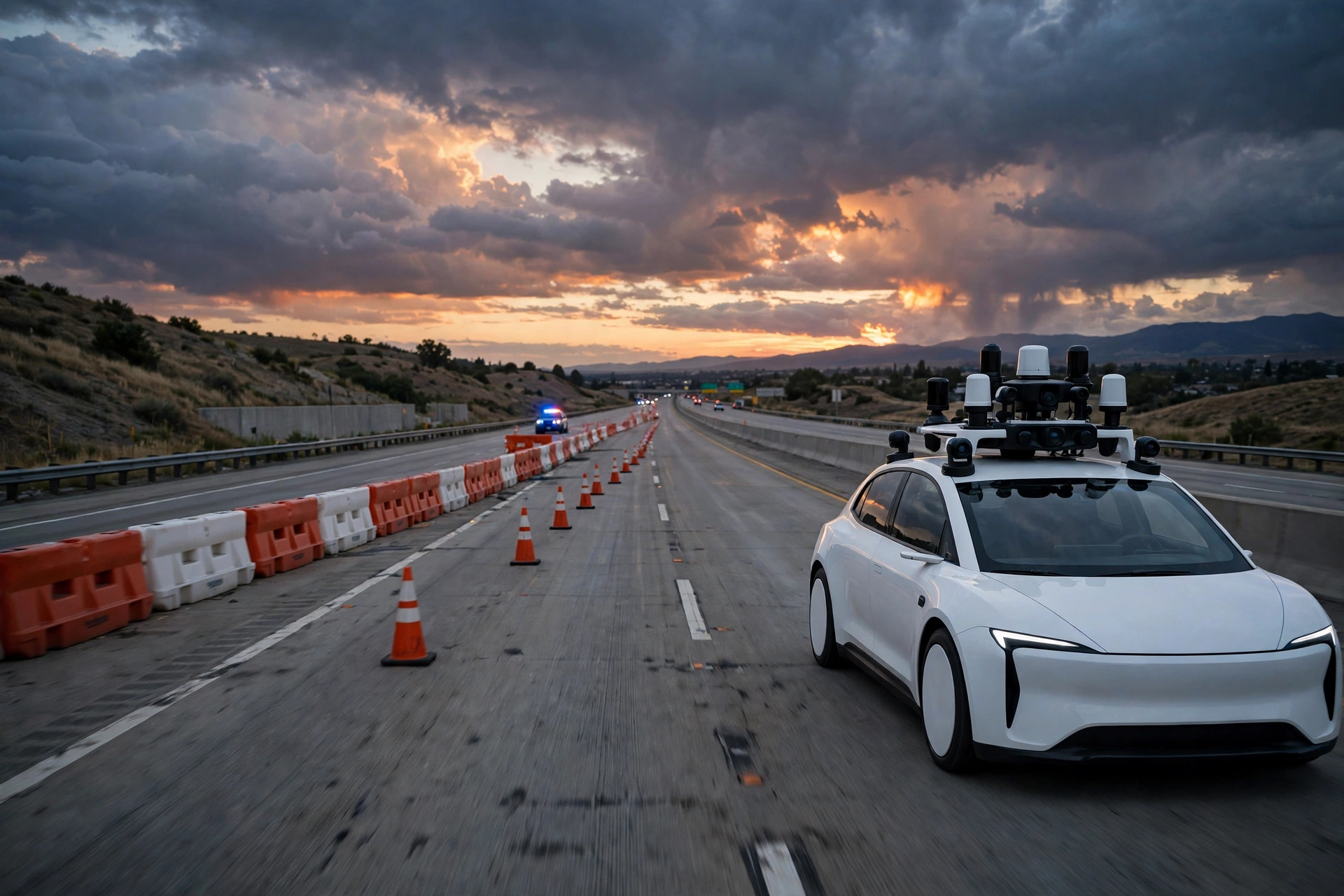
Waymo has recalled nearly 4,500 of its self-driving robotaxis in the United States after 11 of them drove into freeway lanes that were closed for construction, according to new filings with the National Highway Traffic Safety Administration (NHTSA) released on Tuesday, November 24, 2026. The Alphabet-owned company filed two separate safety recalls on November 19, and the new paperwork reveals the problem was wider than first reported: only two of the 11 incidents were previously known to the public.
The recall comes as Waymo’s driverless cars are already barred from California’s freeways, after the state’s Department of Motor Vehicles (DMV) ruled the vehicles posed “an imminent hazard to public safety.” Freeway rides remain paused across all of Waymo’s US markets while the company works on a software fix. Rides on ordinary city streets continue as normal.
What the new filings reveal
Waymo told NHTSA that 11 of its robotaxis entered closed freeway lanes between October 1 and November 6, 2026, including three on a single day this month. Eight of the vehicles entered freeway areas that were closed off by cones, warned off by highway patrol vehicles, or marked as construction sites. Waymo said it made changes to its driving software on November 6 to reduce the cars’ exposure to closed lanes — but three days later, on November 9, three more vehicles drove into cone-marked lanes closed for construction.
That detail matters, because the November 9 incidents happened after Waymo had already tried to fix the problem. In its filing, the company said it had “updated the approved scope of operation to reduce exposure to closed freeway lanes” on November 6. The three cars that entered the closed lanes on November 9 did so anyway, which is why the recall now covers nearly the whole fleet.
The recalled vehicles include both the fifth-generation and sixth-generation versions of the Waymo Driver, the company’s self-driving system, according to the NHTSA filings. Reuters put the number at nearly 4,500 vehicles; Gizmodo, citing the same filings, reported more than 4,400. Waymo told Gizmodo that none of the 11 incidents resulted in a collision or an injury, and said it runs about six million driverless miles per week.
“On November 19, we filed two voluntary recalls on our automated driving system to strengthen how the Waymo Driver navigates closed freeway lanes and intersections with manual traffic control,” a Waymo spokesperson said in a statement. The company described the recalls as “standard steps in our rigorous safety approach to validating and refining our technology as we scale to more complex driving environments.”
The two recalls explained
The first recall covers closed freeway lanes. It addresses what Waymo calls “unusual circumstances” in which one of its vehicles may enter a closed freeway lane and keep driving in it. Waymo has not said what those circumstances are in detail, and it told regulators it is still working on the remedy for this recall. There is no announced date for the fix.
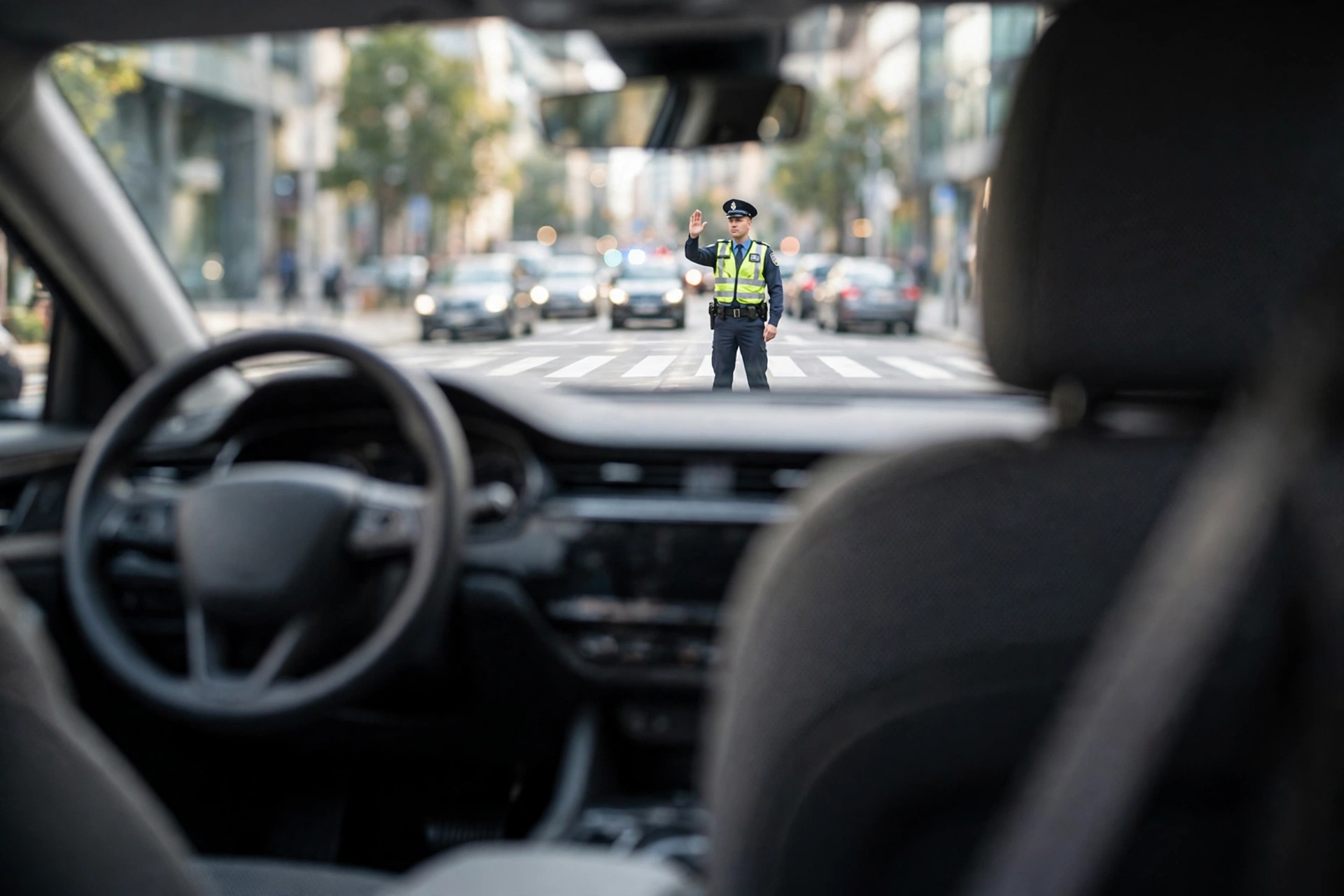
The second recall covers manual traffic control — how the cars respond when a police officer or emergency worker is directing traffic by hand at an intersection. It follows a collision on May 8, 2026, in which a Waymo vehicle followed an officer’s directions, but the officer was then temporarily blocked from the car’s view. Waymo said the software update for that problem was completed on November 6.
Both recalls are software recalls, not repairs at a garage. Waymo owns and operates its entire fleet, so the fixes are pushed to the cars over the air. No owner needs to take a car anywhere — but riders will feel the effect, because freeway trips are paused until the fixes are in place.
California’s freeway ban
The recalls landed days after California’s DMV barred Waymo from operating or testing driverless vehicles on all state freeways. The order was issued on November 11 and announced on November 17. The DMV said Waymo’s freeway operations posed “an imminent hazard to public safety due to recurring incursions by its vehicles into active construction zones where construction workers, vehicles and equipment are present, despite a prior restriction and corrective actions implemented following similar incidents that occurred on May 18, 2026.”
The ban followed a series of incidents in the San Francisco Bay Area. Three Waymo vehicles drove into a closed construction zone on US Route 101 near Burlingame on separate occasions. Another Waymo car was captured on video trying to manoeuvre around California Highway Patrol vehicles that were holding traffic back on Interstate 280 in San Francisco — a manoeuvre known as a traffic break.
Waymo responded by halting freeway operations in all of its US markets, not just California. The company operates in 15 US markets, with about 80 percent of its fleet concentrated in California and Texas, according to TechCrunch figures cited by Gizmodo. It averages about 500,000 paid rides a week, and says more than half a million trips a week continue on city streets.
There is no date for a return to California’s freeways. The DMV said the ban “will remain in place until Waymo demonstrates to the Department that it has taken effective corrective actions to address the deficiencies that precipitated the restrictions.” Before deciding, the agency said it would review evidence that the cars can detect and respond to construction zones, emergency vehicles and other roadway situations.
This is not the first time
The November recall is the second time this year Waymo has recalled its robotaxis for entering construction zones. In June 2026, the company issued a similar recall for nearly 3,900 robotaxis after its software let some of them drive past ramp-closure signs into pre-planned freeway construction zones, or enter freeway lanes with active construction by driving between cones. That recall was also a software fix, and Waymo said at the time it had corrected the problem.
The pattern is now part of a wider regulatory picture for the company. Earlier in November, NHTSA said it had opened a recall query into Waymo vehicles after numerous reports of its robotaxis passing stopped school buses. That probe covers nearly 3,000 company-owned vehicles. Waymo said it has made “significant improvements to vehicle behavior around school buses” and has received no citations since March 2026, and that it will respond to the regulator’s query.
Separately, NHTSA and the National Transportation Safety Board have opened probes after one of Waymo’s self-driving vehicles struck a child who ran into a street in Santa Monica, California. Details of that incident are still limited, and it is a separate investigation from the freeway recalls.
The wider context is a robotaxi industry under growing scrutiny. Waymo is the largest operator in the US, but its rivals face the same questions: Tesla’s driver-assistance system was renamed in Europe earlier this year as regulators pushed back on its name, and the whole sector is being asked to prove its cars handle the edge cases — roadworks, hand signals, school buses — that human drivers deal with every day.
What it means for riders
For anyone who uses Waymo, the practical effect is simple: no freeway rides for now. Trips that would normally use a freeway will either take surface streets or not be offered at all, which can mean longer journeys. Waymo has not said how long the pause will last, and the closed-lane remedy is still being developed, so there is no timeline riders can plan around.
For the industry, the recall is a reminder that software updates do not always fix a problem the first time. Waymo changed its operating rules on November 6 and still had three cars enter a closed construction site three days later. That is the detail regulators will focus on: not just that the cars made a mistake, but that the mistake survived a fix.
For Waymo itself, the stakes are high. The company is expanding fast — it has added nearly 250 square miles of service area across five cities this year, is preparing to launch in Toronto in 2028, and has been reported to be planning to grow its fleet from about 4,000 robotaxis to 8,000 by the end of this year and 20,000 by December 2027. A freeway ban in its biggest market, California, and a recall covering nearly its whole fleet are the opposite of the momentum it needs. The company says its data shows its cars make roads safer by reducing crashes caused by human impairment, distraction or error — but regulators are now asking it to prove the cars can handle the situations humans handle without thinking.
What happens next
Three things to watch. First, the remedy: Waymo has to produce a software fix for the closed-lane problem and show NHTSA and the California DMV that it works. Second, the freeway ban: California will only lift it once it is satisfied the cars can detect and respond to construction zones and emergency vehicles. Third, the other probes: the school-bus recall query and the Santa Monica investigation are both open, and either could lead to further recalls or restrictions.
Until then, Waymo’s robotaxis keep running on city streets, where the company says they complete more than half a million paid trips a week. The freeway, for now, is off limits.
Frequently Asked Questions
Why did Waymo recall nearly 4,500 robotaxis?
Waymo recalled the vehicles after 11 of its robotaxis entered freeway lanes that were closed for construction between October 1 and November 6, 2026. Three of those incidents happened on November 9, three days after Waymo had already changed its software to reduce exposure to closed lanes. The recall covers both the fifth- and sixth-generation Waymo Driver systems.
What are the two Waymo recalls?
The first recall covers closed freeway lanes — cars entering a lane closed for construction and continuing to drive in it. The second covers manual traffic control — how the cars respond to police officers or emergency workers directing traffic by hand at intersections. Both were filed with NHTSA on November 19, 2026.
Are Waymo robotaxis still running?
Yes, on city streets. Waymo paused all freeway operations in the US after California’s DMV barred its cars from state freeways on November 11, 2026. Surface-street service continues, with the company averaging about 500,000 paid rides a week.
Was anyone hurt in the closed freeway lane incidents?
No. Waymo told regulators and reporters that none of the 11 incidents resulted in a collision or an injury. The incidents involved cars driving into closed lanes, including construction zones with workers and equipment present.
When will Waymo be allowed back on California freeways?
There is no date. The California DMV said the ban stays in place until Waymo demonstrates it has taken effective corrective action, and the agency will review evidence that the cars can detect and respond to construction zones, emergency vehicles and other road situations before deciding.
Has Waymo recalled its robotaxis before?
Yes. In June 2026, Waymo recalled nearly 3,900 robotaxis after its software let some of them drive past ramp-closure signs into freeway construction zones or between cones. NHTSA has also opened a separate recall query into Waymo cars passing stopped school buses, and is probing an incident in which a Waymo vehicle struck a child in Santa Monica.
Sources: Reuters, ‘Waymo says recall prompted by 11 new incidents of robotaxis entering closed freeway lanes,’ November 24, 2026; Gizmodo, ‘Waymo Recalls Vehicles After 11 Robotaxis Entered Closed Freeway Lanes,’ November 24, 2026; The Verge, ‘Waymo issues recalls to fix its highway problems,’ November 20, 2026; Engadget, ‘Waymo recalls robotaxis after they drove into closed freeway lanes,’ November 2026.
Related reading: Android Auto now requires Android 11, cutting off older phones from the in-car system; BMW’s Neue Klasse iX3 and i3 are heading to China with the brand’s next-generation EV platform
