


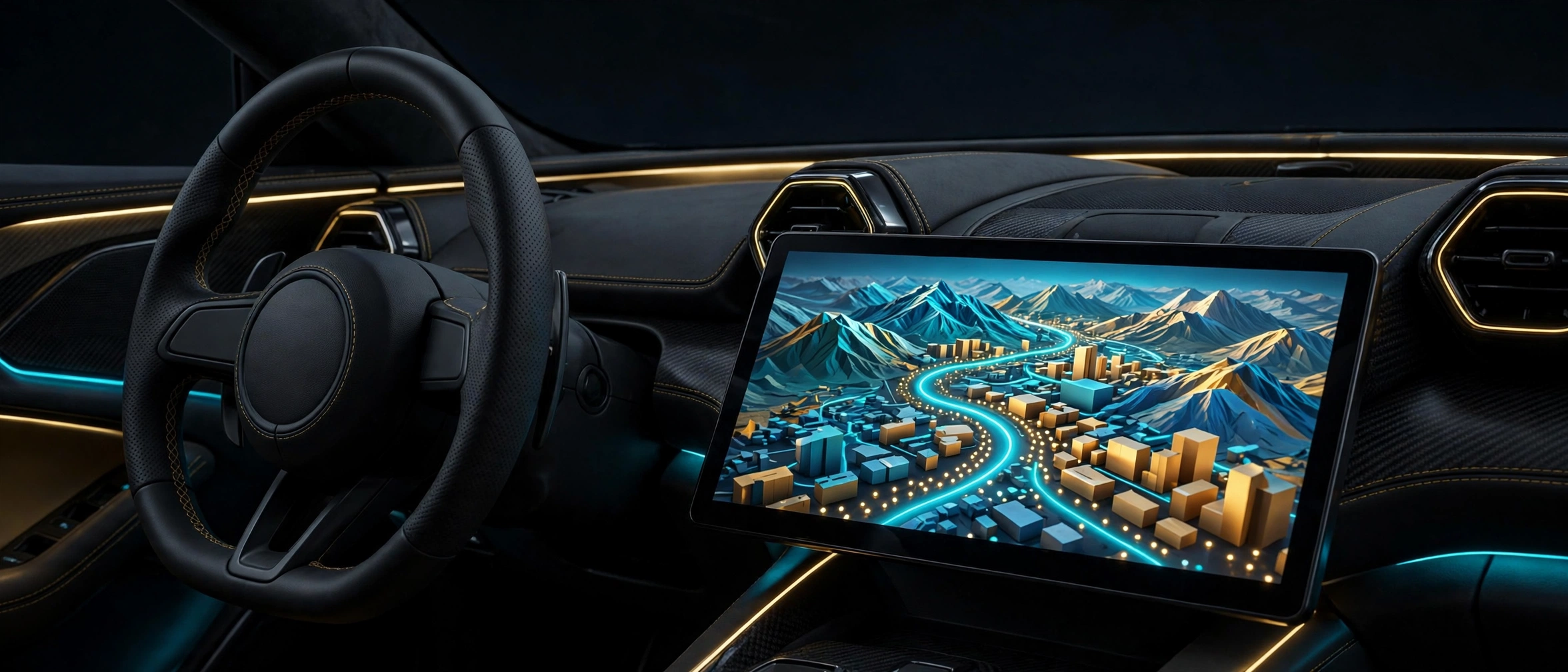
Porsche is rebuilding the brain of its cars. The company has announced a new generation of Porsche Communication Management — PCM, the infotainment system that runs navigation, audio, phone and vehicle settings on the dashboard screen — for the 911, Taycan, Panamera and Cayenne. The headline number is speed: the new hardware platform delivers up to five times the computing power of the system it replaces, built around a modern system-on-chip design. Around that faster chip, Porsche has rebuilt the interface, added an AI voice assistant that understands follow-up questions, and opened the car to Apple Music with Dolby Atmos sound for the first time.
The announcement came from Porsche on November 3, 2026, and it was picked up again in fresh coverage on November 16, 2026, as the rollout approached the 2027 model year. The system will arrive gradually in newly produced cars from the four model lines, rather than all at once, and exactly when it reaches a given buyer will depend on the market, the model, the production date and the equipment fitted. That staged approach is the most important detail for anyone shopping for a Porsche right now: the new PCM is a feature of new production cars, not a software update that lands on every Porsche already on the road.
Summary
- The news: Porsche announced a new generation of its PCM infotainment system on November 3, 2026, for the 911, Taycan, Panamera and Cayenne, with fresh coverage on November 16, 2026 as the 2027 model year rollout nears.
- Five times faster: A new system-on-chip hardware platform delivers up to five times the computing power of the previous PCM, for faster start-ups, shorter loading times and smoother multitasking.
- New interface: Porsche Digital Interaction, first seen in the Cayenne Electric, brings a consistent design and operating language to all four model lines, with a rotatable 3D model of the car, five themes and configurable widgets.
- AI voice assistant: The enhanced Voice Pilot is powered by a large language model, so it can handle natural language, multi-step requests and follow-up questions, and control navigation, selected vehicle functions, media and selected apps.
- New navigation: Navigation Plus adds a new 3D map display with online map data and real-time traffic, and a Charging Planner for electric models that plans charging stops and preconditions the battery.
- Music upgrade: Apple Music is available directly in the car for the first time through the Porsche App Center, with Dolby Atmos spatial audio on Bose and Burmester 3D surround systems.
- Who gets it: The system will be introduced gradually in newly produced vehicles from the four model lines. Availability varies by market, model, production date and equipment, and Porsche has announced no retrofit for existing cars.
Five Times the Computing Power
The core of the new PCM is hardware. Porsche has moved to a modern system-on-chip architecture — a single chip that combines the processing functions the old system spread across separate parts — and says it delivers up to five times the computing power of the previous generation. The company frames the benefit in everyday terms rather than benchmark numbers: faster system start-ups, shorter loading times, and smoother operation when several apps run at once.
That last point is the one drivers will notice most. In the current generation of car infotainment, switching from navigation to music to a phone call can mean waiting while one app closes and another loads. Porsche says the new platform lets multiple applications run in parallel more conveniently, with apps staying active in the background so they are available more quickly when the driver switches back to them. It is the same kind of improvement that made phones feel faster when they moved to more powerful chips: not a single new feature, but less waiting everywhere.
Porsche has not published a chip name, a clock speed, a memory figure or a benchmark score, and none of the reporting so far fills in those blanks. The “up to five times” figure is the company’s own claim, and it should be read as a peak improvement rather than a promise that every interaction will be five times faster.
The new architecture is also designed to be updated. Porsche says comprehensive over-the-air updates will let software and selected functions be developed further even after the vehicle has been delivered. The faster chip is what makes that promise credible: a system running close to its limits cannot take on new features, while one with headroom can.
Porsche Digital Interaction Comes to Four Model Lines
The second half of the announcement is the interface. Porsche Digital Interaction is the design and operating language Porsche introduced with the Cayenne Electric, and the new PCM brings it to the 911, Taycan, Panamera and the combustion-engine and hybrid Cayenne models. The point is consistency: a driver who moves between Porsche models should find the same layouts, the same operating logic and the same personalisation options, rather than learning a different system in each car.
The centrepiece is a high-quality, freely rotatable 3D model of the car in its actual exterior colour, shown on the screen as a way into selected vehicle functions and settings. Instead of hunting through menus for a setting, the driver taps the part of the virtual car it relates to. Around it, Porsche offers five selectable themes and configurable widgets, so the home screen can be arranged around what the driver actually uses — navigation and music for one person, charging and vehicle status for another.
That consistency extends across the car’s displays. Porsche says the new system creates a cohesive digital experience across the various screens in the cabin, with clear layouts, fast responses and a uniform operating logic. In practice, that is what separates a good infotainment system from a frustrating one: the map in the instrument cluster, the media on the centre screen and the phone on the passenger display should feel like one system, not three different ones bolted together.
AI Voice Pilot and Navigation Plus
The most talked-about feature is the voice assistant. The enhanced Voice Pilot is powered by AI and based on a large language model, which means it is designed to process natural language rather than only a fixed list of commands. Porsche says it can handle multi-step requests and follow-up questions, and that navigation, selected vehicle functions, media and selected apps can be controlled by voice.
The difference between a command-based assistant and a language-model assistant is best understood through an example. A command-based system might understand “navigate to the nearest charging station” as a single instruction. A system that handles follow-up questions can cope when the driver then says “actually, make it one with a coffee shop” without starting over. Porsche’s description points at exactly that kind of conversation, though the company has not published a list of example commands or a demonstration of the system handling a long, messy request. Until independent testers sit in a car and try it, the honest description is that the capability is promised, not proven.
Navigation gets its own upgrade alongside the voice assistant. Navigation Plus uses current mapping technology and a new 3D map display, with online map data and real-time traffic information supporting route guidance. In fully electric vehicles, the Porsche Charging Planner plans charging stops and takes battery preconditioning into account — warming or cooling the battery before arrival so it charges faster. That is a practical feature rather than a showpiece: on a long electric journey, the difference between a well-planned charging stop and a badly planned one is measured in tens of minutes, and a system that thinks about the battery before the driver arrives is doing genuinely useful work.
Smartphone integration also goes deeper. Porsche says the map display can now appear in the instrument cluster, and that EV routing with battery preconditioning is supported in selected markets. The qualification matters: not every market gets every feature, and Porsche has not published a country-by-country list. Buyers who care about a specific feature should confirm it for their market and model before ordering, rather than assuming the full feature set travels everywhere.
Apple Music, Dolby Atmos and the App Center
The third part of the announcement is the ecosystem around the car. Porsche describes its approach as a blended ecosystem: the car’s own services, the driver’s smartphone and third-party apps are integrated through standardised interfaces so they behave as one experience. The App Center is where that comes together. It lets customers select, download and update apps directly in the vehicle, covering audio and video streaming, navigation, and parking and charging services, with the range continuously being expanded.
For the first time, Apple Music is available directly in the car through the Porsche App Center. Previously, iPhone owners reached Apple Music in a Porsche through CarPlay; now the app runs natively in the car. In combination with the Bose and Burmester 3D High-End Surround Sound Systems, Apple Music supports Dolby Atmos for a more immersive audio experience. Other compatible apps can also use Dolby Atmos through Apple CarPlay, provided they support the function.
There are conditions attached, and Porsche states them plainly. Apple Music with Spatial Audio by Dolby Atmos is available through the App Center in selected Connect markets, and it requires both an Apple Music subscription and a Dolby Atmos-capable sound system. In other words, the feature is not free, it is not in every country, and it is not on every sound system. A buyer with the base audio system, or in a market outside the Connect rollout, will not get the headline audio experience even in a new car with the new PCM. That is worth knowing before the showroom visit, because Dolby Atmos is the kind of feature that sounds universal in a press release and turns out to be equipment-dependent in practice.
The App Center also matters for a reason that has nothing to do with music. A car that can download and update apps is a car whose dashboard can gain new services over its life, and Porsche says the range of apps is continuously being expanded. Whether that promise holds depends on how actively Porsche and third-party developers keep publishing for the platform — something no announcement can guarantee, and something owners will only learn over the first year of cars on the road.
Who Gets It — and Who Does Not
Availability is where the announcement gets careful. Porsche says the new generation of infotainment, including Porsche Digital Interaction, will be gradually introduced in newly produced vehicles from the 911, Taycan, Panamera and Cayenne model lines, and that availability may vary depending on market, model, production date and equipment. Reporting on the announcement describes the rollout as reaching the 2027 model year cars, with the introduction spreading through the year rather than arriving on a single date.
That wording leaves several questions open. There is no published timetable for which model gets the system first, and no date for any specific market. A 911 ordered in one month may carry the new PCM while an identical-looking car built a few weeks earlier does not. Porsche has also said nothing about a retrofit: the announcement describes the system as part of newly produced vehicles, and no upgrade path for existing cars has been announced. Owners of a current 911, Taycan, Panamera or Cayenne should not expect the new interface to arrive as a software update.
The practical advice for buyers is simple. If the new PCM matters to you, ask the dealer to confirm in writing that the specific car you are ordering — with its production date and equipment — will have the new generation of PCM, and which of its features apply in your market. The system is a genuine step forward, but it is also a rolling change, and the gap between “announced for the 911” and “in the 911 you are buying” is exactly the gap a dealer confirmation closes.
What This Means for Drivers
Step back from the feature list and the picture is of a carmaker catching its dashboard up with the rest of the car. Porsche’s cars have always been engineered around the driving experience; the new PCM is an attempt to make the infotainment feel designed rather than fitted — faster hardware so the screen keeps up with the car, one interface language across the range, and a voice assistant that can hold a conversation instead of obeying a phrasebook.
The competitive context matters too. Other premium brands have spent the last two years rebuilding their infotainment around large language models, app stores and over-the-air updates, and buyers now compare dashboards across brands as directly as they compare engines. Whether the new PCM succeeds will be decided not by the announcement but by the first independent reviews: how fast the system really feels, whether Voice Pilot understands real drivers with real accents and half-finished sentences, and whether the App Center fills up with apps people actually want.
Caveats: What Is Still Unconfirmed
- Announcement date: Porsche announced the new PCM on November 3, 2026. Fresh coverage appeared on November 16, 2026, but the announcement itself is thirteen days old, not a November 16 launch.
- “Five times faster” is Porsche’s claim: The company has not published a chip name, clock speed, memory figure or benchmark, so the improvement cannot be independently verified from the announcement alone.
- No prices and no market timetable: Porsche has not said which model gets the system first, when it reaches each market, or what it costs. Availability varies by market, model, production date and equipment.
- No retrofit announced: The system is described for newly produced vehicles only. Porsche has not announced any upgrade path for existing 911, Taycan, Panamera or Cayenne cars.
- Apple Music conditions: Dolby Atmos via the App Center needs an Apple Music subscription, a Dolby Atmos-capable sound system, and a selected Connect market. It is not available to every buyer.
- Voice Pilot is unproven in the real world: Porsche describes multi-step and follow-up handling, but no independent test has yet shown how it copes with real driving conversations.
- Feature availability varies: Map display in the instrument cluster and EV routing with battery preconditioning apply in selected markets only, and Porsche has not published a full country list.
Is the new Porsche PCM available in every 2027 Porsche?
No. Porsche says the new generation of infotainment will be gradually introduced in newly produced vehicles from the 911, Taycan, Panamera and Cayenne model lines, and that availability may vary depending on market, model, production date and equipment. A car built before the new hardware reaches its production line will not have it, so buyers should ask their dealer to confirm the specific car they are ordering.
Which Porsche models get the new PCM infotainment?
The 911, Taycan, Panamera and Cayenne. Porsche Digital Interaction, the new interface language first seen in the Cayenne Electric, is coming to the 911, Taycan, Panamera and the combustion-engine and hybrid Cayenne models alongside the new hardware.
What is the AI Voice Pilot in the new Porsche PCM?
It is an enhanced voice assistant powered by AI and based on a large language model. Porsche says it can process natural language, multi-step requests and follow-up questions, and control navigation, selected vehicle functions, media and selected apps by voice. It is a promised capability in the announcement; no independent real-world test has yet been published.
Does the new Porsche PCM support Apple Music with Dolby Atmos?
Yes, for the first time Apple Music is available directly in the car through the Porsche App Center, and with the Bose or Burmester 3D High-End Surround Sound Systems it supports Dolby Atmos spatial audio. It requires an Apple Music subscription and a Dolby Atmos-capable sound system, and is available in selected Connect markets only.
Can existing Porsche owners upgrade to the new PCM?
Porsche has not announced a retrofit or upgrade for existing cars. The announcement describes the new generation of infotainment for newly produced vehicles only, so owners of current 911, Taycan, Panamera or Cayenne models should not expect it to arrive as a software update.
Related articles
- How to Use Gemini on Apple CarPlay
- TVS iQube Gets Android Auto at EICMA 2026
- Volkswagen ID. Tiguan Production Starts at Emden in 2027
Sources: Porsche Newsroom, “New operating concept with enhanced performance and an expanded digital ecosystem for the 911, Taycan, Panamera and Cayenne” (November 3, 2026); Motoring Research, “Porsche announces new AI-powered PCM infotainment system” (November 6, 2026); The Herald Business, “Porsche brings new PCM to 911, Taycan, Panamera and Cayenne” (November 16, 2026); StarNews Korea, “Porsche unveils new infotainment system with enhanced hardware performance” (November 16, 2026).
